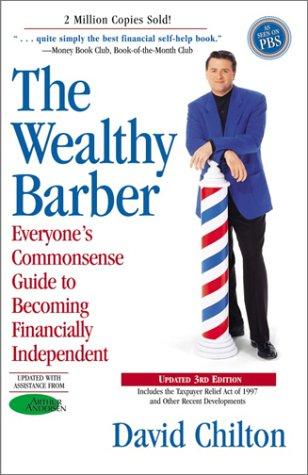
The Wealthy Barber
by David Chilton · 1989
Personal finance basics, delivered as a parable through a small-town barber dispensing advice between haircuts. Canada's answer to The Richest Man in Babylon.
Worth reading? The Wealthy Barber uses the same parable structure as The Richest Man in Babylon -- a wise, folksy figure dispensing financial common sense through story rather than spreadsheet -- applied to modern personal finance basics like pay-yourself-first saving, tax-advantaged investing, and insurance. It's an easy, quick read that's genuinely good for a beginner, but if you've already absorbed the fundamentals from Rich Dad Poor Dad or The Richest Man in Babylon, there's not much new ground here.
| Full Title | The Wealthy Barber: Everyone's Common-Sense Guide to Becoming Financially Independent |
|---|---|
| Author | David Chilton |
| Published | 1989 |
| Category | Business & Money |
| Favorite quote | “Pay yourself first.” |
The Verdict
Chilton’s barber-shop parable format makes the fundamentals genuinely accessible, which is exactly why the book became a Canadian personal-finance staple for decades. It’s foundational rather than advanced – read it once for the habits, then move on to something more specific to your actual investing questions.
you want the simplest possible introduction to saving and investing fundamentals, told as an easy, story-driven parable
you already have the basics down (pay yourself first, invest consistently, use tax-advantaged accounts), this covers foundational ground The Richest Man in Babylon and Rich Dad Poor Dad also already cover
Book Summary
The book's central financial rule is "pay yourself first" -- automatically saving roughly 10% of your income before any other spending, rather than saving whatever happens to be left over at the end of the month, which for most people is nothing. Chilton delivers this and other fundamentals (compound interest, the value of starting early, basic insurance and estate planning) through Roy, a barber in a small Ontario town who dispenses financial wisdom to customers getting haircuts.
The parable format is a deliberate choice to make personal finance approachable to readers intimidated by traditional finance books -- Chilton's barber never talks in jargon, and the emphasis throughout is on simple, consistent habits (automatic saving, starting young, letting compound interest do the work) over sophisticated investment picking or market timing.
Top 7 Lessons from The Wealthy Barber
- Pay yourself first: automatically save roughly 10% of income before other spending, not whatever's left over.
- Starting to save young matters more than the specific amount, because of compound interest over time.
- Automate saving so it doesn't depend on willpower or discipline each month.
- Basic insurance and estate planning are part of financial independence, not just investment returns.
- Simple, consistent saving habits beat sophisticated investment picking or market timing for most people.
- Financial literacy doesn't require complex jargon -- the fundamentals are genuinely simple to explain and understand.
- Small, consistent percentage-based saving compounds into significant wealth over a working lifetime.
Top 2 Quotes from The Wealthy Barber
"Pay yourself first."
David Chilton, The Wealthy Barber
"It's not what you make, it's what you keep that counts."
David Chilton, The Wealthy Barber
Frequently Asked Questions
Is The Wealthy Barber worth reading?
Yes, as a simple, story-driven introduction to personal finance basics for beginners. If you've already read The Richest Man in Babylon or Rich Dad Poor Dad, the ground covered will feel familiar.
What is the main lesson of The Wealthy Barber?
Pay yourself first -- automatically save roughly 10% of your income before other spending -- combined with starting early to let compound interest do most of the work.
Is The Wealthy Barber similar to The Richest Man in Babylon?
Yes, both use a wise, folksy narrator figure to teach basic personal finance principles through parable rather than technical explanation, though The Wealthy Barber is set in modern Canada and covers modern instruments like tax-advantaged accounts.
Who should read The Wealthy Barber?
Beginners who find traditional finance books intimidating or jargon-heavy. Readers who already know the pay-yourself-first fundamentals won't find much new material.
Ready to read it?
Get The Wealthy Barber on Amazon