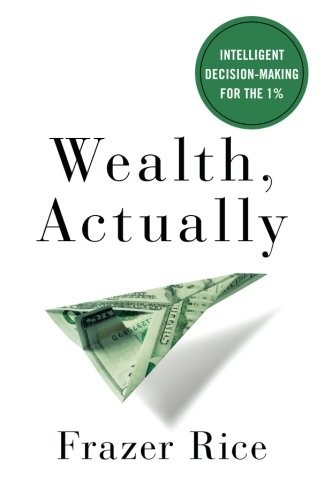
Wealth, Actually
by Frazer Rice · 2018
A private wealth manager's guide to the decisions, estate, fiduciary, family, that matter once you have real assets to protect.
Worth reading? Wealth, Actually is a narrower book than most personal-finance titles: it's not about building wealth, it's about the decisions that come after, estate planning, fiduciary relationships, and preserving what you've built across generations. Rice writes from fifteen years advising wealthy families, and the book is most useful as an orientation guide to problems most readers haven't faced yet. Skip it if you're still in the accumulation phase; this book assumes the wealth already exists.
| Full Title | Wealth, Actually: Intelligent Decision-Making for the 1% |
|---|---|
| Author | Frazer Rice |
| Published | 2018 |
| Category | Business & Money |
| Favorite quote | “Very few of life's important answers are found in a pitch book or a slide deck.” |
The Verdict
Wealth, Actually is a narrower book than most personal-finance titles: it’s not about building wealth, it’s about the decisions that come after, estate planning, fiduciary relationships, and preserving what you’ve built across generations. Rice writes from fifteen years advising wealthy families, and the book is most useful as an orientation guide to problems most readers haven’t faced yet. Skip it if you’re still in the accumulation phase; this book assumes the wealth already exists.
high-net-worth individuals and families navigating estate, fiduciary, and legacy decisions for the first time
you're still building wealth rather than preserving and transferring it
Book Summary
A private wealth manager's guide to the decisions, estate, fiduciary, family, that matter once you have real assets to protect. It earns its place by addressing a stage most personal-finance content skips entirely. The more wealth you accumulate, the more distinct risks (legal, family, fiduciary) appear that don't exist at lower net worth. Good advisors and clear fiduciary structures matter more as complexity grows. The practical move is to read it once you're actually facing these decisions, treating it as an orientation guide to problems most readers haven't encountered yet rather than a book to act on immediately.
Top 14 Lessons from Wealth, Actually
- The more wealth you accumulate, the more distinct risks (legal, family, fiduciary) appear that don't exist at lower net worth.
- Good advisors and clear fiduciary structures matter more as complexity grows.
- Estate planning decisions made early prevent family conflict and legal complications later.
- Preserving wealth requires a different skill set and mindset than building it did.
- Family communication about money and legacy prevents most of the conflict that erupts after a death.
- Complexity in financial structures should serve a clear purpose, not just signal sophistication.
- Choosing the right professional relationships (lawyers, advisors, trustees) is itself a high-stakes decision.
- The book is aimed at the 1% facing decisions after accumulation, not at people still building wealth.
- Rice writes from fifteen years advising high-net-worth families, framing the book as an orientation guide to problems most readers haven't faced yet.
- Trusts and estate vehicles are tools for intent, not just tax avoidance, they encode what you actually want to happen.
- Wealth can fracture families; the soft decisions about who gets what, and why, matter as much as the legal documents.
- Fiduciary duty, acting in someone else's best interest, is the spine of every advisor relationship worth having.
- Protecting assets is a continuous practice, not a one-time plan you set and forget.
- Knowing what you don't know, and hiring accordingly, beats pretending to manage everything yourself.
Top 1 Quotes from Wealth, Actually
"Very few of life's important answers are found in a pitch book or a slide deck."
Frazer Rice, Wealth, Actually
Frequently Asked Questions
Is Wealth, Actually worth reading?
Yes, if the description fits you, high-net-worth individuals and families navigating estate, fiduciary, and legacy decisions for the first time. Skip it if you're still building wealth rather than preserving and transferring it.
What is the main idea of Wealth, Actually?
Rice covers the decisions that come after wealth accumulation, estate planning, fiduciary relationships, and family legacy, drawing on his experience advising high-net-worth families.
Who should read Wealth, Actually?
High-net-worth individuals and families navigating estate, fiduciary, and legacy decisions. Skip it if you're still in the accumulation phase.
What will you get out of Wealth, Actually?
A clearer, opinionated take you can act on, plus the sharpest lessons pulled into a short list so you don't have to read the whole book to decide.
Ready to read it?
Get Wealth, Actually on Amazon