Tim Ferriss Books in Order: The 4-Hour Series to Tribe of Mentors

Updated July 21, 2026 · 4 books

Tim Ferriss Books in Order: The 4-Hour Series to Tribe of Mentors: ranked list of 4 books

Start with The 4-Hour Workweek, because it’s the book everything else Ferriss has written assumes you already absorbed: question the default (retirement, the 9-to-5, “busy” as a virtue) and design your life now instead of deferring it. The specific tactics have dated in spots, but the core heresy hasn’t.

The 4-Hour Body follows as the same method applied to a new domain, his own body instead of his business. It’s the most uneven of the four: the slow-carb diet and minimum-effective-dose framing hold up, but some of the more fringe self-experiments are worth skipping rather than following literally.

Tools of Titans is where Ferriss shifts from one man’s system to a highlight reel of other people’s, distilling 200 podcast guests into a browsable playbook of morning routines, books, and habits. It rewards flipping through over reading start to finish.

Close with Tribe of Mentors, the most compiled and least Ferriss-driven of the four. Roughly 130 people answer the same sharp questions, and the value is in the patterns that repeat across wildly different fields, not any single person’s answer.

One warning: the later three books are reference material more than narrative reads, and it’s easy to mistake collecting other people’s tactics for actually applying your own. Read The 4-Hour Workweek properly, then treat the rest as a shelf you dip into when you have a specific problem to solve.

Quick Comparison

#BookBest for
1The 4-Hour WorkweekTim Ferrissemployees dreaming of escape and founders who want a lean, automated businessAmazon
2The 4-Hour BodyTim Ferrissself-experimenters who want data-driven shortcuts to fitness instead of generic gym adviceAmazon
3Tools of TitansTimothy Ferrisspeople who want a buffet of tactics from top performers without one guruAmazon
4Tribe of MentorsTim Ferrissreaders who want a browsable reference of advice from many different people, not one guru's systemAmazon

The Books

The 4-Hour Workweek by Tim Ferriss book cover

1. The 4-Hour Workweek

Tim Ferriss · 2007

Retirement is a failed concept. Build a business that runs without you and take the time now.

Ferriss wrote this as a 29-year-old who’d built a supplement business that ran on autopilot, and the energy shows. The tactics date in spots (some tools are dead), but the central heresy, that you can design your life now instead of after 40 years of deferring, is why the book still sells. Take the title with a grain of salt and keep the method.

Read it if: employees dreaming of escape and founders who want a lean, automated business

Skip it if: you're happy in a steady corporate career and find hustle-culture grating
Full verdict: The 4-Hour Workweek →

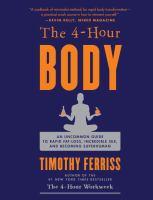
The 4-Hour Body by Tim Ferriss book cover

2. The 4-Hour Body

Tim Ferriss · 2010

Ferriss turns his own body into a science experiment and hands you the results, good and weird alike.

This is Ferriss at his most self-experimental, and the book is uneven because of it: some chapters (slow-carb, minimum effective dose) are genuinely useful years later, others are fringe enough that you should treat them as “here’s what worked for one guy,” not medical advice. Read it selectively.

The throughline that’s worth keeping regardless of which specific diet or workout you land on: question the default, test it on yourself, measure honestly, and drop what doesn’t work no matter how popular it is.

Read it if: self-experimenters who want data-driven shortcuts to fitness instead of generic gym advice

Skip it if: you want a mainstream, medically-conventional fitness book -- Ferriss is deliberately fringe here

Full verdict: The 4-Hour Body →

Tools of Titans by Timothy Ferriss book cover

3. Tools of Titans

Timothy Ferriss · 2016

Tim Ferriss distills 200 world-class performers into one browsable playbook.

Tools of Titans is Ferriss’s highlight reel from his podcast: morning routines, books, habits of the elite. Inconsistent depth, but endlessly browsable and full of starting points. Skip it if you drown in options instead of executing one.

Read it if: people who want a buffet of tactics from top performers without one guru

Skip it if: you prefer a single, coherent method over a tactical smorgasbord

Full verdict: Tools of Titans →

Tribe of Mentors by Tim Ferriss book cover

4. Tribe of Mentors

Tim Ferriss · 2017

Ferriss asks roughly 130 world-class people the same sharp questions and lets the patterns do the teaching.

This is less a book than a curated FAQ from 130 people who don’t agree with each other, and that disagreement is the actual value: you get to see which advice repeats regardless of field (say no more, expect failure, keep experimenting) versus which advice is just one person’s idiosyncratic take.

Because every answer is from the mentors themselves and not from Ferriss, it’s deliberately left without direct quotes attributed to Ferriss on this page – the voices inside the book belong to its contributors, not its author, so treat any specific line you want to cite as that person’s, not his.

Read it if: readers who want a browsable reference of advice from many different people, not one guru's system

Skip it if: you want a single coherent philosophy -- this is a mosaic, and it reads like one

Full verdict: Tribe of Mentors →

Frequently Asked Questions

What is the best Tim Ferriss book to start with?

The 4-Hour Workweek. It's the book that made him, and the DEAL framework (Definition, Elimination, Automation, Liberation) is the mindset shift every later book assumes you already hold, questioning defaults instead of accepting them.

What order did Tim Ferriss actually write these in?

The 4-Hour Workweek (2007), The 4-Hour Body (2010), Tools of Titans (2016), Tribe of Mentors (2017). This list follows that order, which also tracks his own shift from one man's system to compiling other people's.

Is The 4-Hour Body just a fitness book, or does it fit the same theme?

Same method, new domain. Ferriss applies the same self-experimentation and minimum-effective-dose thinking from the Workweek book to his own body, some of it useful (the slow-carb diet), some of it genuinely fringe, so read it selectively.

How is Tribe of Mentors different from Tools of Titans?

Tools of Titans is Ferriss's own synthesis of his podcast guests' habits, meant to be browsed. Tribe of Mentors is a rawer Q&A anthology of roughly 130 people's answers to the same sharp questions, with even less of Ferriss's own voice between them.

Should I read all four Tim Ferriss books, or can I stop after one?

The 4-Hour Workweek alone gives you the core mindset. The other three are optional depth, pick The 4-Hour Body only if fitness is your actual bottleneck, and treat Tools of Titans and Tribe of Mentors as references to dip into, not books to finish in order.

Keep Reading