Cal Newport Books in Order: The Complete Reading Path

Updated July 21, 2026 · 5 books

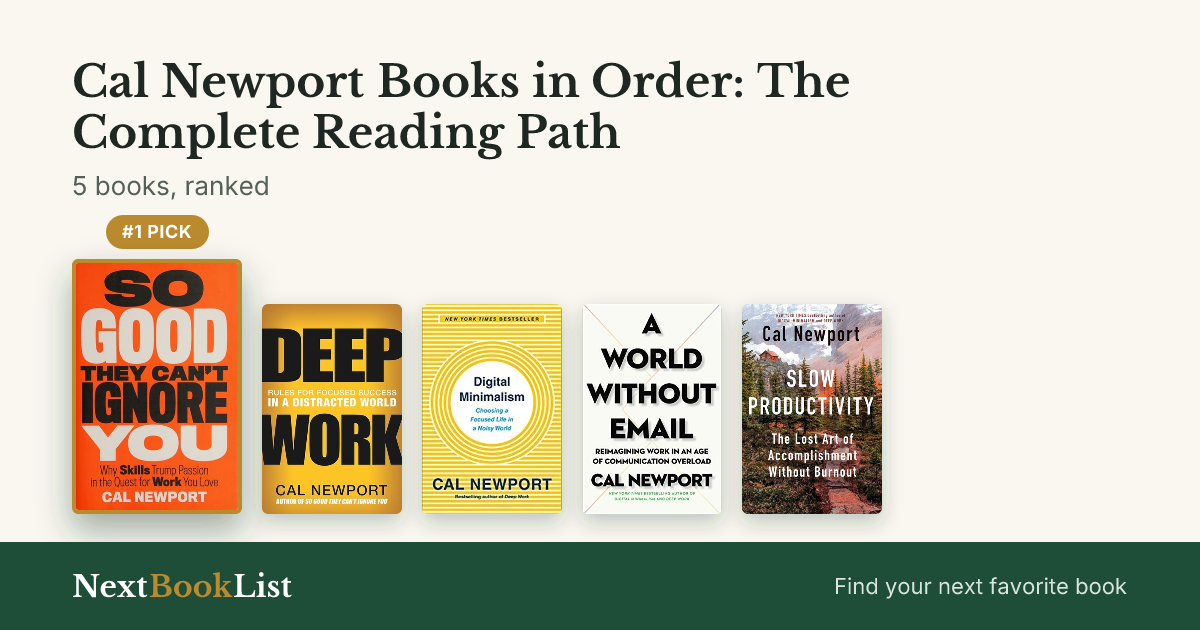
Cal Newport Books in Order: The Complete Reading Path: ranked list of 5 books

Read Deep Work first if you only read one Newport book. It’s his most complete, most quoted, most actionable work, and everything he wrote after assumes you already know the four rules. But if you’re pre-career and still figuring out what to aim your focus at, start one book earlier with So Good They Can’t Ignore You, the book that debunks “follow your passion” and makes the case for building skill first.

After Deep Work, the natural next step depends on which part of your life is actually broken. Digital Minimalism if it’s your personal relationship with your phone. A World Without Email if it’s your team’s communication habits, and only if you have the authority to change them, this one is frustrating without it. Slow Productivity (2024) is the newest and most philosophical, questioning whether “more output” was ever the right goal to begin with.

The honest caveat: Newport keeps circling the same core idea, protect your attention, build real skill, from five different angles. That’s a feature if you want the full picture, but you don’t need all five to get the core of his advice. Deep Work plus one other, matched to your actual problem, covers almost everyone.

Quick Comparison

#BookBest for
1So Good They Can't Ignore YouCal Newportanyone anxious about finding their 'true calling' before committing to a career pathAmazon
2Deep WorkCal Newportknowledge workers whose output depends on sustained concentrationAmazon
3Digital MinimalismCal Newportanyone whose default reaction to boredom is reaching for a deviceAmazon
4A World Without EmailCal Newportmanagers and teams with actual say over how they communicate, not just their own inbox habitsAmazon
5Slow ProductivityCal Newportyou measure your day by how full your calendar was, not by what you actually finishedAmazon

The Books

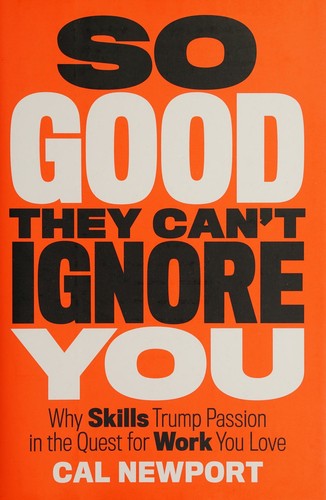
So Good They Can't Ignore You by Cal Newport book cover

1. So Good They Can't Ignore You

Cal Newport · 2012

Cal Newport's case against 'follow your passion': build rare, valuable skills first, and the passion follows the mastery, not the other way around.

Newport’s first swing at the career-advice genre, and it’s aimed squarely at the advice everyone gives and almost nobody can back up: follow your passion. He shows the passion hypothesis doesn’t hold up against how people who actually love their work got there, which is by getting good at something rare and valuable first.

The craftsman mindset versus passion mindset distinction is the book’s most useful takeaway: stop asking what your work can offer you, start asking what you can offer it. Skill accumulates into leverage, and leverage is what eventually buys the autonomy people mistake for “finding their passion.”

It’s the setup book. Deep Work is the execution manual for the capital this one tells you to build. Read them in that order if you’re starting from scratch.

Read it if: anyone anxious about finding their 'true calling' before committing to a career path

Skip it if: you already have deep, marketable skills and just need to schedule the work -- read Deep Work instead
Full verdict: So Good They Can't Ignore You →

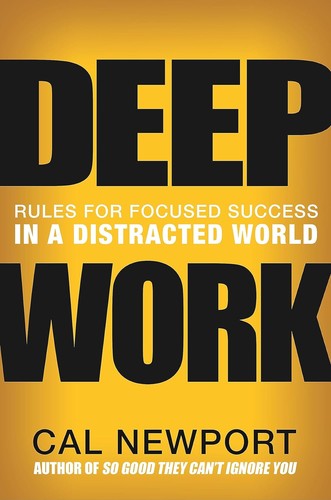
Deep Work by Cal Newport book cover

2. Deep Work

Cal Newport · 2016

Focus is the new superpower. Newport makes the case, then hands you the schedule.

Newport argues that deep, distraction-free work is both increasingly rare and increasingly valuable, which makes it the career leverage of this era. The second half is practical: time-block your day, embrace boredom, quit tools that don’t pass a cost-benefit test. One of the few productivity books whose advice compounds the longer you use it.

Read it if: knowledge workers whose output depends on sustained concentration

Skip it if: your work is genuinely reactive and meeting-driven (the advice will frustrate you)

Full verdict: Deep Work →

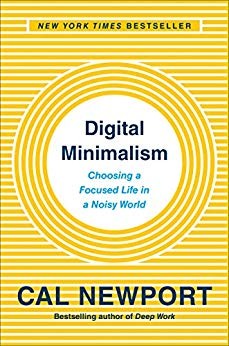
Digital Minimalism by Cal Newport book cover

3. Digital Minimalism

Cal Newport · 2019

A philosophy for your phone, not another screen-time tip list. Includes the 30-day declutter.

Newport’s argument: willpower loses against attention engineering, so you need a philosophy, not tips. The 30-day digital declutter (remove optional technologies, rediscover analog leisure, reintroduce only what serves something you value) has a real completion rate because it’s a protocol, not a suggestion.

Read it if: anyone whose default reaction to boredom is reaching for a device

Skip it if: your digital life is already intentional (you've done the declutter, formally or not)

Full verdict: Digital Minimalism →

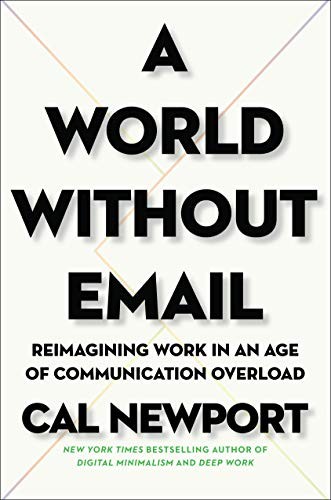
A World Without Email by Cal Newport book cover

4. A World Without Email

Cal Newport · 2021

Cal Newport's case that the real productivity killer is the 'hyperactive hive mind' workflow of constant ad hoc messaging, not any one inbox.

Newport’s argument here is narrower and more structural than Deep Work: it’s not that email is bad, it’s that most teams run on a “hyperactive hive mind” workflow of constant, unscheduled messaging, and that workflow is what’s actually exhausting everyone.

The fix isn’t a better inbox system. It’s replacing ad hoc requests with defined processes: office hours instead of instant replies, task boards instead of chat threads, protocols instead of renegotiating the same request every time it comes up.

That’s also the catch. This book requires organizational authority to act on. If you can change how your team works, it’s genuinely useful. If you’re one person inside someone else’s broken system, you’ll nod along and change nothing.

Read it if: managers and teams with actual say over how they communicate, not just their own inbox habits

Skip it if: you're an individual contributor with zero influence over team workflow -- the fixes here are mostly structural

Full verdict: A World Without Email →

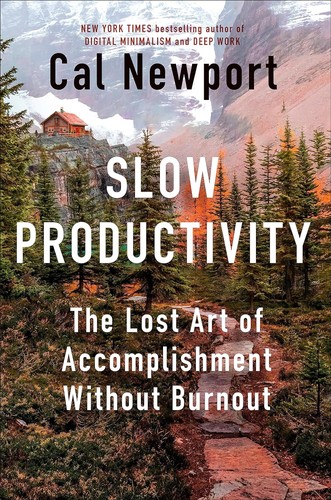
Slow Productivity by Cal Newport book cover

5. Slow Productivity

Cal Newport · 2024

Newport's argument that 'busy' and 'productive' got confused, and the fix is doing fewer things, at a natural pace, to a higher standard.

Newport’s real target is pseudo-productivity: the habit of using a packed calendar as proof of good work. His three principles, fewer things, natural pace, obsess over quality, are simple to state and genuinely rare to see anyone actually practice.

Read it if: you measure your day by how full your calendar was, not by what you actually finished

Skip it if: you want a habits system -- this is a philosophy of work pace, not a task-management framework

Full verdict: Slow Productivity →

Frequently Asked Questions

What order should I read Cal Newport's books in?

Publication order, and it happens to be the logical order too. So Good They Can't Ignore You (2012) on career strategy, Deep Work (2016) on protecting focus, Digital Minimalism (2019) on your personal tech life, A World Without Email (2021) on team workflow, and Slow Productivity (2024) on redefining what "productive" even means.

What's the best Cal Newport book to start with?

Deep Work, if you only read one. It's his most complete, most actionable book, and it's the one his later work assumes you've read. Start with So Good They Can't Ignore You instead if you're pre-career and still choosing a direction.

What's the difference between Deep Work and Digital Minimalism?

Same author, different targets. Deep Work is about your working hours and producing valuable output. Digital Minimalism is about your leisure hours and taking your attention back from your phone. Work problem, Deep Work. Life problem, Digital Minimalism.

Is A World Without Email worth reading if I'm not a manager?

Less so. It's aimed at people with actual say over team workflow. If you're an individual contributor with no structural authority, you'll agree with every page and be able to act on almost none of it. Deep Work and Digital Minimalism apply to you regardless of role; this one doesn't.

Keep Reading