Best Books for Building an Online Business: 8 in the Right Order

Updated July 10, 2026 · 8 books

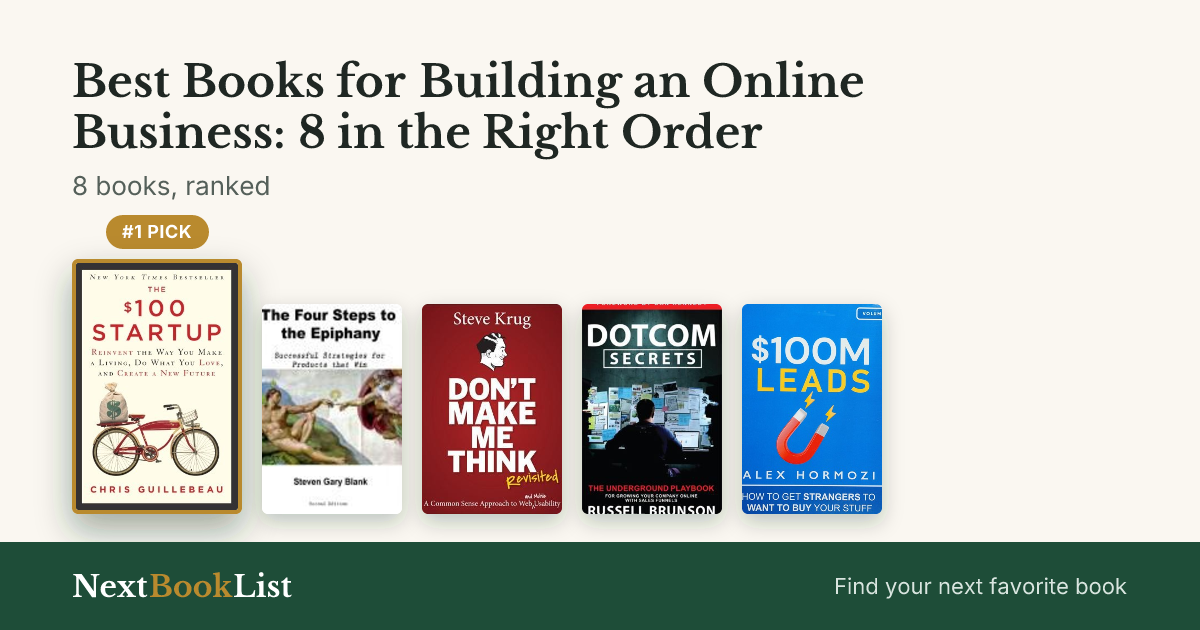
Best Books for Building an Online Business: 8 in the Right Order: ranked list of 8 books

The best book to start an online business is The $100 Startup, because Chris Guillebeau’s hundreds of ordinary case studies prove the thing most people don’t believe: you don’t need a unique idea, just a specific, sellable skill and the willingness to charge for it.

Once you have an idea, validate it before building anything. The Four Steps to the Epiphany is Steve Blank’s original customer-development process, dense, but it’s the actual source the popularized “lean startup” language came from. Don’t Make Me Think, Revisited is the build step: Krug’s usability rule that if a visitor has to think about how to use your site, you’ve already lost them.

Dotcom Secrets is the conversion layer. Brunson’s funnel framework for turning traffic into buyers, which most first-time founders skip past on their way to chasing more visitors. $100M Leads and $100M Money Models are the scale layer: Hormozi on the four channels for consistently finding new buyers, then on the business-model mechanics that turn one good offer into a compounding business instead of a one-time sale.

The 4-Hour Workweek and Millionaire Fastlane close the list with the automate-and-scale mindset: Ferriss on removing yourself as the bottleneck, DeMarco on why trading time for money was never going to make you actually wealthy.

One warning: online-business books are where people build a beautiful reading list instead of a beautiful landing page. Ship something small and ugly this week, the books are there to fix it, not replace it.

Quick Comparison

#BookBest for
1The $100 StartupChris Guillebeauwould-be founders who want a micro-business, not a venture-backed rocketAmazon
2The Four Steps to the EpiphanySteve Blankfounders who want the source text of get-out-of-the-buildingAmazon
3Don’t Make Me Think, RevisitedSteve Krugdesigners, founders, and PMs shipping any user-facing productAmazon
4Dotcom SecretsRussell Brunsononline entrepreneurs building sales funnels and offersAmazon
5$100M LeadsAlex Hormozifounders and marketers who have an offer but not enough people seeing itAmazon
6$100M Money ModelsAlex Hormozifounders who have a working offer but haven't figured out how to scale the model behind itAmazon
7The 4-Hour WorkweekTim Ferrissemployees dreaming of escape and founders who want a lean, automated businessAmazon
8The Millionaire FastlaneMJ DeMarcoanyone tired of the 'save 10% and wait 40 years' script who wants to build real wealthAmazon

The Books

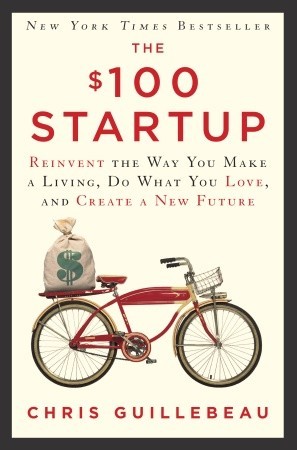
The $100 Startup by Chris Guillebeau book cover

1. The $100 Startup

Chris Guillebeau · 2019

303 everyday people who turned a passion into a livable income, and how they did it.

Chris Guillebeau’s $100 Startup is the best antidote to startup theater: tiny, profitable, one-person businesses built on a skill you already have. Less about hypergrowth, more about freedom. Skip it if you specifically want to raise a Series A.

Read it if: would-be founders who want a micro-business, not a venture-backed rocket

Skip it if: you're building a scale-at-all-costs startup and want VC playbooks
Full verdict: The $100 Startup →

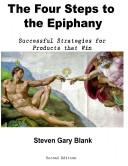
The Four Steps to the Epiphany by Steve Blank book cover

2. The Four Steps to the Epiphany

Steve Blank · 2005

Steve Blank's original customer-development manifesto that launched the lean startup.

The Four Steps to the Epiphany is Blank’s foundational text: startups are not smaller big companies; they need customer development before product development. Dense and seminal. Skip it if you’ve already internalized the method.

Read it if: founders who want the source text of get-out-of-the-building

Skip it if: you've read The Startup Owner's Manual and lived it

Full verdict: The Four Steps to the Epiphany →

Don’t Make Me Think, Revisited by Steve Krug book cover

3. Don’t Make Me Think, Revisited

Steve Krug · 2000

Krug's usability bible: if a site makes me think, it's losing me.

Don’t Make Me Think is the shortest, most humane UX book: obvious navigation, don’t make users think, test early with real users. Required for anyone shipping web products. Skip it only if you’ve internalized it.

Read it if: designers, founders, and PMs shipping any user-facing product

Skip it if: you already run usability tests and follow the conventions

Full verdict: Don’t Make Me Think, Revisited →

Dotcom Secrets by Russell Brunson book cover

4. Dotcom Secrets

Russell Brunson · 2015

Brunson's funnel framework for turning traffic into buyers online.

DotCom Secrets is the ClickFunnels founder’s playbook: the value ladder, funnel scripts, and the so-what-who framework. Salesy and product-pitched, but the funnel-thinking is genuinely useful. Skip it if you’ve outgrown funnel 101.

Read it if: online entrepreneurs building sales funnels and offers

Skip it if: you already run a mature funnel program

Full verdict: Dotcom Secrets →

$100M Leads by Alex Hormozi book cover

5. $100M Leads

Alex Hormozi · 2023

Hormozi's tactical breakdown of how to generate a consistent flow of leads across warm and cold channels.

$100M Leads is narrowly and usefully focused: not offer design, not closing, just the specific mechanics of getting a consistent number of strangers into your pipeline through warm outreach, content, cold outreach, and paid ads. Hormozi’s style works well for a book meant to be referenced and executed against, not read once and shelved. Skip it if leads aren’t your actual constraint; the book solves one specific problem and solves it thoroughly.

Read it if: founders and marketers who have an offer but not enough people seeing it

Skip it if: lead generation isn't your bottleneck, you already have more demand than you can fulfill

Full verdict: $100M Leads →

$100M Money Models by Alex Hormozi book cover

6. $100M Money Models

Alex Hormozi · 2025

Hormozi's follow-up to $100M Offers: the actual business models that let an offer scale into real, repeatable money.

Money Models picks up where $100M Offers leaves off: it’s less about crafting a single irresistible offer and more about the underlying business-model mechanics that turn one good offer into a compounding, scalable business. It’s dense and tactical in Hormozi’s usual style, built for operators already in the business rather than people still deciding whether to start one. Skip it if you don’t already have a validated offer; this book assumes that step is done.

Read it if: founders who have a working offer but haven't figured out how to scale the model behind it

Skip it if: you haven't validated an offer yet, read $100M Offers first, this book assumes one exists

Full verdict: $100M Money Models →

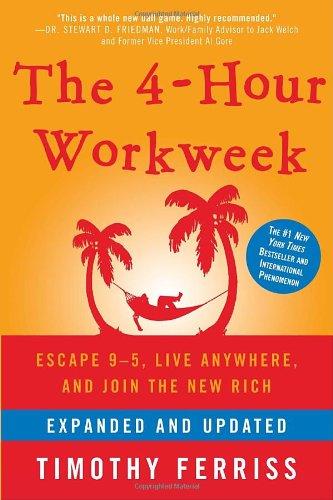
The 4-Hour Workweek by Tim Ferriss book cover

7. The 4-Hour Workweek

Tim Ferriss · 2007

Retirement is a failed concept. Build a business that runs without you and take the time now.

Ferriss wrote this as a 29-year-old who’d built a supplement business that ran on autopilot, and the energy shows. The tactics date in spots (some tools are dead), but the central heresy, that you can design your life now instead of after 40 years of deferring, is why the book still sells. Take the title with a grain of salt and keep the method.

Read it if: employees dreaming of escape and founders who want a lean, automated business

Skip it if: you're happy in a steady corporate career and find hustle-culture grating

Full verdict: The 4-Hour Workweek →

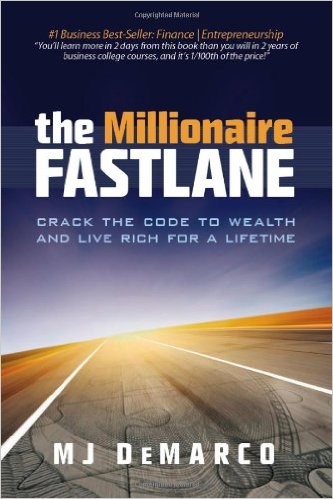
The Millionaire Fastlane by MJ DeMarco book cover

8. The Millionaire Fastlane

MJ DeMarco · 2011

The get-rich-slowly advice is a lie the poor tell each other.

DeMarco wrote this after selling a business he built, then got angry at every book telling people to clip coupons and wait for death. The Fastlane idea is simple and annoying: a salary caps your income at your hours, and ‘invest for 40 years’ is a bet you’ll be alive and healthy to enjoy it. Build something that scales instead. Most readers won’t, but the few who do stop thinking like employees.

Read it if: anyone tired of the 'save 10% and wait 40 years' script who wants to build real wealth

Skip it if: you're already content with a slow, steady 401k-and-pray plan and don't want to be annoyed

Full verdict: The Millionaire Fastlane →

Frequently Asked Questions

What is the first book to read for an online business?

The $100 Startup. Chris Guillebeau's 300-plus case studies of ordinary people turning a narrow skill into a livable income is the proof that you don't need a unique idea or much capital, just a specific, sellable offer. Read it before anything tactical.

I have an idea. What's the next step?

The Four Steps to the Epiphany. Before you build anything, Steve Blank's customer-development process forces you to validate that people actually want it. It's dense and pre-dates the popularized "lean startup" language, but it's the original source.

What about actually building the website or product?

Don't Make Me Think, Revisited. Steve Krug's usability rule, if a visitor has to think about how to use your site, you're losing them, is the single most useful UX idea for a solo founder without a design team.

How do I turn traffic into actual sales?

Dotcom Secrets. Russell Brunson's funnel framework is specifically about converting visitors into buyers, which is the step most first-time online founders skip past on their way to "get more traffic."

I have an offer that converts. How do I actually get more people to see it?

$100M Leads, then $100M Money Models. Hormozi's Leads book covers the four channels, warm outreach, content, cold outreach, paid ads, for getting strangers into your pipeline; Money Models covers the business-model mechanics that let one good offer scale into a compounding business.

Keep Reading