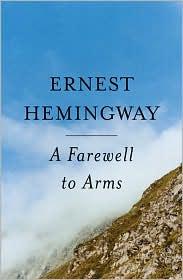
A Farewell to Arms
by Ernest Hemingway · 1929
An American ambulance driver on the Italian front falls for a British nurse while the war around them refuses to care -- and Hemingway's flat, stripped-down prose makes the ending land harder than any amount of florid writing could.
Worth reading? A Farewell to Arms works because Hemingway trusts the reader to feel what he refuses to state outright. The iceberg theory, showing the surface and letting the weight sit underneath, is on full display here: short sentences, plain diction, almost no interior monologue, and yet the ending hits like a gut punch. It's also, quietly, one of the more clear-eyed anti-war novels of its era, precisely because it never announces itself as one.
| Author | Ernest Hemingway |
|---|---|
| Published | 1929 |
| Publisher | Scribner |
| Category | Fiction |
The Verdict
The plainness of the prose is the whole point, and it takes some readers a chapter or two to stop expecting Hemingway to tell them how to feel. Once you adjust, the flatness starts doing real work: the horror of the Caporetto retreat lands harder for being stated matter-of-factly instead of dramatized.
Catherine Barkley gets criticized, fairly, for being underwritten by modern standards, more a projection of Frederic’s need than a fully realized person. That’s a real limitation of the book, not just a dated reading of it.
Read it if you want the novel that made “showing, not telling” a literary discipline instead of just advice. Skip it if you need a book to name its own emotions – Hemingway’s whole method here is refusing to.
you want the novel that made minimalist prose a literary standard, and a war romance that earns its bleakness instead of manufacturing it
you want emotional interiority spelled out for you -- Hemingway's whole style is withholding, and if that reads as flat rather than restrained, this book will frustrate you
Book Summary
Frederic Henry, an American serving as an ambulance driver for the Italian army in World War I, falls in love with Catherine Barkley, a British nurse, while the war grinds on around them with escalating senselessness, culminating in the chaotic Italian retreat from Caporetto.
Hemingway's prose style, short declarative sentences, minimal adjectives, almost no stated emotion, is the book's real argument: the horror and grief are conveyed through restraint and repetition rather than description, forcing the reader to supply the feeling the sentences withhold.
The novel treats the war and the romance as mirror images of the same theme, that the world destroys what people build regardless of merit or love, and the famous, unsentimental ending refuses either character a reprieve from that logic.
Top 7 Lessons from A Farewell to Arms
- Frederic Henry deserts the Italian army after witnessing summary executions of officers during the chaotic retreat from Caporetto, a real historical WWI disaster Hemingway uses as the novel's turning point.
- Hemingway's 'iceberg theory,' stating facts and events plainly while omitting stated emotion, is meant to let the reader feel more, not less, than a book that spells feelings out.
- Catherine Barkley's grief over a previous fiancé killed in the war shapes how she approaches her relationship with Frederic before she ever meets him.
- The novel treats the war bureaucracy, military doctors, army politics, chain of command, as absurd and indifferent to individual survival, well before that became a common literary stance toward WWI.
- Frederic and Catherine's escape to Switzerland by rowboat is the novel's one true respite, and Hemingway makes clear early on it can't last.
- The book's famous closing lines, describing Frederic walking away in the rain, deny the reader any consoling final statement about meaning or loss.
- Hemingway drew on his own WWI service as an ambulance driver on the Italian front, including his own wounding, for the novel's firsthand detail.
Top 5 Quotes from A Farewell to Arms
"The world breaks everyone and afterward many are strong at the broken places."
Ernest Hemingway, A Farewell to Arms
"If people bring so much courage to this world the world has to kill them to break them."
Ernest Hemingway, A Farewell to Arms
"It was a rotten way to die though. No place to go except away from the front."
Ernest Hemingway, A Farewell to Arms
"It kills the very good and the very gentle and the very brave impartially. If you are none of these you can be sure it will kill you too but there will be no special hurry."
Ernest Hemingway, A Farewell to Arms
"After a while I went out and left the hospital and walked back to the hotel in the rain."
Ernest Hemingway, A Farewell to Arms
Frequently Asked Questions
Is A Farewell to Arms worth reading?
Yes -- it's the novel that established Hemingway's minimalist style as a literary force, and the war-and-romance structure earns its bleak ending instead of manufacturing it.
What is A Farewell to Arms about?
An American ambulance driver's love affair with a British nurse during World War I, set against the Italian front and the real historical disaster of the Caporetto retreat.
Is A Farewell to Arms based on Hemingway's own experience?
Loosely. Hemingway served as an ambulance driver on the Italian front in WWI and was wounded there, which informs the novel's firsthand military detail, though the plot itself is fiction.
Why is Hemingway's writing style in A Farewell to Arms considered important?
It popularized a minimalist, declarative prose style, the 'iceberg theory,' that omits stated emotion and trusts the reader to feel what's underneath the plain sentences.
Is the ending of A Farewell to Arms sad?
Yes, deliberately and famously so -- Hemingway reportedly rewrote the final page dozens of times to get the restraint exactly right.
Ready to read it?
Get A Farewell to Arms on Amazon