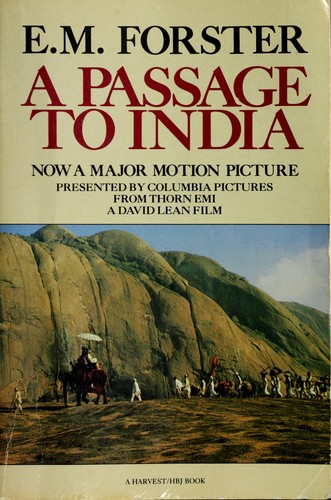
A Passage to India
by E.M. Forster · 1924
A trip to some caves goes wrong and exposes exactly how unbridgeable colonial-era British and Indian relationships really were.
Worth reading? This is a heavier, more structurally pessimistic book than most 'friendship across difference' novels -- Forster doesn't let personal decency save the day, and that refusal is the whole point. If you want a more hopeful take on cross-cultural friendship, this isn't it; if you want an honest one about colonial-era power, it's one of the best.
| Author | E.M. Forster |
|---|---|
| Published | 1924 |
| Publisher | Harcourt / Mariner Books |
| Category | Fiction |
| Favorite quote | “Pathos, piety, courage -- they exist, but are identical, and so is filth. Everything exists, nothing has value.” |
The Verdict
Forster doesn’t let you off easy. Fielding and Aziz’s friendship feels real, and the book still won’t let it survive the system around it – that’s the argument, not a plot failure. The ending, where the land itself seems to physically keep them apart, is one of the more devastating closing images in 20th-century fiction.
Skip it if you want plot momentum or a resolved mystery – what happened in the caves stays genuinely unclear on purpose. But as a serious, unflinching look at colonial-era relationships, it earns its reputation as one of the major novels of its century.
you want a serious, literary novel about colonialism, misunderstanding, and the limits of individual goodwill against a system built on inequality
you want a fast plot or a tidy resolution -- the central incident at the Marabar Caves is left genuinely ambiguous, and the ending refuses the friendship it spends the whole book building toward
Book Summary
Dr. Aziz, an Indian Muslim doctor, befriends Mr. Fielding, an English schoolteacher willing to treat Indians as equals, and organizes an expedition to the Marabar Caves for Fielding, Mrs. Moore, and the young Adela Quested. Something happens to Adela in the caves that she can't fully explain, and she accuses Aziz of assault. The accusation, its unraveling, and its aftermath expose exactly how thin any individual friendship is against the machinery of colonial suspicion and racial hierarchy.
Forster's real subject isn't the incident itself, it's what surrounds it: the English colonial community closing ranks reflexively, the Indian community reacting to a system that was never built to give them the benefit of the doubt, and Fielding and Aziz's friendship straining under pressure neither of them fully controls. Individual decency, the book argues, isn't enough to overcome structural inequality.
The caves themselves are treated as almost mystically indifferent -- their strange echo unsettles Mrs. Moore into a kind of existential despair, suggesting that colonial India's contradictions can't be resolved by good intentions or rational explanation, only lived with or escaped.
Top 8 Lessons from A Passage to India
- Aziz and Fielding's friendship, genuine as it is, can't survive the racial and colonial pressures neither of them fully controls.
- Adela's accusation and its unraveling shows how quickly a colonial system assumes guilt based on race rather than evidence.
- Mrs. Moore's breakdown after the caves' echo argues that some of India's contradictions resist rational explanation or resolution.
- The English colonial community's reflexive closing of ranks around Adela shows how group loyalty can override individual fairness.
- Forster treats individual goodwill (Fielding's, Aziz's) as real but insufficient against structural inequality -- friendship alone can't fix a colonial system.
- The novel's ambiguity about what actually happened in the caves is deliberate -- Forster refuses to resolve it into a simple truth.
- Aziz's eventual disillusionment with English friendship, even Fielding's, reflects a broader argument that genuine equality wasn't possible under colonial rule.
- The famous ending, where horses, earth, and sky seem to physically separate Aziz and Fielding, suggests the era itself -- not just personal choice -- kept them apart.
Top 3 Quotes from A Passage to India
"Pathos, piety, courage -- they exist, but are identical, and so is filth. Everything exists, nothing has value."
E.M. Forster, A Passage to India
"Good and evil are different, as their names imply. But, in my humble opinion, they are both of them aspects of my Lord."
E.M. Forster, A Passage to India
"the sky said, 'No, not there.'"
E.M. Forster, A Passage to India
Frequently Asked Questions
Is A Passage to India worth reading?
Yes, especially if you want a serious literary treatment of colonialism that doesn't offer an easy resolution. It's considered one of the major English novels of the 20th century.
What actually happened in the Marabar Caves in A Passage to India?
Forster deliberately never resolves this -- the ambiguity is the point, forcing the reader to sit with uncertainty the way the characters have to.
Is A Passage to India hard to read?
It's more demanding than a plot-driven novel -- the pacing is slow and reflective, and a lot of the tension is social and psychological rather than action-based.
What is the main theme of A Passage to India?
That individual friendship and goodwill, however genuine, can't overcome the structural inequality of colonial rule.
Ready to read it?
Get A Passage to India on Amazon