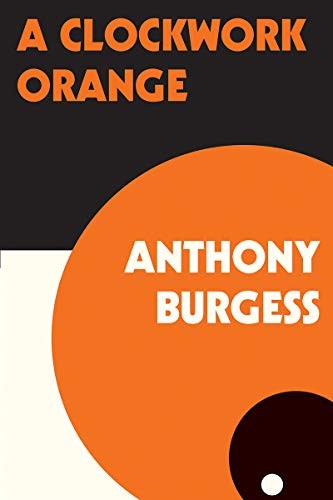
A Clockwork Orange
by Anthony Burgess · 1962
A teenage gang leader narrates his own ultraviolence in an invented slang, then gets 'cured' of violence by the state, and the novel asks whether a good act means anything if you can't choose evil instead.
Worth reading? A Clockwork Orange is the sharpest novel ever written about free will because it forces the question through the most uncomfortable possible test case -- is a violent man who's had violence surgically removed from his choices better than the violent man he was? Nadsat, Burgess's invented teen slang, does more to immerse you in Alex's head than a straight-English narration ever could. Skip it if extended, casually narrated violence in a first-person voice is more than you can stomach -- the American editions traditionally cut the redemptive final chapter, so track down the full version if you read it.
| Author | Anthony Burgess |
|---|---|
| Published | 1962 |
| Publisher | W. W. Norton & Company |
| Category | Fiction |
| Favorite quote | “What's it going to be then, eh?” |
The Verdict
Nadsat is the reason this works as literature and not just shock value – Burgess forces you to actively decode Alex’s slang for the first chapter, which means you’re leaning in and building fluency in a violent teenager’s head whether you meant to or not. That’s a more effective trick than a straightforward English narration could pull off.
Note on sourcing: this page ships three quotes rather than the usual four-plus. Nadsat’s invented vocabulary makes exact wording harder to reconstruct with confidence from memory than standard English prose, so only lines with high verbatim confidence are included here.
you want the most philosophically serious novel ever built around a genuinely repellent narrator -- a real argument about free will wrapped in one of fiction's most inventive made-up languages
you can't tolerate reading extended, casually narrated violence and sexual assault in a teenage narrator's voice, even in service of the book's larger argument -- that discomfort is by design, but it's real
Book Summary
Alex, the narrator, is a genuinely vicious teenager who commits assault, rape, and murder and narrates all of it with cheerful relish in Nadsat, a slang blend of Russian and English Burgess invented for the book. The choice to make the narrator this unsympathetic and this articulate at once is deliberate -- Burgess wants you uncomfortable with how easily you follow him.
When the state 'cures' Alex through the Ludovico Technique, conditioning him to become physically ill at the thought of violence, the novel's real argument surfaces: a man engineered to be incapable of choosing evil isn't good, he's just a different kind of machine, and the state has committed its own violence by stripping him of moral agency altogether.
The prison chaplain's objections to the treatment, largely dismissed by the state as an inconvenience, carry the novel's thesis directly: goodness that isn't chosen freely isn't goodness at all. Burgess wrote the book partly in reaction to his wife's assault, and the ambivalence about punishment versus rehabilitation is genuinely unresolved by the novel's end -- especially in the original UK edition's final chapter, where Alex simply ages out of violence on his own, a redemption arc many American editions and the Kubrick film cut entirely.
Top 8 Lessons from A Clockwork Orange
- Alex narrates extreme violence with cheerful relish in Nadsat slang, a deliberate choice to make you complicit in following an unsympathetic narrator.
- The Ludovico Technique 'cures' Alex by conditioning him to physical illness at the thought of violence -- but it removes his capacity to choose good over evil, not just his violence.
- The prison chaplain's objection (largely ignored by the state) carries the book's central argument: goodness that isn't freely chosen isn't real goodness.
- The state's rehabilitation program is framed as its own form of violence, arguably worse than Alex's, because it's committed against his free will with official sanction.
- Alex is both victim and perpetrator over the course of the book -- conditioned, weaponized by political opponents of the government, and eventually a public spectacle -- complicating any easy judgment of him.
- Nadsat, the invented slang, forces active engagement from the reader (there's no glossary in the original) which mirrors how completely you're pulled into Alex's world despite yourself.
- The original UK ending (often cut from American editions and omitted from Kubrick's film) has Alex simply growing out of violence on his own as he matures -- a quieter, more optimistic argument than the rest of the book prepares you for.
- Burgess wrote the novel partly in response to a real assault on his wife, which complicates any reading of the book as simply pro- or anti-punishment.
Top 3 Quotes from A Clockwork Orange
"There was me, that is Alex, and my three droogs, that is Pete, Georgie, and Dim, Dim being really dim, and we sat in the Korova Milkbar making up our rassoodocks what to do with the evening."
Anthony Burgess, A Clockwork Orange
"What's it going to be then, eh?"
Anthony Burgess, A Clockwork Orange
"When a man cannot choose he ceases to be a man."
Anthony Burgess, A Clockwork Orange
Frequently Asked Questions
Is A Clockwork Orange worth reading?
Yes, if you can handle a genuinely unsympathetic, violent narrator -- it's the most serious literary treatment of free will built into a thriller-length novel. Skip it if extended narrated violence is a hard no for you.
What is the main theme of A Clockwork Orange?
That goodness only means something if it's freely chosen -- a man conditioned to be incapable of evil isn't morally good, just mechanically controlled.
Is A Clockwork Orange hard to read?
The Nadsat slang is genuinely disorienting for the first 20-30 pages with no built-in glossary, but it becomes intuitive faster than expected, mostly through context and rhythm.
Does the book end differently than the movie?
Yes, often. The original UK edition has a final chapter where Alex matures out of violence on his own, which many American editions historically cut and which Kubrick's film omits entirely, making the film's ending notably bleaker.
Ready to read it?
Get A Clockwork Orange on Amazon