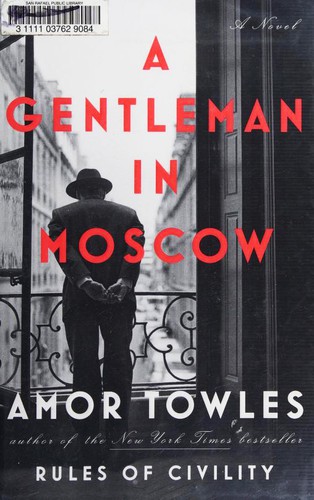
A Gentleman in Moscow
by Amor Towles · 2016
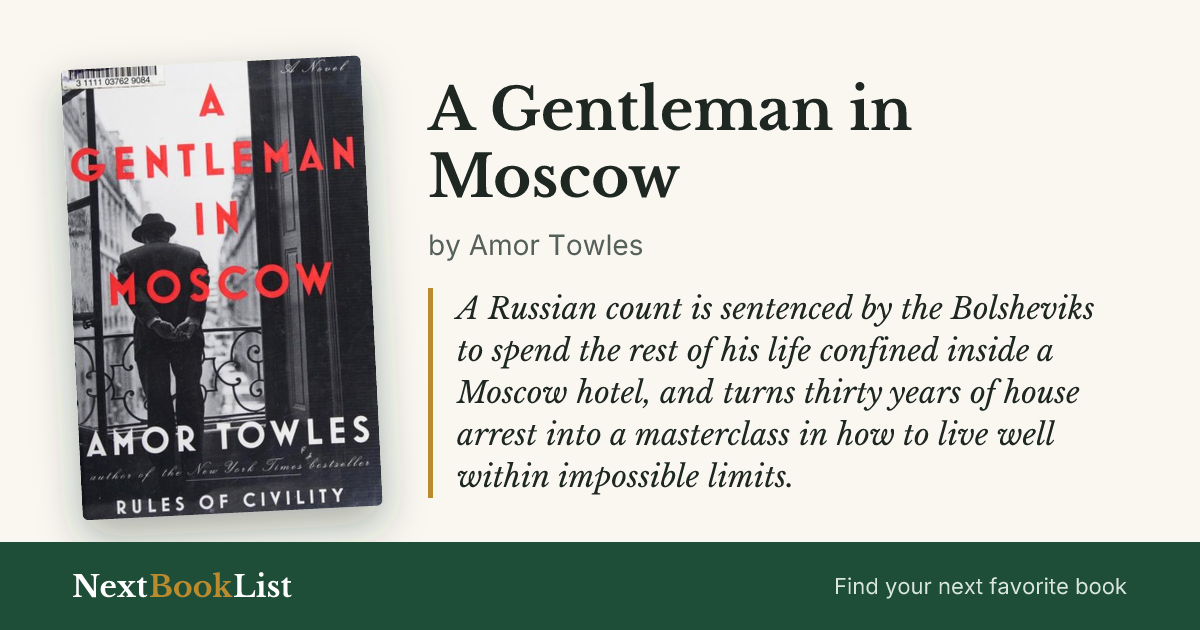
A Russian count is sentenced by the Bolsheviks to spend the rest of his life confined inside a Moscow hotel, and turns thirty years of house arrest into a masterclass in how to live well within impossible limits.
Worth reading? A Gentleman in Moscow is a genuinely rare thing: a novel about confinement that never feels claustrophobic. Towles turns the Hotel Metropol into a complete world, and Count Rostov's refusal to let circumstance diminish his sense of purpose or curiosity makes the book one of the warmest, most quietly wise pieces of literary fiction published this century.
| Author | Amor Towles |
|---|---|
| Published | 2016 |
| Publisher | Viking |
| Category | Fiction |
| Favorite quote | “If a man does not master his circumstances, then he is bound to be mastered by them.” |
The Verdict
The book’s real trick is making thirty years inside one hotel feel expansive rather than confining. Towles fills the Metropol with enough staff, guests, and rooms that Rostov’s world never feels smaller than the reader’s own, even though he can never leave it.
This isn’t a plot-driven novel, and it doesn’t pretend to be. The pleasures here are in Rostov’s wit, the careful construction of the hotel as a full ecosystem, and a patient accumulation of meaning that pays off hard in the book’s final stretch.
Read it if you want elegant, humane literary fiction that rewards patience with real emotional payoff. Skip it if you need plot stakes and urgency to stay engaged.
you want elegant, witty, deeply humane literary fiction about dignity and adaptation under confinement, with prose that rewards slow, attentive reading
you need plot urgency and stakes -- almost the entire novel takes place inside one hotel, and its pleasures are in character and atmosphere, not tension
Book Summary
In 1922, Count Alexander Rostov is deemed an unrepentant aristocrat by a Bolshevik tribunal and sentenced to house arrest for life inside Moscow's Hotel Metropol, on pain of execution if he ever sets foot outside. Rather than a straightforward punishment narrative, the novel becomes a study of how a person builds a meaningful life inside radically narrowed circumstances.
Over the following three decades, spanning Stalin's purges, World War II, and the early Cold War, Rostov forms deep relationships with hotel staff, guests, and eventually a young girl named Nina and, later, her daughter Sofia, whom he essentially raises inside the hotel's walls, turning confinement into a kind of chosen family.
Towles uses the hotel as a lens on Soviet history unfolding just outside its doors, with events reaching Rostov secondhand through guests and staff, while making the argument, implicitly, that a life of purpose, curiosity, and attentiveness to others can be lived fully even within the smallest of physical worlds.
Top 7 Lessons from A Gentleman in Moscow
- The novel argues, through Rostov's example, that dignity and purpose are choices sustained through daily habit and attention, not conditions granted by circumstance or freedom of movement.
- Confinement in the novel becomes an occasion for depth rather than diminishment -- Rostov knows the Metropol more intimately after thirty years than most people know anywhere they've lived.
- The book uses secondhand accounts of Soviet history (Stalin's purges, World War II, the early Cold War) filtering into the hotel through guests and staff, letting the reader feel history's weight without leaving Rostov's confined vantage point.
- Found family, built with hotel staff and, eventually, a child he essentially raises, becomes the emotional core of Rostov's life, replacing the aristocratic world the revolution took from him.
- The novel treats manners, ritual, and attentiveness to small pleasures (a good meal, a well-poured glass of wine) as serious moral practices, not aristocratic affectation, especially under a regime trying to strip such things of meaning.
- Rostov's late-novel decisions reveal that his patient, seemingly passive acceptance of confinement concealed real agency all along, reframing the entire book's pacing in retrospect.
- The Bolsheviks try to strip Rostov of status by erasing his aristocratic title, but the novel argues it's his character, not his class, that actually earns him the staff's and guests' respect over three decades.
Top 3 Quotes from A Gentleman in Moscow
"If a man does not master his circumstances, then he is bound to be mastered by them."
Amor Towles, A Gentleman in Moscow
"Hospitality is the art of anticipating the needs of one's guests before those needs are even acknowledged by the guests themselves."
Amor Towles, A Gentleman in Moscow
"Others must content themselves with the passing of the seasons, but we aristocrats need only see the flowering of a rose."
Amor Towles, A Gentleman in Moscow
Frequently Asked Questions
Is A Gentleman in Moscow worth reading?
Yes -- it's widely considered one of the best literary novels of the last decade, warm and beautifully constructed despite its confined setting.
What is A Gentleman in Moscow about?
A Russian aristocrat is sentenced to house arrest for life inside a Moscow hotel after the Bolshevik Revolution, and spends thirty years building a rich, meaningful life within its walls.
Is A Gentleman in Moscow slow-paced?
Yes, deliberately -- it prioritizes character, atmosphere, and reflection over plot urgency, especially in its first half.
Does A Gentleman in Moscow require knowledge of Russian history?
No -- Towles provides enough context for readers unfamiliar with the period, and the historical events reach the reader the same way they reach Rostov, secondhand.
Was A Gentleman in Moscow adapted for TV?
Yes, as a Paramount+ limited series starring Ewan McGregor.
Ready to read it?
Get A Gentleman in Moscow on Amazon