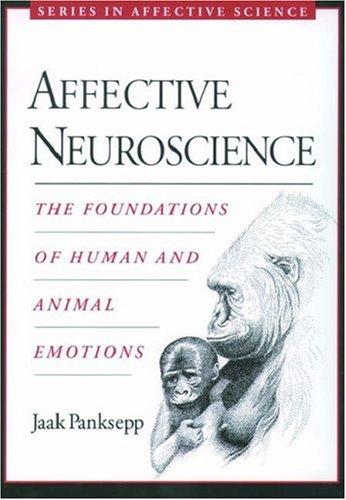
Affective Neuroscience
by Jaak Panksepp · 1998
The textbook that established emotion as a legitimate neuroscience research subject, mapping the actual brain circuits behind rage, fear, play, and seeking.
Worth reading? Panksepp effectively founded the field of affective neuroscience with this book, mapping specific brain circuits (which he named SEEKING, RAGE, FEAR, PANIC/GRIEF, PLAY, LUST, and CARE) shared across mammals, using both animal research and clinical human data to argue emotions aren't vague subjective states but have identifiable neural architecture. It's a genuine textbook, dense and technical, but it's the primary source underneath a huge amount of later pop-psychology writing about emotion. Read it if you want the rigorous neuroscience underneath emotional-intelligence and self-help claims about feelings. Skip it if you want something accessible, this is closer to a graduate course than a beach read.
| Full Title | Affective Neuroscience: The Foundations of Human and Animal Emotions |
|---|---|
| Author | Jaak Panksepp |
| Published | 1998 |
| Category | Science & Nature |
The Verdict
This is the primary source, not a summary of it. Panksepp built the actual field of affective neuroscience with this book, and its seven-system framework for basic emotion still underlies a huge amount of later, more accessible psychology writing. Dense, but foundational.
readers who want the rigorous neuroscience foundation under pop-psychology claims about emotion
you want an accessible pop-science book, this is a graduate-level neuroscience textbook
Book Summary
Panksepp's foundational argument is that basic emotional systems are ancient, subcortical, and shared across mammalian species, meaning you can study core human emotions rigorously through animal research, a claim that was genuinely controversial in a field that had largely treated emotion as too subjective for hard neuroscience.
He identified and named seven primary emotional systems (SEEKING, RAGE, FEAR, PANIC/GRIEF, PLAY, LUST, CARE), each with specific neural circuitry and neurochemistry, arguing that understanding these systems has direct clinical relevance for treating depression, addiction, and anxiety, not just theoretical interest for researchers.
Top 7 Lessons from Affective Neuroscience
- Basic emotions have identifiable neural circuitry, they aren't purely subjective or unstudiable.
- Core emotional systems are ancient and shared across mammalian species, which makes animal research clinically relevant to humans.
- Panksepp's seven primary systems (SEEKING, RAGE, FEAR, PANIC/GRIEF, PLAY, LUST, CARE) give emotion a rigorous, mappable vocabulary.
- The SEEKING system, tied to dopamine and motivation, underlies both healthy curiosity and addictive behavior.
- Clinical treatment of depression and anxiety benefits from understanding the specific circuits involved, not just symptom management.
- PLAY is treated as a genuine, evolutionarily important emotional system, not a trivial behavior.
- This textbook is the primary source underneath a large amount of later pop-psychology writing about emotion and motivation.
Frequently Asked Questions
Is Affective Neuroscience worth reading?
Yes, if you want the rigorous scientific foundation underneath emotional-intelligence and self-help claims about feelings. It's a dense, technical textbook, not casual reading.
What is Affective Neuroscience about?
Jaak Panksepp's foundational neuroscience textbook mapping seven core emotional brain systems, SEEKING, RAGE, FEAR, PANIC/GRIEF, PLAY, LUST, and CARE, shared across mammalian species.
Who should read Affective Neuroscience?
Readers with a serious interest in the neuroscience of emotion, students, clinicians, and researchers, rather than those looking for an accessible pop-psychology introduction.
Ready to read it?
Get Affective Neuroscience on Amazon