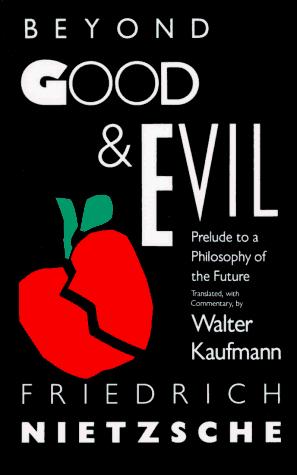
Beyond Good and Evil
by Friedrich Nietzsche · 1886
Nietzsche's aphoristic attack on centuries of moral philosophy, arguing that 'good' and 'evil' are historical inventions, not eternal truths, written to unsettle you on purpose.
Worth reading? Nietzsche doesn't build a tidy argument here, he fires aphorisms at the foundations of Western moral philosophy, arguing that what we call 'good' and 'evil' are historically contingent, often serving the interests of the weak against the strong (his 'slave morality' concept), rather than timeless truths handed down from above. It's dense, deliberately provocative, and rewards slow reading more than any book on this list. Read it if you want your assumptions about morality directly challenged. Skip it if you want a clean thesis with a conclusion, that's not what this book is for.
| Full Title | Beyond Good and Evil: Prelude to a Philosophy of the Future |
|---|---|
| Author | Friedrich Nietzsche |
| Published | 1886 |
| Category | Sociology & Culture |
| Favorite quote | “He who fights with monsters should look to it that he himself does not become a monster. And if you gaze long into an abyss, the abyss also gazes into you.” |
The Verdict
Nietzsche isn’t trying to win an argument here, he’s trying to dislodge assumptions you didn’t know you were making. Read slowly, expect discomfort, and don’t mistake the aphoristic style for looseness, every fragment is doing deliberate philosophical work.
readers ready to have their assumptions about morality directly challenged, in short, quotable bursts
you want a systematic argument with a clear conclusion, Nietzsche writes in aphorisms designed to provoke, not a linear case
Book Summary
Nietzsche's central provocation: philosophers before him treated morality as something to discover, a fixed truth about good and evil waiting to be found. He argues instead that moral systems are historical inventions that served specific power dynamics, and his famous 'master morality' versus 'slave morality' distinction traces how different eras and classes built ethics around what benefited their own position.
The aphoristic form is deliberate, Nietzsche wants readers to sit with contradiction and discomfort rather than follow a tidy syllogism to a comfortable conclusion. His targets include Christian morality's exaltation of weakness and self-denial, academic philosophy's pretense of objectivity, and the idea that any single moral framework applies universally across all people and eras.
Top 7 Lessons from Beyond Good and Evil
- Moral systems have histories and power dynamics behind them, they aren't handed down as fixed, eternal truths.
- 'Master morality' and 'slave morality' offer two different lenses for reading any ethical claim's origin.
- Discomfort with an idea isn't evidence it's wrong, Nietzsche writes specifically to produce that discomfort.
- Aphorism, not systematic argument, can be a deliberate philosophical method, not a shortcut.
- Question who benefits from a given moral framework before accepting it as universal truth.
- Self-denial and weakness aren't automatically virtuous, examine why a culture rewards them.
- Reading philosophy slowly, sitting with contradiction, often produces more insight than reading for a fast conclusion.
Top 4 Quotes from Beyond Good and Evil
"He who fights with monsters should look to it that he himself does not become a monster. And if you gaze long into an abyss, the abyss also gazes into you."
Friedrich Nietzsche, Beyond Good and Evil
"There are no facts, only interpretations."
Friedrich Nietzsche, Beyond Good and Evil
"There is master morality and slave morality."
Friedrich Nietzsche, Beyond Good and Evil
"Every profound thinker is more afraid of being understood than of being misunderstood."
Friedrich Nietzsche, Beyond Good and Evil
Frequently Asked Questions
Is Beyond Good and Evil worth reading?
Yes, if you want your assumptions about morality directly and deliberately challenged. It's dense and aphoristic rather than a linear argument, so expect to reread passages.
What is Beyond Good and Evil about?
Nietzsche's argument that Western moral concepts of 'good' and 'evil' are historically contingent inventions tied to power dynamics, not timeless, objective truths, developed through his 'master morality' versus 'slave morality' framework.
Is Beyond Good and Evil a good first Nietzsche book?
It's demanding but commonly used as an entry point, since it summarizes ideas Nietzsche developed across his career. Pair it with secondary commentary if it's your first serious philosophy text.
Ready to read it?
Get Beyond Good and Evil on Amazon