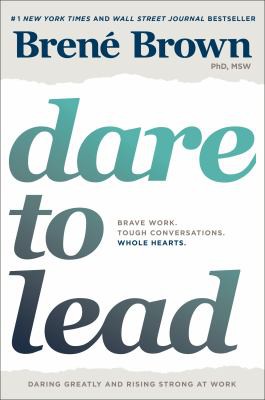
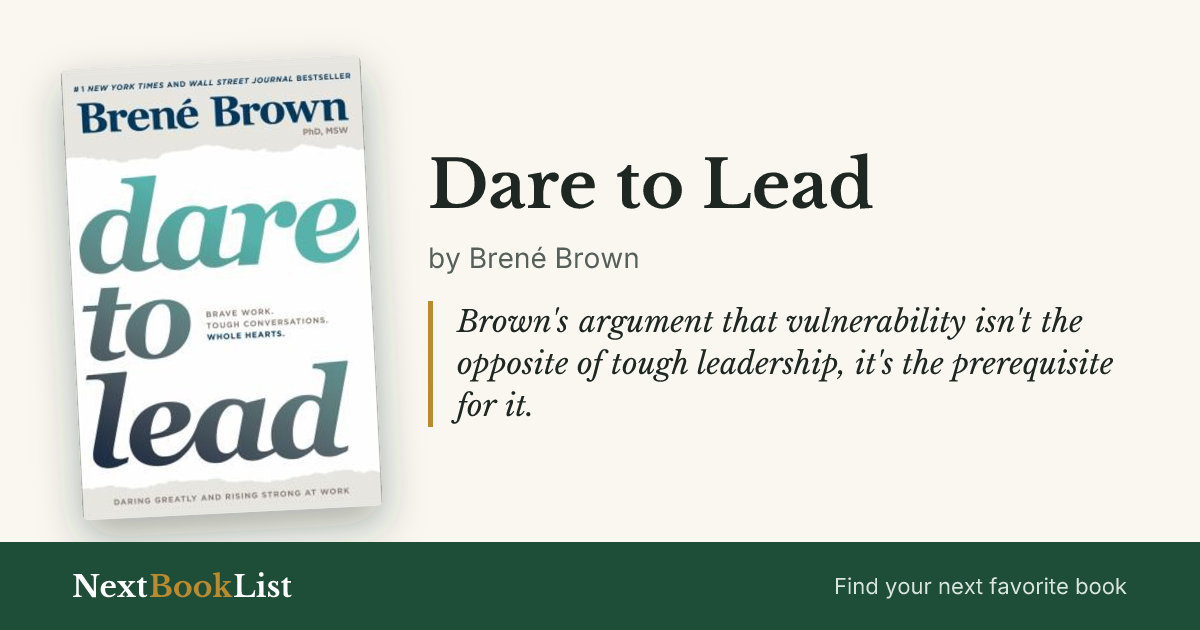
Dare to Lead
by Brené Brown · 2018
Brown's argument that vulnerability isn't the opposite of tough leadership, it's the prerequisite for it.
Worth reading? Dare to Lead takes the vulnerability research from Brown's earlier work and points it squarely at management. Compared to Radical Candor, it's less about the mechanics of feedback and more about why most leaders avoid hard conversations in the first place: they've confused armor with strength. The "clear is kind, unclear is unkind" line alone justifies the read for anyone managing people. Skip it if you already run a culture of blunt, fast feedback -- you've built the thing this book is arguing for.
| Full Title | Dare to Lead: Brave Work. Tough Conversations. Whole Hearts. |
|---|---|
| Author | Brené Brown |
| Published | 2018 |
| Publisher | Random House |
| Category | Business & Money |
| Favorite quote | “Clear is kind. Unclear is unkind.” |
The Verdict
Brown’s leadership thesis boils down to one line: clear is kind, unclear is unkind. Most managers think they’re being nice by softening feedback into mush, and Brown makes the case that’s actually the crueler move. If your team’s hard conversations keep getting avoided until they blow up, start here.
you manage people and keep hitting the same wall: nobody tells you the truth until it's too late
you want tactics for org charts and OKRs -- this is about courage and culture, not process
Book Summary
Brown's central claim: brave leadership requires the willingness to be vulnerable in front of your team, not armor and certainty. Leaders who can't tolerate discomfort default to silence, and silence lets small problems become disasters.
Clarity is an act of kindness, not cruelty. Vague feedback delivered "gently" is actually the unkind option, because it leaves people guessing and unable to improve.
Trust is built in small moments, not grand gestures. Brown's BRAVING acronym (boundaries, reliability, accountability, vault, integrity, nonjudgment, generosity) breaks trust down into behaviors you can actually practice and audit.
Top 9 Lessons from Dare to Lead
- Clear is kind. Unclear is unkind. Vague feedback is the cruel option, not the gentle one.
- Armor (perfectionism, cynicism, knowing it all) looks like strength but blocks real leadership.
- Rumbling with a problem means staying in the discomfort of a hard conversation instead of avoiding it.
- Trust is built or broken in small moments (the marble jar), not in one big gesture.
- Shame shuts down learning; call it out fast before it derails a team's performance.
- A leader's job is to name the elephant in the room, not manage around it.
- Values only count if you can name the two behaviors that operationalize them daily.
- Feedback conversations should open with 'I'm ready to hear the story you're telling yourself.'
- Perfectionism is not the same as high standards -- perfectionism is fear pretending to be a standard.
Top 4 Quotes from Dare to Lead
"Clear is kind. Unclear is unkind."
Brené Brown, Dare to Lead
"Vulnerability is not weakness; it's our greatest measure of courage."
Brené Brown, Dare to Lead
"You can't get to courage without rumbling with vulnerability."
Brené Brown, Dare to Lead
"Daring leaders work to make sure people can be their most authentic selves."
Brené Brown, Dare to Lead
Frequently Asked Questions
Is Dare to Lead worth reading for managers?
Yes -- if the recurring problem on your team is that hard conversations get avoided until they explode, this names why and gives you language to fix it.
What's the main idea of Dare to Lead?
Brave leadership requires vulnerability, not armor. Clarity in feedback is kindness; vagueness is cruelty dressed up as tact.
How is it different from Radical Candor?
Radical Candor focuses more on the mechanics of giving feedback. Dare to Lead spends more time on why leaders avoid the conversation at all -- the emotional armor underneath.
Ready to read it?
Get Dare to Lead on Amazon