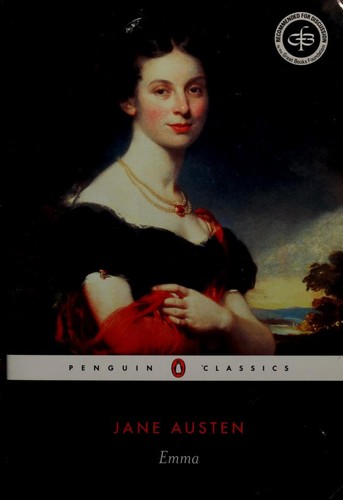
Emma
by Jane Austen · 1815
Emma Woodhouse, rich, clever, and convinced she's a matchmaking genius, is wrong about basically everyone, including herself, for 400 pages before she figures it out.
Worth reading? Emma is the best Jane Austen novel to start with if you want to see her working at full comic control, the heroine is wrong about nearly everything and the book knows it well before she does. It beats Pride and Prejudice for pure structural cleverness, though Pride and Prejudice still wins on pure charm. Skip it if you want a heroine you're meant to root for uncomplicatedly from page one.
| Author | Jane Austen |
|---|---|
| Published | 1815 |
| Publisher | Penguin Classics |
| Category | Fiction |
| Favorite quote | “Emma Woodhouse, handsome, clever, and rich, with a comfortable home and happy disposition, seemed to unite some of the best blessings of existence; and had lived nearly twenty-one years in the world with very little to distress or vex her.” |
The Verdict
What makes Emma hold up is how unlikable Austen is willing to let her heroine be. Emma isn’t cruel by nature, she’s careless with other people’s feelings because she’s never had a reason to be careful, and the novel makes you sit with the discomfort of that before it lets her earn any growth.
Read this instead of Pride and Prejudice when you want Austen’s sharpest comic structure rather than her most purely romantic plot. It’s less immediately lovable, but it’s the better-built book.
you want Austen's funniest, most tightly plotted novel, one where the heroine is genuinely flawed and has to earn her own growth instead of just waiting for a proposal
you want plot-heavy drama, this is a novel of manners and misjudged social maneuvering, low stakes by design, and it rewards patient readers over ones chasing incident
Book Summary
Emma Woodhouse, wealthy, clever, and used to getting her own way, decides she has a talent for matchmaking and sets about arranging the romantic lives of the people around her, especially her new friend Harriet Smith, with results that are disastrous and often completely invisible to Emma herself.
The novel is a masterclass in dramatic irony. Austen tells the story almost entirely through Emma's own flawed perspective, so readers catch her misjudgments long before Emma does, and that gap between what Emma believes and what's actually happening is the engine of most of the book's comedy.
Emma's real arc isn't finding romance, it's learning to see other people accurately instead of casting them in the plots she's invented for them. That's most painful in her treatment of the poor, talkative Miss Bates, and most quietly funny in how long it takes Emma to notice her own feelings for Mr. Knightley.
Top 10 Lessons from Emma
- Emma Woodhouse, rich, clever, and used to getting her way, decides she has a gift for matchmaking and starts arranging other people's romantic lives.
- She takes on Harriet Smith, a sweet but socially unremarkable young woman, as a protégée and steers her away from a genuine match, Robert Martin, toward men Emma judges more suitable.
- Austen tells the story almost entirely through Emma's perspective, so readers see Emma's misjudgments well before Emma does, that gap is the novel's main source of comedy.
- Emma's public mockery of Miss Bates at the Box Hill picnic is the novel's turning point, Mr. Knightley's direct rebuke forces her first real self-examination.
- Mr. Knightley functions as the novel's moral compass, one of the only people willing to criticize Emma directly instead of flattering her.
- Emma spends most of the novel oblivious to her own feelings for Knightley, having cast herself as matchmaker rather than participant in the marriage plot.
- Frank Churchill's secret engagement to Jane Fairfax runs as a hidden plot underneath Emma's schemes, exposing how much Emma misreads even the people closest to her.
- The novel is set almost entirely within the small social world of Highbury, Austen proving she doesn't need a large canvas to build a complete social comedy.
- Emma's father, Mr. Woodhouse, is a comic study in anxious hypochondria, and his dependence on Emma is part of why she's slow to imagine leaving home.
- By the end, Emma's growth is measured not by who she marries but by how much more accurately she's learned to see the people around her.
Top 5 Quotes from Emma
"Emma Woodhouse, handsome, clever, and rich, with a comfortable home and happy disposition, seemed to unite some of the best blessings of existence; and had lived nearly twenty-one years in the world with very little to distress or vex her."
Jane Austen, Emma
"Badly done, Emma!"
Jane Austen, Emma
"If I loved you less, I might be able to talk about it more."
Jane Austen, Emma
"It is such a happiness when good people get together, and they always do."
Jane Austen, Emma
"One half of the world cannot understand the pleasures of the other."
Jane Austen, Emma
Frequently Asked Questions
Is Emma worth reading?
Yes, it's Austen's tightest, most structurally clever novel, and Emma's flaws make her more interesting than a conventionally virtuous heroine. Skip it if you want low-friction charm over dramatic irony.
What is Emma about?
A wealthy young woman who fancies herself a talented matchmaker spends the novel meddling in her neighbors' romantic lives while remaining oblivious to her own feelings, until a public misstep forces her to actually grow up.
Is Emma hard to read?
No, it's Austen's prose at its wittiest and most controlled. The challenge, if any, is patience, this is a novel of small social misunderstandings, not incident-driven plot.
Is Emma better than Pride and Prejudice?
It's arguably Austen's most skillfully constructed novel, thanks to its dramatic irony, though Pride and Prejudice remains the more purely charming read. Start with whichever premise appeals more, a flawed heroine or a classic romance.
Ready to read it?
Get Emma on Amazon