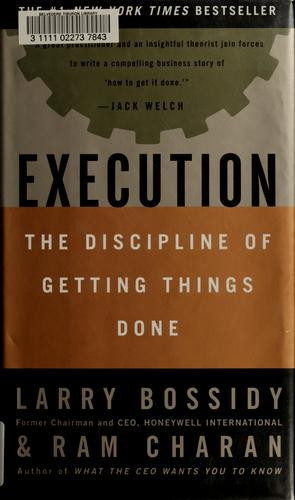
Execution
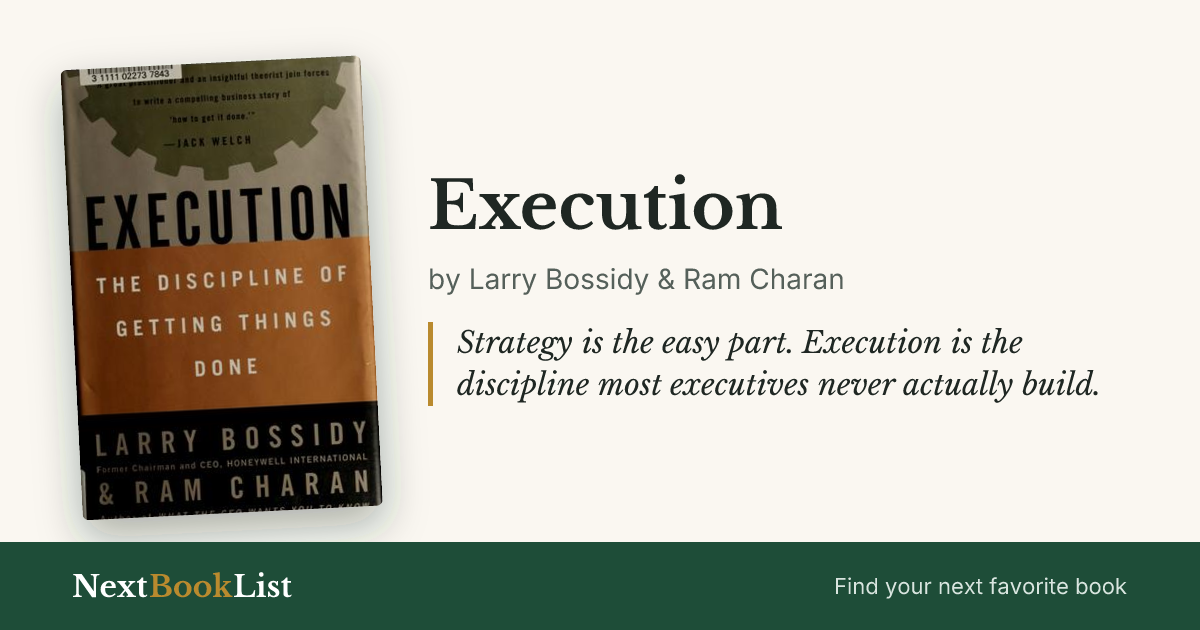
by Larry Bossidy & Ram Charan · 2002
Strategy is the easy part. Execution is the discipline most executives never actually build.
Worth reading? Execution is the buttoned-up, process-driven cousin to The Hard Thing About Hard Things. Ben Horowitz tells you what it feels like to execute under pressure with no good options; Bossidy and Charan give you the actual system -- linked people, strategy, and operations processes -- so you're not improvising every crisis from scratch. Read Execution if you want the operating discipline; read Horowitz's book alongside it for what it feels like when the discipline still isn't enough. Skip Execution if you're not yet responsible for a P&L or headcount decisions -- it's written for people already holding that bag.
| Full Title | Execution: The Discipline of Getting Things Done |
|---|---|
| Author | Larry Bossidy & Ram Charan |
| Published | 2002 |
| Publisher | Crown Business |
| Category | Business & Money |
| Favorite quote | “Execution is not just tactics -- it is a discipline and a system.” |
The Verdict
Bossidy ran Honeywell and AlliedSignal before writing this with Ram Charan, and it reads like a CEO annoyed at how many smart plans die from nobody actually owning the follow-through. It’s less inspiring than most leadership books and more useful for it – there’s no story arc here, just the system.
you've watched a good plan die in the gap between the strategy deck and what actually happened
you're not in a leadership role yet -- this is written for people who own P&L and headcount decisions
Book Summary
Bossidy (a former CEO) and Charan's thesis: execution isn't the tactical, unglamorous stuff you delegate once the "real" strategic thinking is done. It's a discipline in its own right, and most executives who fail, fail at execution, not strategy. Most strategic plans are fine on paper; almost none of them get done as written.
Execution runs on three core processes that have to link together: the people process (are the right people in the right roles, honestly assessed, not politely rated), the strategy process (a strategy grounded in operational reality rather than a wish list), and the operations process (translating strategy and people decisions into specific targets, deadlines, and real accountability).
A recurring theme is intellectual honesty, which most organizations quietly avoid. Leaders soften bad news, dodge the hard conversation about an underperforming executive, and let strategy reviews turn into presentations instead of real debate. Bossidy's fix is to stay close enough to the details to ask the right follow-up question, and to hold people to specific, dated commitments instead of vague intentions.
Top 11 Lessons from Execution
- Execution is a discipline, not the boring leftover after strategy is decided.
- Most plans fail in the doing, not in the thinking.
- Link the people process, strategy process, and operations process together.
- Put the right people in the right roles -- honestly assessed, not politely rated.
- A strategy not grounded in operational reality is just a wish.
- Turn strategy into specific targets with real deadlines and real owners.
- Intellectual honesty is rare in organizations, and it's the main thing missing.
- Leaders avoid the hard conversation about an underperforming exec far too long.
- Follow up relentlessly -- a plan without follow-through is just a suggestion.
- Being 'in the details' as a leader isn't micromanaging, it's how you catch reality early.
- Robust dialogue beats polite meetings where nobody disagrees out loud.
Top 4 Quotes from Execution
"Execution is not just tactics -- it is a discipline and a system."
Larry Bossidy & Ram Charan, Execution
"Many people regard execution as detail work that's beneath the dignity of a business leader. That's wrong."
Larry Bossidy & Ram Charan, Execution
"The gap nobody's talking about is the one between what leaders promise and what their organizations actually deliver."
Larry Bossidy & Ram Charan, Execution
"Without execution, the breakthrough thinking breaks down, learning adds no value, people don't meet their stretch goals, and the revolution stops dead in its tracks."
Larry Bossidy & Ram Charan, Execution
Frequently Asked Questions
Is Execution worth reading?
Yes, if you own a P&L or lead people directly. Bossidy and Charan treat execution as a learnable discipline with a specific system behind it, not a personality trait some leaders happen to have.
What is the main idea of Execution?
Most business failures come from poor execution, not poor strategy. Execution requires linking three processes -- people, strategy, and operations -- and running all three with intellectual honesty instead of politeness.
What are the three core processes in Execution?
The people process (right people, right roles, honest assessment), the strategy process (grounded in operational reality), and the operations process (turning decisions into specific, dated, owned targets).
Is Execution still relevant today?
The core argument -- that intellectual honesty and specific accountability beat polished plans -- hasn't dated, even though some of the early-2000s corporate examples have.
Ready to read it?
Get Execution on Amazon