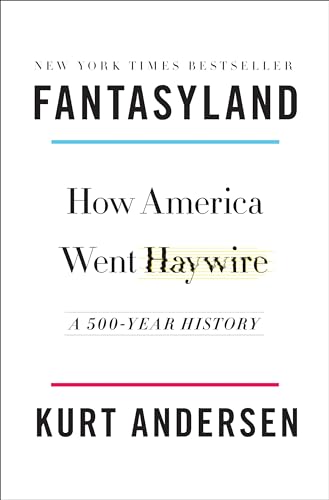
Fantasyland
by Kurt Andersen · 2017
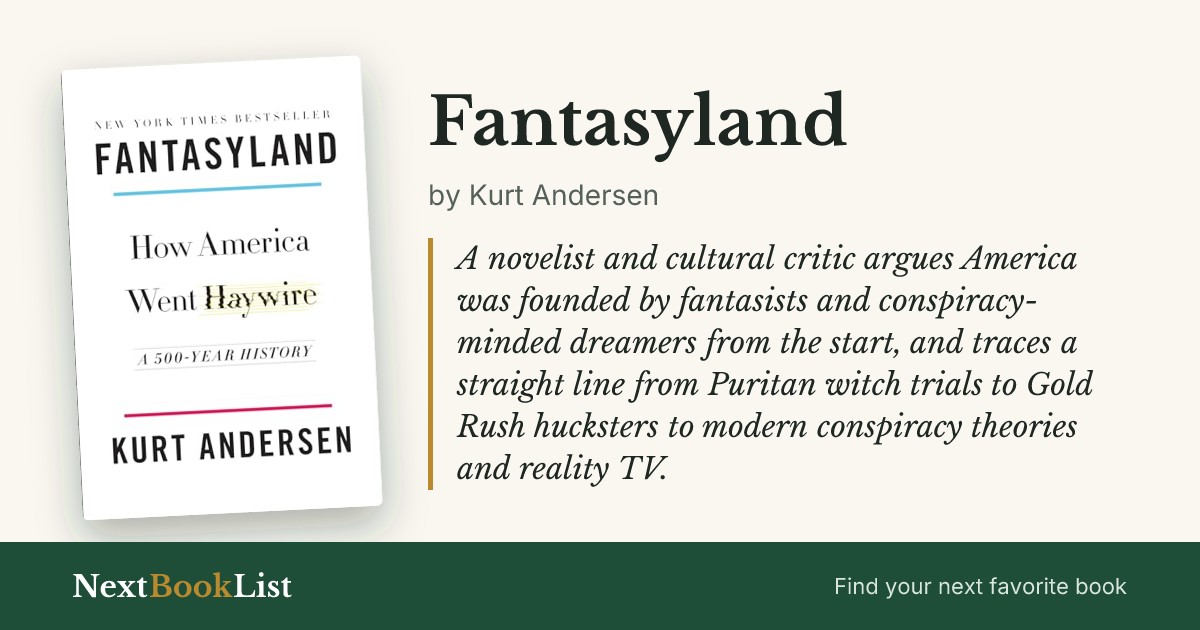
A novelist and cultural critic argues America was founded by fantasists and conspiracy-minded dreamers from the start, and traces a straight line from Puritan witch trials to Gold Rush hucksters to modern conspiracy theories and reality TV.
Worth reading? Andersen's thesis is that America was never the sober Enlightenment project of its founding myth -- it was settled and built by religious visionaries, gold-rush hucksters, and quack-cure salesmen, and that thread runs continuously through Christian Science, UFO culture, self-help gurus, and into modern conspiracy theories and reality television. It's a sprawling, ambitious argument, occasionally overextended (500 years is a lot to cover in one book), and written with the confident, sometimes glib voice of a magazine writer rather than a historian, but the connections he draws are genuinely illuminating even where you'd push back on the specifics.
| Full Title | Fantasyland: How America Went Haywire: A 500-Year History |
|---|---|
| Author | Kurt Andersen |
| Published | 2017 |
| Publisher | Random House |
| Category | Sociology & Culture |
| Favorite quote | “You're entitled to your own opinions and your own fantasies, but not your own facts -- especially if your fantastical facts hurt people.” |
The Verdict
Andersen’s pitch: forget the story where America is the sober child of the Enlightenment that recently went off the rails into conspiracy theories and alternative facts. His argument is that going off the rails was always the plan. The Puritans who settled New England believed in witches and prophecy. The Gold Rush ran on hucksters. Patent medicine sold miracle cures to millions. Fantasy, in his telling, isn’t a modern American bug. It’s the oldest feature there is.
That’s a genuinely fun thesis to watch him build, and the connections across five centuries are the best reason to read this. He’s sharpest in the middle stretch – 19th-century spiritualism, quack medicine, and the birth of American self-help culture read like the direct ancestors of Goop and self-help Instagram, and he makes the lineage stick.
Read it if you want a big, sweeping, well-written argument that reframes conspiracy culture and pseudoscience as continuous American history rather than a recent crisis. It’s genuinely entertaining, written with a magazine writer’s confidence and pace.
Skip it if you want careful, footnoted history. Andersen is a novelist and essayist, not a historian, and it shows – the argument moves fast and loose in places, and some historians have pushed back on how neatly he links 1960s counterculture relativism to modern conspiracy culture; that’s more provocative thesis than settled cause-and-effect. Also skip it if you’re hoping the book lets your own political tribe off the hook – Andersen spreads the blame across the spectrum, and depending on your priors, that will read as either admirably evenhanded or frustratingly both-sides.
you want a sweeping, provocative argument that America's current tolerance for conspiracy theories, pseudoscience, and alternative facts isn't a recent breakdown but a 500-year national habit
you want a book that spares any particular political side -- Andersen aims his critique at New Age wellness culture, fringe religion, and conspiracy thinking across the spectrum, and readers looking for a partisan gotcha book (in either direction) will find it more evenhanded, and more exhausting, than expected
Book Summary
Andersen argues that magical, wishful, reality-optional thinking isn't a modern American pathology but a foundational national character trait, present from the earliest colonial settlements (many founded by religious visionaries and fantasists) straight through the present.
He traces a continuous lineage from Puritan supernaturalism and the Salem witch trials, through 19th-century spiritualism, patent medicine, and Gold Rush-era hucksterism, to 20th-century self-help culture, UFO conspiracy theories, and New Age spirituality, arguing each era's fantasists borrowed the same rhetorical moves.
A key turning point, in his account, is the 1960s counterculture's embrace of "do your own thing" relativism -- which he argues, somewhat controversially, created cultural permission structures on the left that later fed both New Age pseudoscience and, eventually, right-wing conspiracy culture's own version of "your truth."
The book's back half connects this long history to cable news, talk radio, and internet culture, arguing that media fragmentation didn't invent American fantasy-thinking, it just gave a 500-year-old habit far more efficient distribution.
Top 8 Lessons from Fantasyland
- America's founding settlements were disproportionately populated by religious visionaries and fantasists, not sober Enlightenment rationalists -- the myth of a purely rational founding is itself a kind of fantasy.
- Conspiracy thinking and pseudoscience in America predate mass media by centuries -- the Salem witch trials and 19th-century spiritualism show the pattern long before radio or the internet existed.
- Patent medicine and Gold Rush-era hucksterism established a durable American template: confident salesmanship outperforming verifiable truth.
- The 1960s counterculture's relativism ('do your own thing,' 'your truth') created a permission structure that Andersen argues fed both New Age culture and later conspiracy culture, across the political spectrum.
- Media fragmentation (cable news, talk radio, the internet) didn't create American fantasy-thinking -- it gave a pre-existing national habit dramatically more efficient distribution and reinforcement.
- Self-help and wellness culture share a rhetorical lineage with 19th-century quack medicine: both promise transformation through belief and confident marketing rather than evidence.
- Reality television normalized a blurred line between authentic and performed reality that Andersen connects to Americans' broader tolerance for treating fantasy as functionally true.
- The pattern isn't confined to one political side -- Andersen extends the critique to New Age spirituality and fringe wellness culture as much as to right-wing conspiracy theories.
Top 3 Quotes from Fantasyland
"You're entitled to your own opinions and your own fantasies, but not your own facts -- especially if your fantastical facts hurt people."
Kurt Andersen, Fantasyland
"It will require a struggle to try to make America reality-based again."
Kurt Andersen, Fantasyland
"Donald Trump is a pure Fantasyland being, its apotheosis."
Kurt Andersen, Fantasyland
Frequently Asked Questions
Is Fantasyland worth reading?
Yes, if you want a big, provocative argument connecting 500 years of American conspiracy thinking, religious fantasy, and pseudoscience into one continuous story. It's a magazine writer's sweeping essay stretched to book length, not a tightly sourced academic history, so read it for the argument, not for footnote-level rigor.
What is Fantasyland's main argument?
That America was founded and built by religious visionaries, hucksters, and fantasists, and that this tolerance for reality-optional thinking runs continuously from Puritan times through modern conspiracy culture and reality TV, rather than being a recent breakdown.
Is Fantasyland politically one-sided?
Andersen aims criticism in both directions -- at New Age wellness culture and 1960s countercultural relativism as much as at right-wing conspiracy theories -- though some readers on both sides have felt the balance tips against their side more.
How does Fantasyland connect to modern politics?
The book's later chapters argue that cable news and internet fragmentation didn't invent American conspiracy thinking, they just gave a 500-year-old habit much faster, more efficient distribution.
Ready to read it?
Get Fantasyland on Amazon