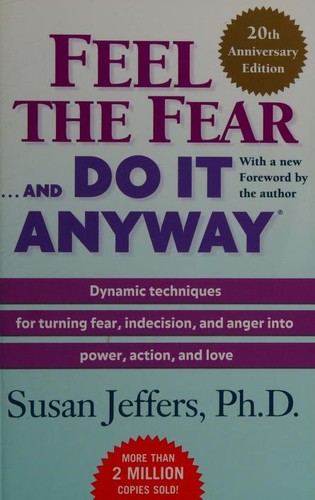
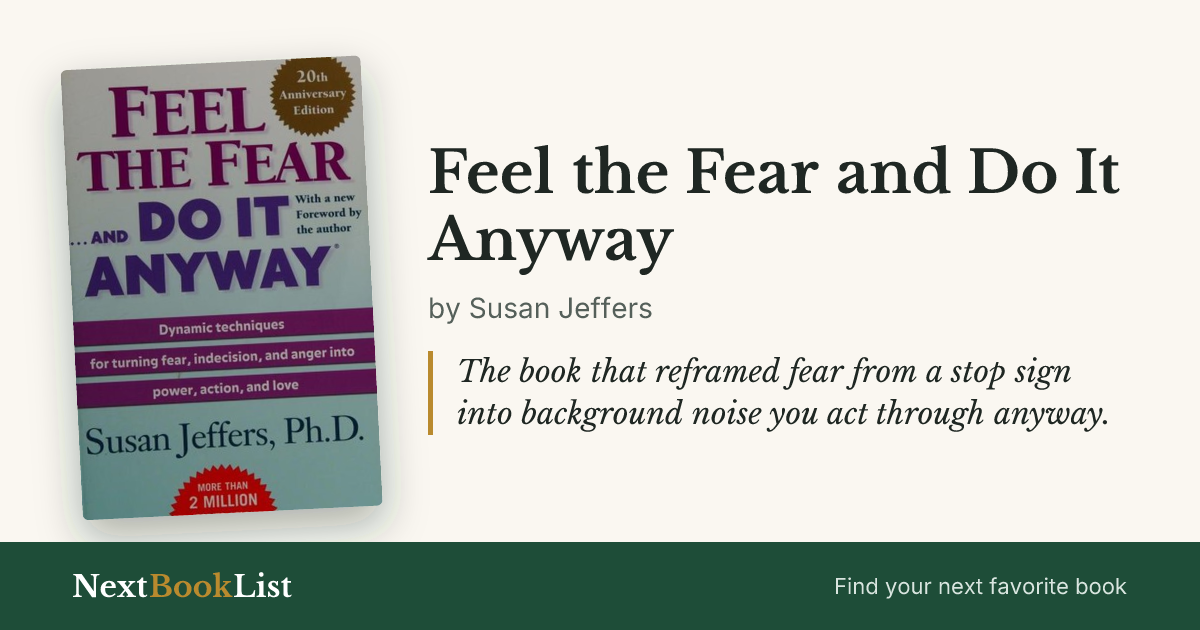
Feel the Fear and Do It Anyway
by Susan Jeffers · 1987
The book that reframed fear from a stop sign into background noise you act through anyway.
Worth reading? The title is the thesis, and Jeffers proves it works as a mantra: fear never fully goes away, competence comes from acting despite it, not from waiting for it to pass. It's thinner on concrete technique than Feeling Good or Learned Optimism, so treat it as a mindset primer you read once and carry the title phrase from, not a workbook you'll return to.
| Author | Susan Jeffers |
|---|---|
| Published | 1987 |
| Category | Self-Improvement & Psychology |
| Favorite quote | “Feel the fear and do it anyway.” |
The Verdict
Jeffers writes in short, direct bursts built for rereading before a scary decision, not for one long sitting. The core reframe (fear is permanent, competence is action despite it) is genuinely useful and easy to carry around as a mantra. Don’t expect a system – expect a nudge, delivered well.
you're stuck in analysis-paralysis before a decision and need permission to act while still scared
you want a tactical framework or step-by-step system, this is more mindset reframe than method
Book Summary
Fear doesn't go away once you become successful or experienced -- it's a permanent companion to anyone doing anything that matters, and waiting for it to disappear before acting means waiting forever. The people who look fearless have simply built a habit of acting alongside the fear instead of after it.
Jeffers also pushes back on the idea that any single decision is truly a "wrong choice" you need to protect yourself from. Most decisions are recoverable, and the energy spent agonizing over the "right" choice is better spent building the skills to handle whatever choice you make.
Top 7 Lessons from Feel the Fear and Do It Anyway
- Fear doesn't disappear with experience -- competent people act alongside it, not after it fades.
- Waiting to feel ready before acting means waiting indefinitely.
- Most decisions are recoverable; there's rarely one 'wrong choice' that ruins everything.
- Shift from 'I can't handle it' to 'I can handle whatever happens' -- the second is usually more true.
- Every time you act despite fear, the fear has less power over the next decision.
- Complaining about a stuck situation without acting keeps you stuck longer than the fear itself does.
- Say yes to opportunities before you feel fully prepared -- readiness is built by doing, not before.
Top 4 Quotes from Feel the Fear and Do It Anyway
"Feel the fear and do it anyway."
Susan Jeffers, Feel the Fear and Do It Anyway
"All you have to do to diminish your fear is to develop more trust in your ability to handle whatever comes your way."
Susan Jeffers, Feel the Fear and Do It Anyway
"Not choosing is a choice."
Susan Jeffers, Feel the Fear and Do It Anyway
"Whatever happens to you in life, you'll be able to handle it."
Susan Jeffers, Feel the Fear and Do It Anyway
Frequently Asked Questions
Is Feel the Fear and Do It Anyway worth reading?
Yes, as a short, motivating reframe on fear and decision-making. It's light on concrete technique compared to CBT-based books, so treat it as a mindset primer, not a workbook.
What is the main idea of Feel the Fear and Do It Anyway?
Fear never fully disappears, even for successful people. Confidence comes from acting despite fear repeatedly, not from waiting for fear to go away first.
Is Feel the Fear and Do It Anyway good for decision-making?
It's useful for breaking analysis-paralysis by reframing most decisions as recoverable, but it doesn't give a structured decision-making method the way a book like Thinking, Fast and Slow does.
How is this different from Learned Optimism?
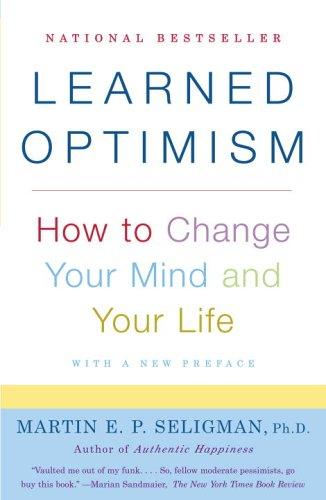
Feel the Fear is a mindset and motivation book focused on action despite fear. Learned Optimism is a more research-grounded look at explanatory style and resilience.
Ready to read it?
Get Feel the Fear and Do It Anyway on Amazon