Best Books on Self-Belief and Mindset: 5 Ranked by How Woo It Gets

Updated July 16, 2026 · 5 books

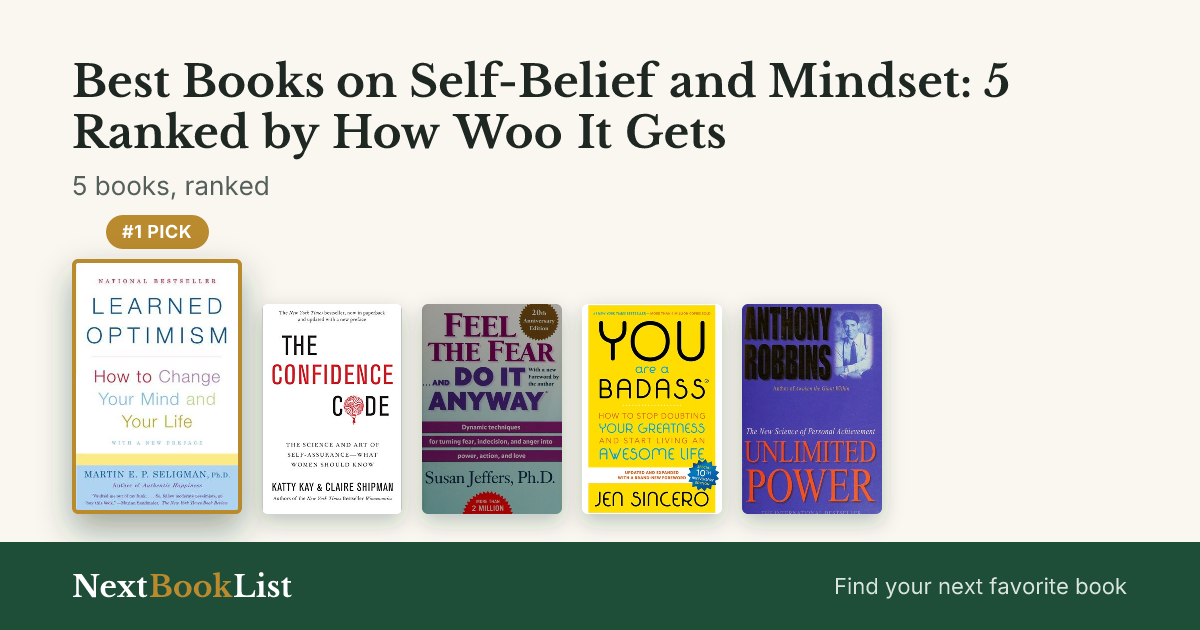
Best Books on Self-Belief and Mindset: 5 Ranked by How Woo It Gets: ranked list of 5 books

Rank these by evidence, not popularity, and the order changes. Learned Optimism is the most scientifically grounded book here – Martin Seligman’s explanatory-style research founded positive psychology as a field, and the book’s three-dimension framework for how you narrate setbacks to yourself (permanent or temporary, pervasive or specific, personal or circumstantial) is one of the more useful diagnostic tools in the whole genre. Start here if you want the why before the pep talk.

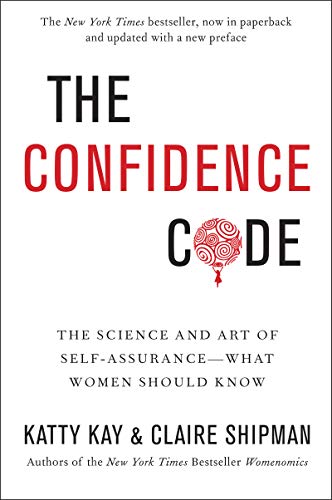
The Confidence Code sits close behind on rigor. Katty Kay and Claire Shipman treat confidence as a trainable skill separate from competence, and back it with neuroscience and interviews rather than personal anecdote alone. It’s specifically framed around the confidence gap between men and women, so it’s the sharpest pick if that’s your actual question.

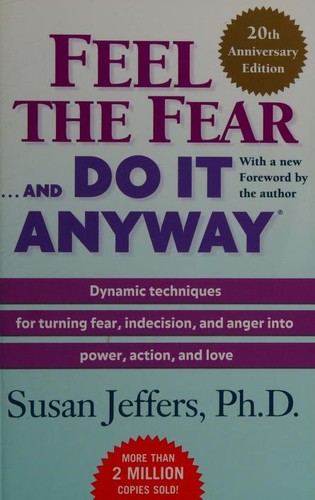
Feel the Fear and Do It Anyway is older and thinner on technique than the first two, but the core reframe (fear never fully disappears, competent people act alongside it) has held up since 1987 for a reason. Treat it as a mantra you carry into a scary decision, not a workbook.

You Are a Badass and Unlimited Power are a different register entirely, and it’s worth being honest about that instead of pretending all five books are doing the same job. Jen Sincero writes like your funniest, most impatient friend, and Tony Robbins builds on NLP techniques like anchoring and modeling excellence. Both work if you already know your problem and need momentum, not a diagnosis. Neither is trying to be a research book, and neither should be judged like one.

One warning: don’t mistake energy for evidence. A book that makes you feel fired up for a week isn’t the same as one that changes your explanatory style for good – if you only have time for one, the research-backed pick at the top of this list will do more for you long-term than the loudest one at the bottom.

Quick Comparison

#BookBest for
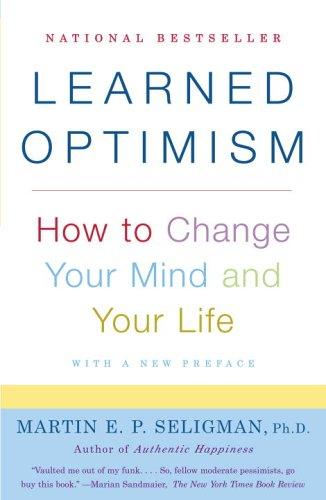
1Learned OptimismMartin Seligmanyou want the research-backed case for why explanatory style shapes resilience, with a real test to diagnose your ownAmazon
2The Confidence CodeKatty Kay & Claire Shipmanyou're more competent than you give yourself credit for and it's costing you opportunitiesAmazon
3Feel the Fear and Do It AnywaySusan Jeffersyou're stuck in analysis-paralysis before a decision and need permission to act while still scaredAmazon
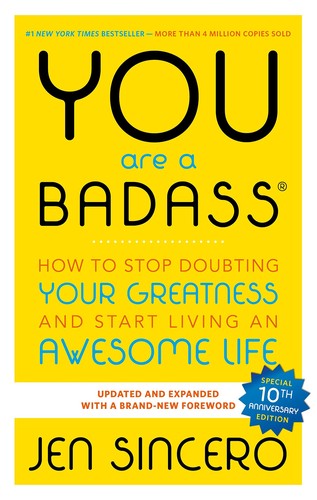
4You Are a BadassJen Sinceroyou know exactly what's holding you back and need a swift kick more than another frameworkAmazon
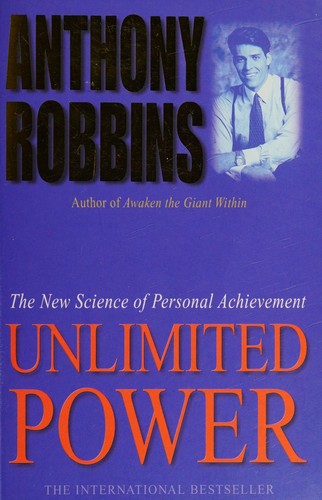
5Unlimited PowerTony Robbinsyou want the original, more grounded Robbins before the seminar-stage persona took overAmazon

The Books

Learned Optimism by Martin Seligman book cover

1. Learned Optimism

Martin Seligman · 1991

The research that founded positive psychology, built on one simple finding: how you explain bad events to yourself predicts whether you give up.

Seligman writes as a research psychologist, and the book carries the weight of decades of studies rather than anecdote, which makes it slower going than most books on this list but more convincing. The three-dimension framework (permanence, pervasiveness, personalization) is genuinely one of the more useful diagnostic tools in the whole self-improvement genre.

Read it if: you want the research-backed case for why explanatory style shapes resilience, with a real test to diagnose your own

Skip it if: you want a quick motivational read, this is a research book first, with a self-help layer on top, and it reads accordingly
Full verdict: Learned Optimism →

The Confidence Code by Katty Kay & Claire Shipman book cover

2. The Confidence Code

Katty Kay & Claire Shipman · 2014

The book that treats confidence as a skill you build, not a trait you're born with.

Katty Kay and Claire Shipman set out to answer why competent women still hold back, and came back with a research-backed case that confidence is a separate, trainable skill from competence itself. The Confidence Code is less about mindset tricks than about proving the gap is real and showing what actually closes it. Read it if being right isn’t translating into being heard.

Read it if: you're more competent than you give yourself credit for and it's costing you opportunities

Skip it if: you want a step-by-step action plan -- this is closer to a research-backed explainer than a workbook

Full verdict: The Confidence Code →

Feel the Fear and Do It Anyway by Susan Jeffers book cover

3. Feel the Fear and Do It Anyway

Susan Jeffers · 1987

The book that reframed fear from a stop sign into background noise you act through anyway.

Jeffers writes in short, direct bursts built for rereading before a scary decision, not for one long sitting. The core reframe (fear is permanent, competence is action despite it) is genuinely useful and easy to carry around as a mantra. Don’t expect a system – expect a nudge, delivered well.

Read it if: you're stuck in analysis-paralysis before a decision and need permission to act while still scared

Skip it if: you want a tactical framework or step-by-step system, this is more mindset reframe than method

Full verdict: Feel the Fear and Do It Anyway →

You Are a Badass by Jen Sincero book cover

4. You Are a Badass

Jen Sincero · 2013

The self-help book that yells at you to stop doubting yourself and actually do something.

Jen Sincero built a career on saying the thing your inner critic won’t shut up about, then telling you to ignore it anyway. This isn’t a book of frameworks – it’s a book of permission, delivered with enough humor that the tough love doesn’t feel like a lecture. Read it when you’re stuck in your own head, not when you’re looking for a step-by-step plan.

Read it if: you know exactly what's holding you back and need a swift kick more than another framework

Skip it if: you want citations and hard research instead of hype and pep talks

Full verdict: You Are a Badass →

Unlimited Power by Tony Robbins book cover

5. Unlimited Power

Tony Robbins · 1986

Robbins' first book, and the one where the NLP-fueled state-management pitch is still fresh instead of recycled.

This is Robbins before he became a caricature of himself – more technique, less arena-scale showmanship. The NLP scaffolding (anchoring, modeling, state control) is genuinely where a lot of modern “peak performance” content quietly borrows from, even when it doesn’t credit him. Still, if you’re only going to own one Robbins book, make it the later one.

Read it if: you want the original, more grounded Robbins before the seminar-stage persona took over

Skip it if: you already own Awaken the Giant Within, the two overlap heavily and you don't need both

Full verdict: Unlimited Power →

Frequently Asked Questions

What is the best book on self-belief and mindset?

Learned Optimism, if you want the most scientifically grounded case. Martin Seligman founded positive psychology on the research in this book, and its explanatory-style framework is the most rigorously evidenced idea on this list. If you want something punchier and less academic, You Are a Badass is the better starting point.

Are these books all equally research-backed?

No, and that's the point of ranking them this way. Learned Optimism and The Confidence Code are built on studies. Feel the Fear and Do It Anyway is a mindset reframe with real ideas but light on citations. You Are a Badass and Unlimited Power are motivational -- genuinely useful for momentum, but they lean on anecdote and energy more than evidence.

Is You Are a Badass just hype with no substance?

It's hype with a real idea underneath: self-doubt is a habit, not a fact, and confidence follows action instead of preceding it. That's a legitimate insight. Just know going in that it's delivered as a pep talk, not a research summary, and there's spiritual "Universe" language mixed in that won't land for every reader.

I want a book specifically about the confidence gap between men and women. Which one?

The Confidence Code. Katty Kay and Claire Shipman interview neuroscientists and businesswomen to make the case that competence alone doesn't close the gap -- action and tolerance for failure do. It's more targeted than the general-audience books on this list.

What's the difference between You Are a Badass and Unlimited Power?

Both are high-energy motivational reads, but Unlimited Power leans on Tony Robbins' NLP background -- state management, anchoring, modeling excellence -- while You Are a Badass is closer to a funny, blunt pep talk with less technique underneath it. If you're only picking one, Robbins fans should read Awaken the Giant Within instead; this earlier book is mostly for completists.

Keep Reading