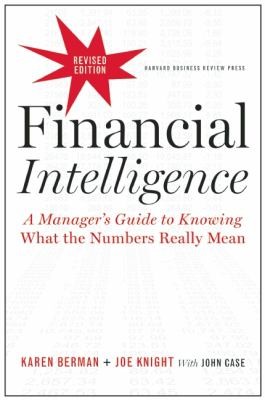
Financial Intelligence
by Karen Berman and Joe Knight · 2013
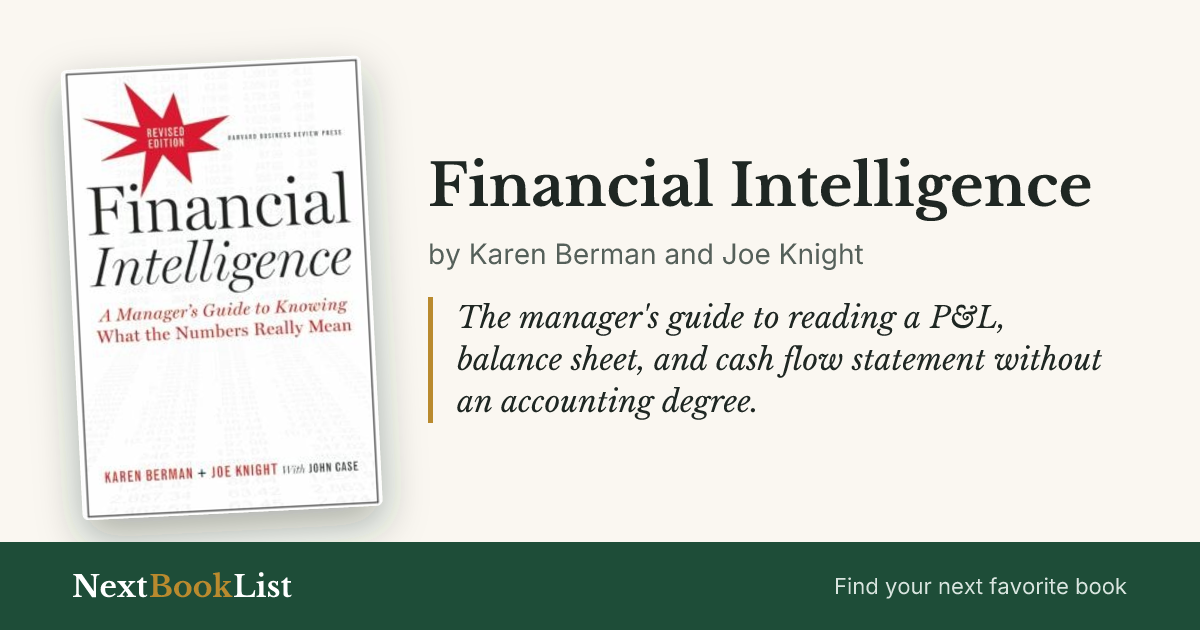
The manager's guide to reading a P&L, balance sheet, and cash flow statement without an accounting degree.
Worth reading? Berman and Knight's whole premise is that most managers nod along in finance meetings without actually understanding the numbers, and that gap costs real decisions. The book is refreshingly honest that accounting involves estimates and judgment calls, not pure objective truth, which is the insight that actually changes how you read a report. Skip it if you already have formal financial training; this is built for the gap, not to add nuance for people who've closed it.
| Full Title | Financial Intelligence, Revised Edition: A Manager's Guide to Knowing What the Numbers Really Mean |
|---|---|
| Author | Karen Berman and Joe Knight |
| Published | 2013 |
| Category | Business & Money |
The Verdict
Berman and Knight’s whole premise is that most managers nod along in finance meetings without actually understanding the numbers, and that gap costs real decisions. The book is refreshingly honest that accounting involves estimates and judgment calls, not pure objective truth, which is the insight that actually changes how you read a report. Skip it if you already have formal financial training; this is built for the gap, not to add nuance for people who’ve closed it.
managers who make decisions off financial reports they don't fully understand
you're already a trained accountant or finance professional
Book Summary
The manager's guide to reading a P&L, balance sheet, and cash flow statement without an accounting degree. It earns its place by closing the single biggest blind spot most non-finance managers have. Financial statements involve estimates and assumptions, not just objective facts. Profit is an opinion; cash is a fact. The practical move is to read it once, then act on the one idea that maps to your current bottleneck, rereading the whole thing rarely adds more than executing the part you skipped.
Top 14 Lessons from Financial Intelligence
- Financial statements involve estimates and assumptions, not just objective facts, accounting is part art.
- Profit is an opinion; cash is a fact, a profitable company can still run out of cash.
- The three core statements are the income statement, the balance sheet, and the cash flow statement.
- A balance sheet balances because assets always equal liabilities plus equity.
- Financial intelligence is a learned skill set, not an innate talent reserved for finance people.
- Working capital management is where many otherwise-healthy businesses actually fail.
- Return on invested capital tells you more about performance than revenue growth alone.
- Every manager's decisions eventually show up somewhere on the three financial statements.
- Asking what assumption sits under a number is often more useful than asking what the number is.
- The four areas of financial intelligence are the foundation, the art, the big picture, and business acumen.
- Profit and cash rarely move in the same period, so cash-flow timing can quietly sink a company.
- Accrual accounting lets you show profit before the cash arrives, which is exactly why cash can disappear.
- Managers who understand the numbers make better trade-off calls, like price versus volume.
- Taught across an organization, financial fluency becomes a core competency that improves results and morale.
Frequently Asked Questions
Is Financial Intelligence worth reading?
Yes, if the description fits you, managers who make decisions off financial reports they don't fully understand. Skip it if you're already a trained accountant or finance professional.
What is the main idea of Financial Intelligence?
Berman and Knight teach non-finance managers to actually read a P&L, balance sheet, and cash flow statement, and to understand that financial numbers involve judgment calls, not pure objective fact.
Who should read Financial Intelligence?
Managers who make decisions off financial reports they don't fully understand. Skip it if you already have formal financial training.
What will you get out of Financial Intelligence?
A clearer, opinionated take you can act on, plus the sharpest lessons pulled into a short list so you don't have to read the whole book to decide.
Ready to read it?
Get Financial Intelligence on Amazon