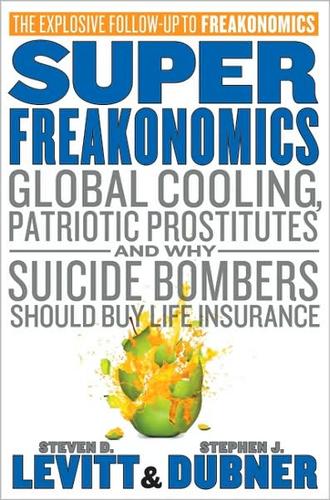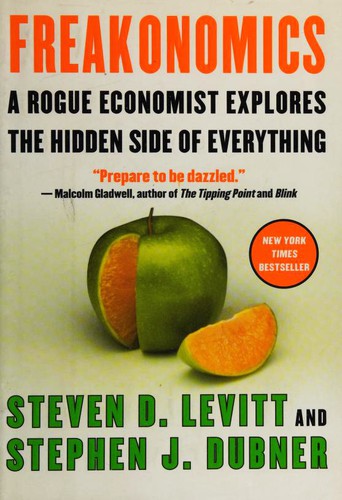
Freakonomics
by Steven D. Levitt · 2005
Steven D. Levitt's take on business, the honest verdict is below.
Worth reading? Levitt and Dubner prove economics is just the study of incentives applied to anything, sumo, drugs, baby names. Read it before you trust any 'common sense' social claim; skip it if you hate playful stats, because that's the whole vibe.
| Author | Steven D. Levitt |
|---|---|
| Published | 2005 |
| Category | Business & Money |
| Favorite quote | “Incentives are the cornerstone of modern life.” |
The Verdict
Levitt and Dubner prove economics is just the study of incentives applied to anything, sumo, drugs, baby names. Read it before you trust any ‘common sense’ social claim; skip it if you hate playful stats, because that’s the whole vibe.
anyone weighing whether Freakonomics belongs on their business and money shelf
you want a different angle than Steven D. Levitt's
Top 8 Lessons from Freakonomics
- Incentives drive behavior in every field, not just markets.
- Correlation is not causation; clever data separates them.
- Information asymmetry lets some people cheat undetected.
- Conventional wisdom is often wrong because it's comfortable, not true.
- Small changes (like legalized abortion) can move huge outcomes (crime).
- Experts and middlemen often profit from keeping you confused.
- Naming trends reveal hidden social signals (baby names).
- Asking weird questions uncovers the real mechanics of society.
Top 3 Quotes from Freakonomics
"Morality, it could be argued, represents the way that people would like the world to work; economics represents how it actually does work."
Steven D. Levitt, Freakonomics
"Incentives are the cornerstone of modern life."
Steven D. Levitt, Freakonomics
"Economics is, at root, the study of incentives: how people get what they want, or need, especially when other people want or need the same thing."
Steven D. Levitt, Freakonomics
Frequently Asked Questions
Is Freakonomics worth reading?
Yes for anyone who likes seeing the world upside down with data.
What is the main idea of Freakonomics?
That incentives and information explain strange human behavior better than moralizing.
Who should read Freakonomics?
Curious readers, students, and skeptics of common sense.
Ready to read it?
Get Freakonomics on Amazon