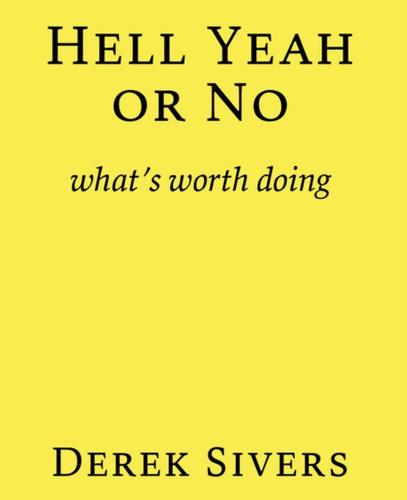
Hell Yeah or No
by Derek Sivers · 2020
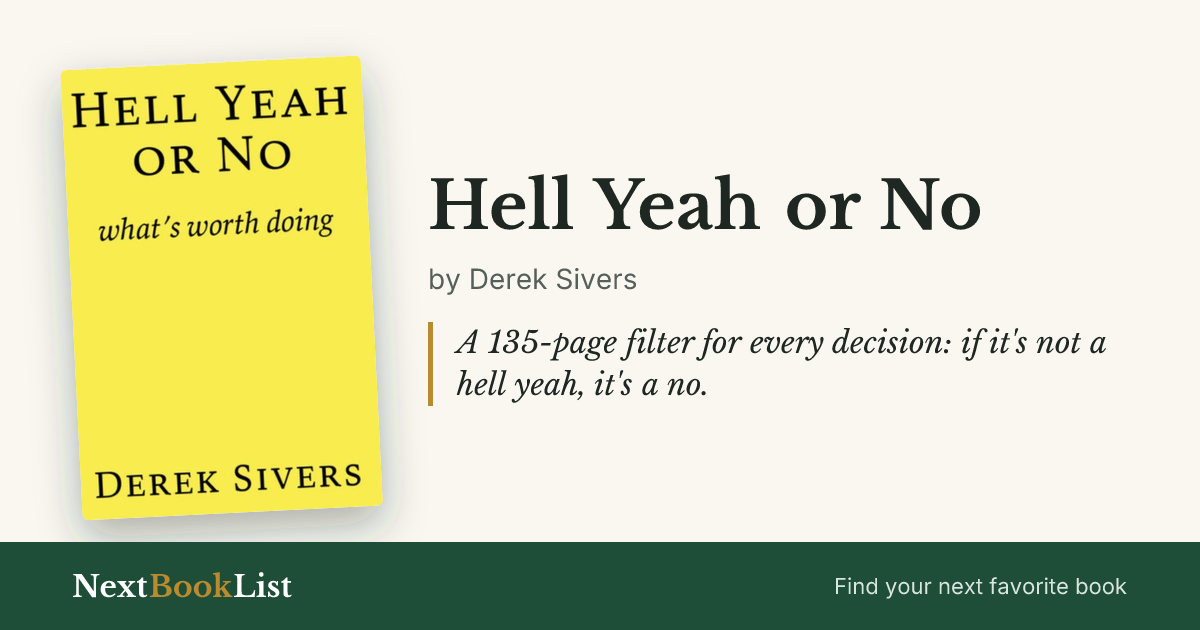
A 135-page filter for every decision: if it's not a hell yeah, it's a no.
Worth reading? Hell Yeah or No is the sharpest short filter for overcommitment on the shelf: if your answer to an opportunity isn't an enthusiastic yes, it's a no, full stop. Compared to Essentialism, it's far shorter and more aphoristic, less argument, more usable rule. Skip it if you want depth and narrative; this is closer to a collection of short, sharp essays than a single developed book.
| Full Title | Hell Yeah or No: What's Worth Doing |
|---|---|
| Author | Derek Sivers |
| Published | 2020 |
| Publisher | Hit Media |
| Category | Self-Improvement & Psychology |
| Favorite quote | “Hell yeah or no. Spend time doing/working/being things you love and are passionate about. If it doesn't excite you, and you don't have to do it, say no.” |
The Verdict
Sivers built his reputation on compressing big ideas into a sentence, and this book is that skill applied to overcommitment. The filter is almost insultingly simple: hell yeah or no. But the simplicity is the point, most people don’t need a more nuanced decision framework, they need permission to stop saying yes to things that don’t excite them.
It reads fast because it’s built to be read fast, short essays, most under a page, meant to be applied the same day rather than studied. That makes it a weaker pick if you want a single sustained argument like Essentialism gives you, but a stronger pick if your actual problem is that you keep committing to things you don’t want to do.
Skip it if you’re after depth or narrative, this won’t give you either. But as a fast gut-check before saying yes to the next thing on your calendar, it’s hard to beat.
you say yes to too much and it's spreading you thin across things you don't actually want to do
you want a long, developed argument -- this is a collection of short essays, most under a page, not a single sustained thesis
Book Summary
Most bad time commitments come from saying a lukewarm yes. Sivers's filter collapses the decision: if it's not an enthusiastic "hell yeah," treat it as a no, because middling opportunities crowd out the ones you'd actually love.
Goals and inspiration work differently than most advice assumes. A vague goal ("someday I'll...") rarely produces action; a genuinely great goal makes you want to start immediately, which is itself the test of whether it's worth pursuing.
Small, sharp essays beat one long argument for changing behavior. Sivers writes in short bursts on purpose, each one built to be read, applied, and acted on in a single sitting rather than absorbed as theory over a whole book.
Top 8 Lessons from Hell Yeah or No
- If your answer to an opportunity isn't an enthusiastic 'hell yeah,' treat it as a no -- don't leave room for lukewarm yeses.
- A genuinely great goal makes you want to act immediately; if it doesn't, question whether it's actually your goal.
- Middling commitments crowd out the few things you'd actually love doing -- protect your calendar from them.
- Don't wait for external permission or inspiration to start something real; the desire to start is often the whole signal.
- Skip the 'someday' career or art project fantasy -- decide now, or admit it's not actually a priority.
- Say no by default to anything that isn't a clear yes; explaining the no in detail is optional and often unnecessary.
- Revisit your commitments periodically -- something that was a hell yeah a year ago may not be one now.
- Treat inspiration literally as 'breathing in' ideas -- but remember you also have to breathe out and act on them.
Top 2 Quotes from Hell Yeah or No
"Hell yeah or no. Spend time doing/working/being things you love and are passionate about. If it doesn't excite you, and you don't have to do it, say no."
Derek Sivers, Hell Yeah or No
"A bad goal makes you say, 'I want to do that some day.' A great goal makes you take action immediately."
Derek Sivers, Hell Yeah or No
Frequently Asked Questions
Is Hell Yeah or No worth reading?
Yes, if you say yes to too much and want a single, fast filter to fix it. It's short enough to read in one sitting and apply immediately.
What is the main idea of Hell Yeah or No?
If an opportunity isn't an enthusiastic 'hell yeah,' treat it as a no. Middling commitments crowd out the few things you'd actually love doing.
How is it different from Essentialism?
Essentialism builds a longer, more developed argument for doing less but better. Hell Yeah or No is a collection of short essays built around one usable rule, faster to read, less depth per idea.
Who should read Hell Yeah or No?
Anyone who overcommits out of guilt or FOMO. Skip it if you want a single sustained argument rather than a set of short, punchy essays.
Ready to read it?
Get Hell Yeah or No on Amazon