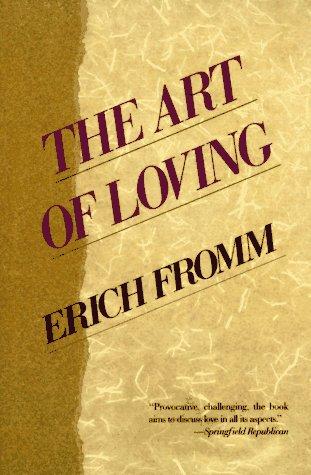
The Art of Loving
by Erich Fromm · 1956
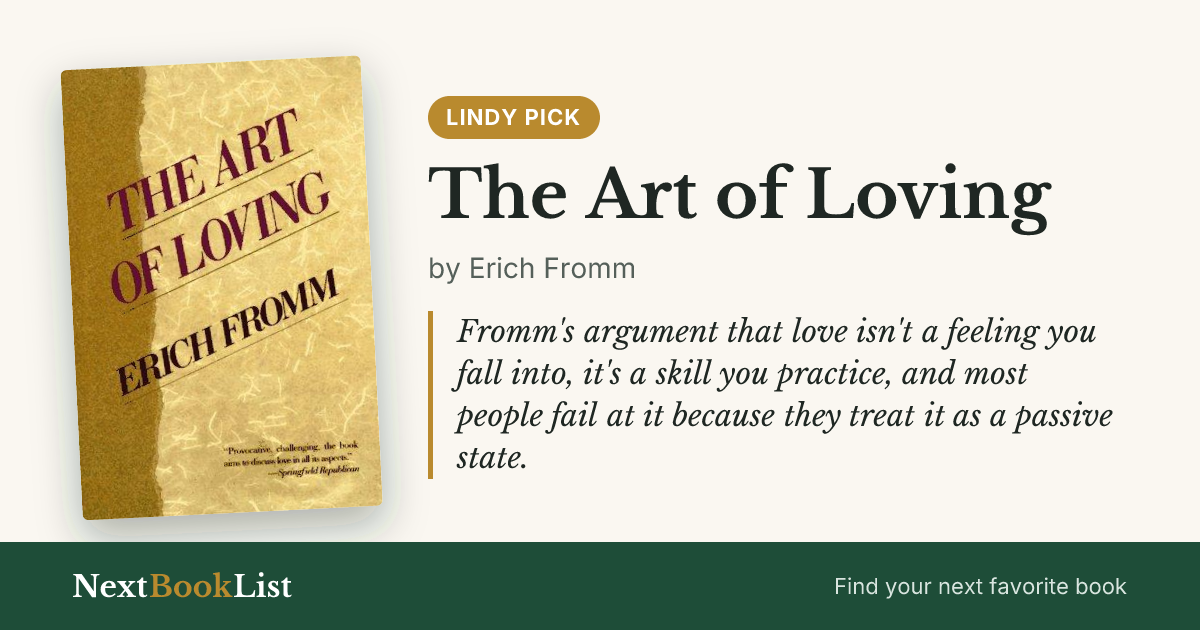
Fromm's argument that love isn't a feeling you fall into, it's a skill you practice, and most people fail at it because they treat it as a passive state.
Worth reading? Erich Fromm wrote this in 1956 and quietly demolished the modern idea of love as something that happens to you. His case, that love is a practiced capacity like any art, and most people fail it because they're waiting instead of training, is more uncomfortable now than then. It's a short book with a long half-life because the problem it names is permanent. People still believe the right person will fix them; Fromm says no, you have to become someone capable of love, and that's work nobody signed up for. It earns its Lindy spot by being 70 years old, still in print, and still the smartest thing most people will read on why their relationships keep breaking. Read it once before you blame your next ex.
| Full Title | The Art of Loving |
|---|---|
| Author | Erich Fromm |
| Published | 1956 |
| Publisher | Harper & Row |
| Category | Self-Improvement & Psychology |
| Favorite quote | “Love is the only sane and satisfactory answer to the problem of human existence.” |
The Verdict
Fromm’s 1956 argument, love is a practiced skill, not a feeling you fall into, has been in print for 70 years because the problem it names is permanent. Most people wait to be loved instead of learning to love.
Read it if your relationships keep failing and you suspect the problem is you, not your luck in partners.
Skip it if you want a warm, easy read about romance. Fromm is a psychoanalyst with a thesis, and it's challenging.
Book Summary
Fromm's provocation: love is not a feeling but a practiced capacity, like any art. Most people believe they'll love once they find the right person; Fromm says you can't, because love is something you do, not something that happens to you.
He separates immature love ('I love you because I need you') from mature love ('I need you because I love you'). The first is dependency; the second is the ability to give without losing yourself.
The book is also a quiet critique of capitalism's effect on intimacy, we treat people, and ourselves, as commodities to be consumed, which is why modern love feels thin. That critique reads sharper now than in 1956.
Top 10 Lessons from The Art of Loving
- Love is a skill, not a feeling. You practice it like a craft; you don't fall into it like a trap.
- Most people wait to be loved instead of learning to love. That's why they keep failing at it.
- Immature love says 'I love you because I need you.' Mature love says 'I need you because I love you.'
- You can't truly love another without loving yourself. Self-love isn't narcissism; it's the prerequisite.
- Knowledge, care, responsibility, respect, and faith are the components of love as an act, not a mood.
- Modern culture treats people as commodities, including in romance. That's why connection feels thin and disposable.
- Brotherly love, the care for all humans, is the foundation; the rest are specific forms of the same capacity.
- Falling in love is easy and largely biological; staying is the art, and almost nobody is taught it.
- Escape from freedom, merging with another to avoid being alone with yourself, is a fake love.
- Discipline and concentration are required. Love as an art demands the same devotion you'd give any serious practice.
Top 6 Quotes from The Art of Loving
"Love is the only sane and satisfactory answer to the problem of human existence."
Erich Fromm, The Art of Loving
"Immature love says: 'I love you because I need you.' Mature love says: 'I need you because I love you.'"
Erich Fromm, The Art of Loving
"The mature answer to the problem of existence is love as union under the condition of preserving one's integrity, one's individuality."
Erich Fromm, The Art of Loving
"Love is not primarily a relationship to a specific person; it is an attitude, an orientation of character which determines the relatedness of a person to the world as a whole."
Erich Fromm, The Art of Loving
"If I truly love one person I love all persons, I love the world, I love life."
Erich Fromm, The Art of Loving
"Most people see the problem of love primarily as that of being loved, rather than that of loving, of one's capacity to love."
Erich Fromm, The Art of Loving
Frequently Asked Questions
Is The Art of Loving a relationship guide?
Not in the how-to sense. Fromm, a psychoanalyst, argues that love is a cultivated capacity, like any art, not a feeling you fall into. It's philosophical more than instructional, but the implication is practical: learn the skill.
What's the most famous idea in it?
That immature love is 'I love you because I need you,' while mature love is 'I need you because I love you.' The shift from dependency to generous giving is the book's core.
Why is it Lindy-qualified?
Seventy years of continuous print and a permanent readership. The complaint it answers, 'why can't I make love work' has not changed, and Fromm's answer keeps getting rediscovered by each new generation.
Ready to read it?
Get The Art of Loving on Amazon