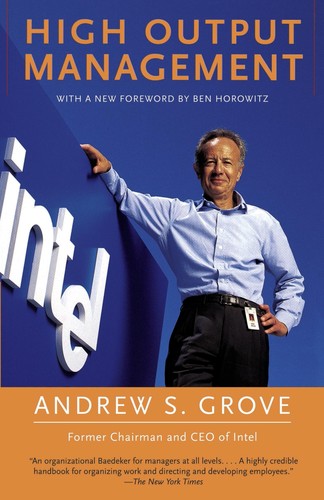
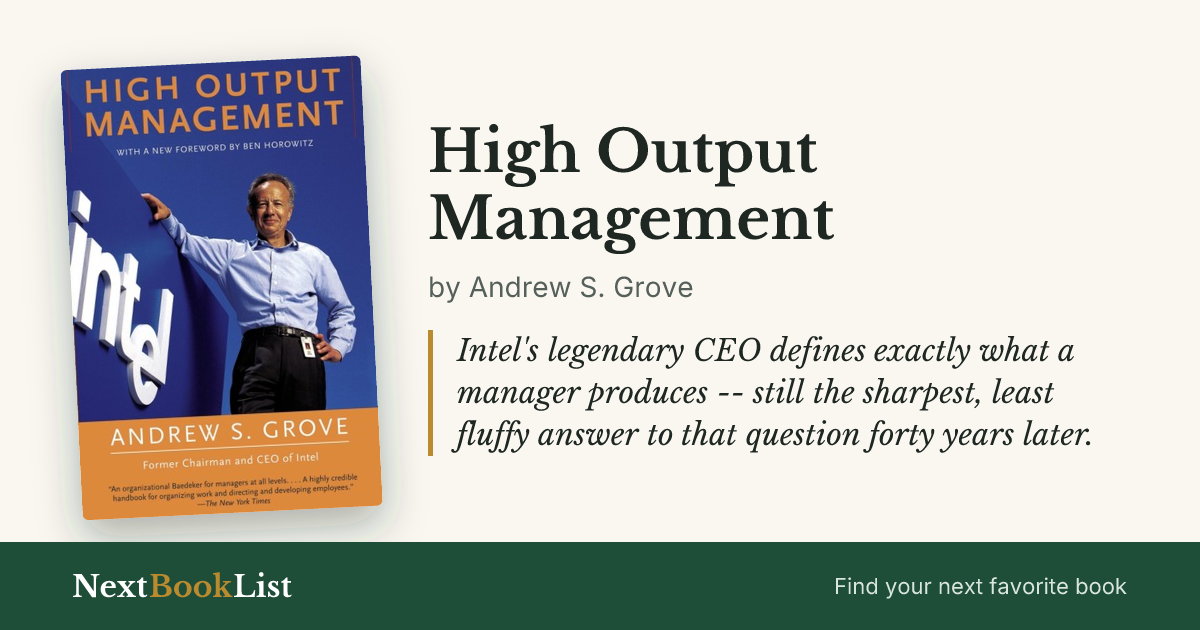
High Output Management
by Andrew S. Grove · 1983
Intel's legendary CEO defines exactly what a manager produces -- still the sharpest, least fluffy answer to that question forty years later.
Worth reading? Andy Grove's 1983 Intel playbook for managers, still the sharpest writing on what a manager actually produces. Read it the day you get anyone reporting to you. Skip it only if you're a lone individual contributor with no plans to lead.
| Author | Andrew S. Grove |
|---|---|
| Published | 1983 |
| Category | Business & Money |
| Favorite quote | “A manager's output is the output of the organizational units under his or her supervision or influence.” |
The Verdict
Andy Grove’s 1983 Intel playbook for managers, still the sharpest writing on what a manager actually produces. Read it the day you get anyone reporting to you. Skip it only if you’re a lone individual contributor with no plans to lead.
you just started managing people, or you've managed for years and never had the job actually defined this precisely
you're a solo individual contributor with no plans to lead a team -- the whole book is built around the specific leverage question managers face
Book Summary
A manager's output isn't their own individual work, it's the output of the team and the decisions they influence -- which reframes a manager's job entirely around leverage: spend time on the activities that multiply the output of the most people, not on whatever feels most urgent that day. Grove's "free-market test" (would this task be bought externally or done in-house?) is his practical tool for deciding where a manager's own time actually belongs.
One-on-ones are the manager's core information and coaching tool, not an optional courtesy meeting -- and Grove insists on diagnosing whether an underperformance problem is a knowledge gap or a motivation gap before acting, because the two require completely different fixes and treating one as the other wastes both the manager's and the employee's time.
Top 8 Lessons from High Output Management
- A manager's output is the output of the teams and decisions they influence.
- Spend your time on the highest-leverage activities, not the most urgent.
- One-on-ones are the manager's core tool for information and coaching.
- Use the free-market test: would this task be bought or done in-house?
- Diagnose whether a problem is a knowledge gap or a motivation gap before you act.
- Delegation means assigning the whole task with clear metrics, not hovering.
- Meetings are for decisions and alignment, not for status you could email.
- Train your reports so the work doesn't bottleneck on you.
Top 1 Quotes from High Output Management
"A manager's output is the output of the organizational units under his or her supervision or influence."
Andrew S. Grove, High Output Management
Frequently Asked Questions
Is High Output Management worth reading?
Yes. It's the clearest definition of a manager's real job, and it hasn't aged.
What is the main idea of High Output Management?
A manager's product is the output of their team, so spend time only on the highest-leverage work.
Who should read High Output Management?
New and seasoned managers who want to understand leverage, not just tasks.
Is High Output Management outdated?
The tech examples are old, but the management logic is timeless. Ignore the floppy references.
Ready to read it?
Get High Output Management on Amazon