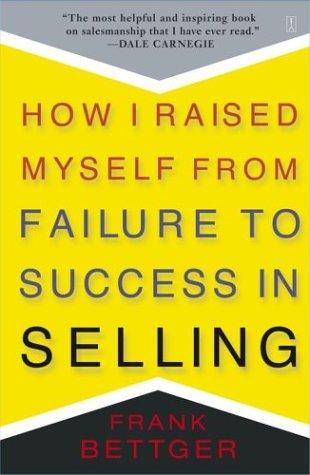
How I Raised Myself from Failure to Success in Selling
by Frank Bettger · 1947
A failed insurance salesman's plain diary of the exact habits that took him from dead-broke to a top earner, written in 1947 and still taught.
Worth reading? Frank Bettger was a failed insurance salesman who turned his career around with a notebook and some enthusiasm, then wrote it all down in 1947. That's the whole appeal: it's not a theory from a consultant, it's a guy's diary of exactly what pulled him out of failure. The advice is embarrassingly simple, use names, listen, follow up, track your calls, act enthusiastic, and that's why it's survived 75 years. Modern sales 'systems' dress these same habits in dashboards and jargon; Bettger gives you the habits without the costume. It's on the Lindy list because the human mechanics of selling haven't changed since the 1930s. A person still has to trust you before they buy, and Bettger's method is how you earn that trust. Read it before any $30 sales course.
| Full Title | How I Raised Myself from Failure to Success in Selling |
|---|---|
| Author | Frank Bettger |
| Published | 1947 |
| Publisher | Simon & Schuster |
| Category | Business & Money |
| Favorite quote | “Every sale has five basic obstacles: no need, no money, no hurry, no desire, no trust.” |
The Verdict
Bettger’s 1947 memoir, a failed salesman’s diary of the exact habits that made him a top earner, is still used to train reps. The human mechanics of trust haven’t changed since the 1930s.
Read it if you sell anything, including your own ideas, and want timeless, unglamorous technique rather than a 2020s growth hack.
Skip it if you want a modern, data-driven sales system. This is a man's notebook from the 1930s, and proud of it.
Book Summary
Bettger's breakthrough was enthusiasm, faked at first, then real. He noticed that acting energized, even when he wasn't, changed how prospects responded, which energized him for real. Enthusiasm was a lever, not a personality trait.
He kept a written record of every call and learned from his own numbers, what he said before a yes, what he did before a no. That self-tracking discipline predates every modern CRM by decades.
The book is a collection of small, repeatable habits: use the customer's name, ask questions, listen more than you talk, follow up. None are clever; all work, which is why it's still assigned to new reps.
Top 10 Lessons from How I Raised Myself from Failure to Success in Selling
- Enthusiasm is a lever you can pull on command. Act energized and the energy becomes real; prospects feel it first.
- Keep a written record of every call and learn from your own data. Bettger tracked what he said before a yes.
- Use the customer's name and say it naturally. It's the oldest rapport trick because it works.
- Ask questions and listen. The best salespeople talk least and learn most.
- Follow up relentlessly but warmly. Most sales are lost by people who stop showing up, not by people who pitch poorly.
- Prepare harder than the other person. Bettger rehearsed his openings until they were automatic.
- Set a clear daily goal in numbers, not vibes. Activity creates outcomes; waiting creates nothing.
- Turn failure into a case study. Every lost deal is data about what to change next time.
- Sincerity beats technique. The habits work, but only if you actually believe in the product.
- This 1947 book is the root of practical sales training. Most 'new' sales habits are Bettger, reworded.
Top 1 Quotes from How I Raised Myself from Failure to Success in Selling
"Every sale has five basic obstacles: no need, no money, no hurry, no desire, no trust."
Frank Bettger, How I Raised Myself from Failure to Success in Selling
Frequently Asked Questions
Is this book outdated?
The tech is, the psychology isn't. Bettger wrote in 1947 about enthusiasm, listening, using names, and following up, which are still the core of every effective sales training. The tactics are old because they're true.
Who was Frank Bettger?
A failed insurance salesman who became a top earner and a colleague of Dale Carnegie, who promoted the book. It's his real memoir of turning his career around, not a ghostwritten framework.
Why is it Lindy-qualified?
Seventy-five years in print and still used to train new salespeople. The core habits predate every CRM and still outperform most of them, which is the definition of a Lindy idea.
Ready to read it?
Get How I Raised Myself from Failure to Success in Selling on Amazon