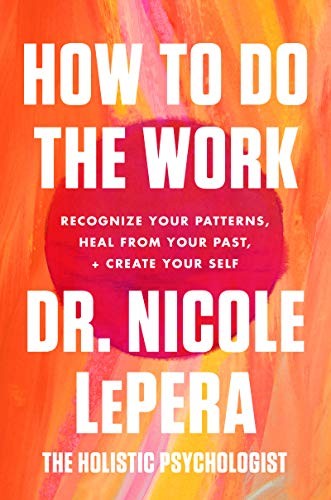
How to Do the Work
by Nicole LePera · 2021
A clinical psychologist who built a massive following as 'the holistic psychologist' lays out a full self-healing method connecting trauma, nervous system regulation, and daily habits.
Worth reading? How to Do the Work is the best self-directed healing framework because LePera connects the dots -- childhood patterns, nervous system states, daily habits -- into one usable system instead of treating them as separate self-help topics. Skip it if you need clinical-level trauma treatment; this is a self-guided companion, not a substitute for a therapist.
| Full Title | How to Do the Work: Recognize Your Patterns, Heal from Your Past, and Create Your Self |
|---|---|
| Author | Nicole LePera |
| Published | 2021 |
| Publisher | Harper Wave |
| Category | Self-Improvement & Psychology |
| Favorite quote | “Healing is a daily event. You can't 'go somewhere' to be healed; you must go inward to be healed. This means a daily commitment to doing the work.” |
The Verdict
LePera’s real contribution is connective tissue – she takes ideas that usually live in separate self-help lanes (childhood psychology, nervous system science, daily habit-building) and shows how they feed into each other. That framing alone makes this more useful than picking up three separate books on trauma, somatic practice, and habit change.
Where it gets shakier is the science: some of the nervous system and trauma claims lean further into polyvagal theory and inherited-trauma framing than current clinical research fully supports, so treat the underlying theory with some skepticism even as you use the practices. Read it if you want a self-guided daily practice connecting mind and body. Skip it if you’re in acute crisis – that calls for a therapist, not a book.
you want a structured, self-directed framework connecting childhood conditioning, nervous system regulation, and daily practice -- built for people doing inner work outside of or alongside traditional therapy
you're in acute crisis or need clinical treatment for trauma or mental illness -- this is a self-guided framework, not a replacement for a therapist or psychiatric care
Book Summary
Many adult patterns -- anxiety, people-pleasing, self-sabotage, difficulty with boundaries -- trace back to childhood conditioning, where a child's authentic needs and emotions got suppressed to keep the peace or earn approval, creating a "wounded self" that keeps running old survival strategies long after they stop being useful.
The body and nervous system hold onto stress and trauma independently of conscious memory (LePera draws heavily on polyvagal theory and somatic approaches), which means healing requires more than insight or willpower -- it requires actually regulating the nervous system through practices like breathwork, movement, and grounding before lasting behavior change is possible.
LePera frames healing as an active, daily practice she calls "doing the work" -- journaling, body-based practices, reparenting your inner child, and consciously choosing new responses to old triggers -- rather than a single breakthrough moment, positioning consistent small practice as more powerful than occasional intense insight.
Top 8 Lessons from How to Do the Work
- Identify your core wound -- the childhood pattern (like needing to be perfect, or suppressing emotions to keep the peace) that's still running your adult reactions.
- Notice when you're in a stress response (fight, flight, freeze, fawn) before trying to reason your way out of a reaction -- regulate the body first, then address the thought.
- Practice 'conscious parenting' of your own inner child -- actively give yourself the validation or safety you didn't get growing up, instead of waiting for someone else to provide it.
- Use daily body-based practices (breathwork, movement, grounding) to discharge stored stress, since insight alone doesn't reliably change a dysregulated nervous system.
- Journal to separate 'the wounded self' narrating a situation from what's actually happening in the present moment.
- Build 'future self' visualization into your practice -- imagine the person you're becoming and let that identity inform daily choices, not just your past conditioning.
- Set and hold boundaries as an act of self-respect, expecting discomfort and pushback, especially from relationships built around your old, more accommodating patterns.
- Treat healing as a repeatable daily practice, not a single insight or therapy breakthrough -- consistency matters more than intensity.
Top 5 Quotes from How to Do the Work
"Healing is a daily event. You can't 'go somewhere' to be healed; you must go inward to be healed. This means a daily commitment to doing the work."
Nicole LePera, How to Do the Work
"In order to achieve mental wellness, you must begin by being an active daily participant in your own healing."
Nicole LePera, How to Do the Work
"Our practiced thoughts become our truth."
Nicole LePera, How to Do the Work
"We are social creatures, and it is not until we are able to truly embody our authentic Self that we become able to connect deeply with the people we love."
Nicole LePera, How to Do the Work
"There is tremendous freedom in not believing every thought we have and understanding that we are the thinker of our thoughts, not the thoughts themselves."
Nicole LePera, How to Do the Work
Frequently Asked Questions
Is How to Do the Work worth reading?
Yes, if you want a structured self-guided framework connecting childhood patterns, nervous system regulation, and daily practice. It's more actionable than most self-help books in this space.
Is How to Do the Work a replacement for therapy?
No, and LePera doesn't present it as one. It's designed as a self-guided companion practice, useful alongside therapy or for people not currently in treatment, not a substitute for clinical care.
What is 'reparenting' in How to Do the Work?
The practice of consciously giving yourself the emotional validation, safety, or attention you didn't fully receive as a child, rather than continuing to seek it externally in ways that repeat old patterns.
Who is Nicole LePera?
A clinical psychologist known online as 'the holistic psychologist,' who built a large following sharing accessible mental health and self-healing content before writing this book.
Ready to read it?
Get How to Do the Work on Amazon