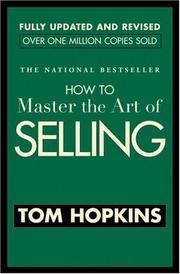
How to Master the Art of Selling
by Tom Hopkins · 1980
Hopkins went from broke 19-year-old failed salesman to top real estate producer within a couple of years, and turned the specific scripts and techniques that got him there into one of the most detailed sales training books ever written.
Worth reading? Hopkins built his reputation on precision: word-for-word scripts for cold calling, objection handling, and closing, refined from his own real-world sales career before he became a trainer. It's more tactically granular than Secrets of Closing the Sale, closer to a drill manual than a philosophy book, which makes it genuinely useful for reps who want exact language to practice, but less useful if you're looking for the why behind the technique rather than the technique itself.
| Author | Tom Hopkins |
|---|---|
| Published | 1980 |
| Category | Business & Money |
| Favorite quote | “Champions are willing to give up their needs for the desires of others.” |
The Verdict
Hopkins treats sales language the way a coach treats game film – specific, drillable, and meant to be rehearsed until it’s automatic under pressure. If you want exact scripts to practice rather than concepts to absorb, this is the more tactical choice on the shelf next to Ziglar.
you want extremely detailed, script-level sales training. Hopkins covers specific word-for-word phrasing for prospecting, objection handling, and closing
you want conceptual sales philosophy over tactical scripts, this leans heavily into memorizable, word-for-word technique rather than broader principle
Book Summary
Hopkins' core belief is that sales success comes from mastering specific, repeatable language patterns through deliberate practice, the same way an athlete drills specific plays -- rather than relying on natural charisma or improvisation, which he argues fails under real pressure from a skeptical prospect. He provides extensive word-for-word scripts precisely because he believes vague conceptual advice ("build rapport," "handle objections") doesn't actually change behavior without a specific script to practice.
He also emphasizes "loving the word no" -- reframing rejection as a normal, expected part of the sales process rather than a personal failure, since Hopkins' own numbers-driven approach treats each no as statistically bringing you closer to the next yes, provided you're tracking and refining your ratios rather than getting emotionally derailed by any single rejection.
Top 7 Lessons from How to Master the Art of Selling
- Practice specific, word-for-word scripts for prospecting and objection handling rather than relying on improvisation.
- Reframe rejection ('the word no') as a normal, expected statistical part of the sales process, not a personal failure.
- Track your specific ratios (calls to appointments, appointments to closes) to identify where to improve, not just overall results.
- Prepare specific responses to the most common objections in your specific market in advance.
- Vague conceptual sales advice rarely changes behavior without a concrete script to actually practice and drill.
- Deliberate rehearsal of sales language, like an athlete drilling plays, builds performance under real pressure.
- Personal discipline in follow-up and prospecting volume matters as much as skill in any individual sales conversation.
Top 4 Quotes from How to Master the Art of Selling
"Champions are willing to give up their needs for the desires of others."
Tom Hopkins, How to Master the Art of Selling
"The primary reason people fail in life is because they cater to the opinions, whims, thoughts, wishes, and words of others instead of listening to the voice inside them."
Tom Hopkins, How to Master the Art of Selling
"Never be afraid to try something new because life gets boring when you stay within the limits of what you already know."
Tom Hopkins, How to Master the Art of Selling
"Losers make promises they often break. Winners make commitments they always keep."
Tom Hopkins, How to Master the Art of Selling
Frequently Asked Questions
Is How to Master the Art of Selling worth reading?
Yes, especially if you want detailed, word-for-word sales scripts to practice and drill. It's more tactically granular than most sales books, which makes it useful as a reference to rehearse from.
Who is Tom Hopkins?
A sales trainer who built his reputation on a highly successful real estate sales career before turning to writing and training, known specifically for detailed, script-based technique.
How is this different from Secrets of Closing the Sale?
Both cover closing techniques, but Hopkins leans more heavily into exact, memorizable word-for-word scripts, while Ziglar's book blends technique with more motivational, philosophical framing about selling as service.
Is How to Master the Art of Selling only for real estate agents?
No, though Hopkins draws heavily on his own real estate sales background. The scripts and principles are written to generalize to sales roles across industries.
Ready to read it?
Get How to Master the Art of Selling on Amazon