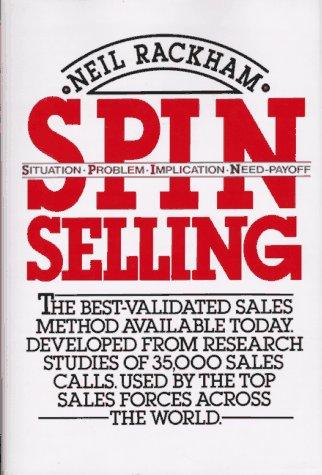
SPIN Selling
by Neil Rackham · 1988
The research-backed method for large, complex sales, built from studying 35,000 actual sales calls, and still the serious answer when your deals run six figures and multiple meetings.
Worth reading? Neil Rackham's research-backed method for large, complex sales, still the serious book on the topic. Read it before any fluff sales seminar if your deals are big and slow. Skip it if you sell cheap, fast, or one-call, this is for six-figure sales cycles.
| Author | Neil Rackham |
|---|---|
| Published | 1988 |
| Category | Self-Improvement & Psychology |
| Favorite quote | “In large sales, the more questions you ask about problems, the more successful the call.” |
The Verdict
Neil Rackham’s research-backed method for large, complex sales, still the serious book on the topic. Read it before any fluff sales seminar if your deals are big and slow. Skip it if you sell cheap, fast, or one-call, this is for six-figure sales cycles.
you sell large, complex, multi-meeting deals where conventional small-sale closing tricks don't work
you sell cheap, fast, or one-call products -- SPIN was built specifically for large sales, and its findings explicitly don't transfer to quick, low-stakes transactions
Book Summary
Rackham's research (based on studying tens of thousands of real sales calls) found that small-sale tactics actively hurt large, complex sales -- traditional closing techniques and objection-handling that work in a quick, low-stakes transaction backfire once a buyer is making a large, considered, multi-stakeholder decision, because pressure reads as a red flag rather than a nudge.
His alternative is a four-stage questioning sequence: Situation questions establish context, Problem questions surface a difficulty, Implication questions make the cost of leaving that problem unsolved concrete and uncomfortable, and Need-payoff questions get the buyer to state the value of solving it in their own words -- building the buyer's own case for the purchase rather than the seller asserting it.
Top 8 Lessons from SPIN Selling
- Small sales and large sales need different tactics; what works cheap breaks big.
- SPIN stands for Situation, Problem, Implication, Need-payoff questions.
- Implication questions make the cost of inaction hurt, which builds urgency.
- Features don't sell; tied benefits do, especially in complex deals.
- Early in the call, diagnose; late in the call, confirm value.
- Objections matter less than conventional wisdom says; need does the work.
- Closing tricks are nearly useless in large sales; real agreement closes itself.
- Track whether your questions raise perceived value, not just fill silence.
Top 1 Quotes from SPIN Selling
"In large sales, the more questions you ask about problems, the more successful the call."
Neil Rackham, SPIN Selling
Frequently Asked Questions
Is SPIN Selling worth reading?
Yes if you sell high-value, multi-meeting deals. It's the evidence-based standard.
What is the main idea of SPIN Selling?
Win big sales by asking a researched sequence of questions that build the buyer's own case.
Who should read SPIN Selling?
B2B reps, account executives, and founders closing enterprise or complex deals.
Is SPIN Selling outdated?
The research is old but the structure still holds. Modern CRM scripts are basically SPIN with lipstick.
Ready to read it?
Get SPIN Selling on Amazon