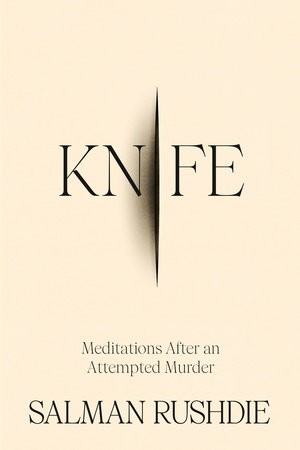
Knife
by Salman Rushdie · 2024
Rushdie's own account of the 2022 stage attack that nearly killed him, and the language he used to survive it.
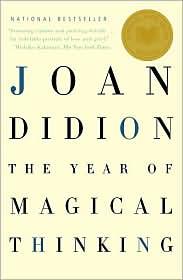
Worth reading? Knife earns its place next to Rushdie's fiction rather than under it. It's short, direct, and refuses the two easy modes memoirs like this fall into -- neither pure vengeance nor pure inspiration. Compare it to Reeve Lindbergh or Joan Didion's grief writing for tone; Rushdie's version is angrier and funnier at once.
| Full Title | Knife: Meditations After an Attempted Murder |
|---|---|
| Author | Salman Rushdie |
| Published | 2024 |
| Publisher | Random House |
| Category | Biographies & Memoirs |
| Favorite quote | “Language, too, was a knife. I could cut open the world and reveal its meaning, its inner workings, its secrets, its truths.” |
The Verdict
Rushdie could have written a book about vengeance, or a book about martyrdom for free speech. He wrote neither. What he wrote is closer to a working writer’s notebook on how you keep using language after someone tries to take it, and you, away permanently.
It’s a short book, and it earns every page of that shortness – there’s no padding, no chapter that exists just to hit a word count. If you’ve read Rushdie’s fiction and wondered what the man behind the fatwa headlines actually sounds like when he’s not performing, this is it.
you want a survivor's own reckoning with violence and free expression, written by one of the people the fatwa era actually happened to
you're looking for a detailed history of the fatwa itself -- this is about the attack and its aftermath, not a Satanic Verses retrospective
Book Summary
The book opens with the 2022 stage attack in Chautauqua, New York, narrated in unflinching physical detail -- the stabbing, the loss of an eye and use of a hand, and the long, brutal recovery that followed. Rushdie refuses to name his attacker, calling him only "the A.," a deliberate act of denying the man the individual notoriety an assassination attempt usually confers. Language itself becomes the book's central metaphor: Rushdie treats writing as his own knife, the tool he uses to cut open and make sense of what happened to him. He imagines and writes fictional dialogues with his attacker as a way of processing the violence intellectually, not just emotionally. The memoir is as much a love letter to his wife, the poet Rachel Eliza Griffiths, as it is a survival account, and it connects the 2022 attack back to the decades of the fatwa following The Satanic Verses without lapsing into self-pity. Its closing argument is that continued creative work, not retreat or silence, is the only sane response to violence aimed at silencing you.
Top 9 Lessons from Knife
- The memoir opens with the 2022 stage attack narrated in unflinching physical detail.
- Rushdie refuses to name his attacker directly, calling him only 'the A.,' denying him individual notoriety.
- The book is as much a love letter to his wife, Rachel Eliza Griffiths, as it is a survival narrative.
- Rushdie treats language itself as his 'knife' -- the tool he uses to cut through and make sense of the violence done to him.
- He imagines and writes fictional dialogues with his attacker to process the attack intellectually as well as emotionally.
- The memoir connects the 2022 attack back to the decades-long fatwa following The Satanic Verses without dwelling in self-pity.
- Recovery is depicted in brutal physical specifics -- the loss of an eye, impaired use of a hand, and a long rehabilitation.
- Rushdie insists art and free expression are necessities, not luxuries, worth defending even at mortal cost.
- The book's closing argument is that continued creative work, not silence or retreat, is the answer to an attack meant to silence him.
Top 3 Quotes from Knife
"When Death comes very close to you, the rest of the world goes far away and you can feel a great loneliness. At such a time kind words are comforting and strengthening."
Salman Rushdie, Knife
"Art is not a luxury. It stands at the essence of our humanity, and it asks for no special protection except the right to exist."
Salman Rushdie, Knife
"During those empty, sleepless nights, I thought a lot about The Knife as an idea. A knife was a tool, and acquired meaning from the use we made of it. Language, too, was a knife. I could cut open the world and reveal its meaning, its inner workings, its secrets, its truths. It could cut through from one reality to another. It could call bullshit, open people's eyes, create beauty. Language was my knife."
Salman Rushdie, Knife
Frequently Asked Questions
Is Knife worth reading?
Yes -- it's a short, direct memoir that refuses both pure vengeance and pure inspiration, from a writer with a rare, hard-earned authority on the subject of violence aimed at silencing speech.
What is Knife about?
Salman Rushdie's account of the 2022 stabbing attack that cost him an eye and the use of a hand, his recovery, and his reflections on language, art, and love in the aftermath.
Is Knife difficult to read given the subject matter?
The physical detail is unflinching, but the prose is clear and the book is short. It's more direct than gratuitous.
Who should read Knife?
Readers interested in Rushdie's work, free-speech history, or trauma memoirs written with genuine literary craft rather than ghostwritten polish.
Ready to read it?
Get Knife on Amazon