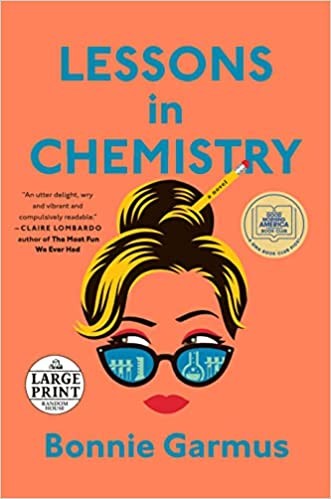
Lessons in Chemistry
by Bonnie Garmus · 2022
A brilliant chemist, sidelined by 1960s sexism and pushed out of the lab, ends up hosting an afternoon cooking show -- and uses it to teach America's housewives real chemistry disguised as recipes.
Worth reading? Lessons in Chemistry earns its bestseller status by being genuinely funny and quietly furious at the same time -- Garmus doesn't let the sexism plot curdle into misery, and Elizabeth Zott's refusal to perform likability is the book's best running joke. It leans on a few too-neat coincidences to close its plot threads, but the voice carries it past that. If you want a period piece with real teeth instead of nostalgia, this delivers.
| Author | Bonnie Garmus |
|---|---|
| Published | 2022 |
| Category | Fiction |
| Favorite quote | “Children, no matter your age, don't let anyone tell you what you can and cannot do. Contrary to popular belief, chemistry is all about change, and change is all about courage.” |
The Verdict
The dog’s chapters (Six-Thirty gets his own point-of-view sections) are a genuine gamble that mostly pays off – it sounds like a gimmick on paper, but Garmus uses it to add warmth without softening Elizabeth’s sharper edges elsewhere in the book. It’s the kind of choice that either charms you immediately or takes a chapter to win you over.
you want a sharp, funny, quietly angry novel about a woman using an unlikely platform to fight the era's misogyny on her own terms
you want subtlety -- the sexism Elizabeth Zott faces is drawn broadly and the plot leans into some convenient coincidences to tie its threads together, so if you want restrained literary fiction this will feel a little heightened
Book Summary
Garmus builds the novel around a simple inversion: a woman treated as unfit for serious science finds a wildly unlikely venue (a TV cooking show) where she can practice real science in public and get paid for it. The show's popularity becomes its own quiet rebellion -- she's not softening chemistry for housewives, she's respecting them enough to teach it straight.
The found-family element (Elizabeth, her daughter Mad, her dog Six-Thirty, and a small circle of allies) does as much work as the sexism plot -- it's a book about building support systems outside institutions that have already rejected you, not just about surviving them.
Top 7 Lessons from Lessons in Chemistry
- Refusing to perform likability can be a novel's best running joke instead of a character flaw.
- Anger and humor aren't opposites -- a book can be furious and funny in the same scene.
- An unlikely venue (a cooking show) can become a real platform for serious work instead of a compromise.
- Respecting an audience (teaching real chemistry, not simplifying it) is its own quiet form of rebellion.
- A found family can carry as much narrative weight as the plot it exists alongside.
- An unconventional narrative choice (a dog's point-of-view chapters) is a real gamble that either earns its charm fast or needs a chapter to win the reader over.
- Period fiction lands harder when it has real teeth instead of just nostalgia for the era's aesthetics.
Top 1 Quotes from Lessons in Chemistry
"Children, no matter your age, don't let anyone tell you what you can and cannot do. Contrary to popular belief, chemistry is all about change, and change is all about courage."
Bonnie Garmus, Lessons in Chemistry
Frequently Asked Questions
Is Lessons in Chemistry worth reading?
Yes. It balances real anger at 1960s institutional sexism with genuine humor and warmth, which is a harder combination to pull off than it sounds.
Is Lessons in Chemistry based on a true story?
No, it's fiction, though the sexism Elizabeth Zott faces in academic and corporate science reflects real, well-documented barriers women scientists faced in that era.
Is there a TV adaptation of Lessons in Chemistry?
Yes, Apple TV+ adapted it into a limited series starring Brie Larson.
What age group is Lessons in Chemistry for?
It's adult literary fiction -- not YA -- though it's a relatively accessible, fast read for adult fiction.
Ready to read it?
Get Lessons in Chemistry on Amazon