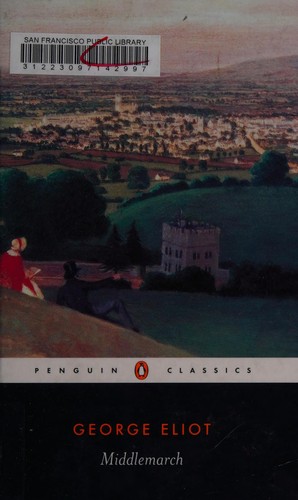
Middlemarch
by George Eliot · 1871
A sprawling English town novel follows an idealistic young woman married to the wrong scholar, a doctor with the wrong ambitions, and a whole community quietly failing and succeeding at the same ordinary compromises -- and somehow it's the novel Virginia Woolf called 'one of the few English novels written for grown-up people.'
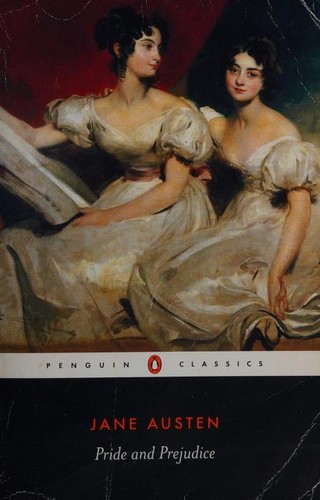
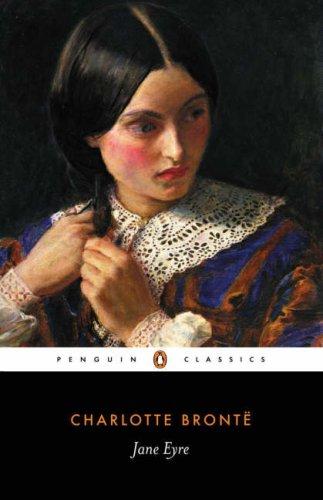
Worth reading? Middlemarch is the novel serious readers of Victorian fiction eventually get pointed toward once Austen and Dickens aren't enough, and it earns the recommendation -- Eliot's narrator understands every character's self-deceptions better than the characters understand themselves. It's a bigger investment than Pride and Prejudice or Jane Eyre, but the payoff (Dorothea Brooke's arc especially) is one of the most emotionally accurate marriage plots in English literature.
| Full Title | Middlemarch: A Study of Provincial Life |
|---|---|
| Author | George Eliot |
| Published | 1871 |
| Publisher | Penguin Classics |
| Category | Fiction |
| Favorite quote | “For the growing good of the world is partly dependent on unhistoric acts.” |
The Verdict
Eliot’s narrator is the real star – there’s a generosity of understanding extended to nearly every character, even the ones behaving badly, that few 19th-century novelists managed. Dorothea’s arc is the emotional core, but Lydgate’s slow-motion compromise is the sneakier tragedy, and it’s the one that sticks with you longer.
you want the most psychologically precise 19th-century English novel about disappointment, ambition, and marriage, told with real patience for every character's interior life
you want a fast plot or a single protagonist -- this is a long, multi-strand novel about an entire town, and it demands sustained attention across 800-plus pages
Book Summary
Dorothea Brooke marries the much older scholar Casaubon believing she's choosing a life of intellectual purpose, and discovers instead a marriage of mutual disappointment and small cruelties. Eliot uses this to argue that idealism divorced from real knowledge of another person is a recipe for heartbreak, however sincere the idealism.
Lydgate, the ambitious young doctor, wants to do serious medical research but gets slowly ground down by provincial politics, debt, and an unsuitable marriage to Rosamond Vincy. Eliot treats his slow compromise with the same seriousness as Dorothea's, arguing that most lives are shaped by a thousand small capitulations rather than one dramatic failure.
The novel's narrator constantly widens the lens to show how private choices ripple through the whole community of Middlemarch -- money, reputation, and gossip connect characters who barely interact directly. Eliot's famous closing argument is that most good in the world comes from "unhistoric acts" -- ordinary, unrecorded faithfulness, not grand gestures.
Top 8 Lessons from Middlemarch
- Idealism without real knowledge of the person you're idealizing leads Dorothea into a marriage built on projection, not partnership.
- Lydgate's ambition is undone gradually, through debt and an unsuitable marriage, not through one dramatic failure.
- Middlemarch treats provincial gossip and social pressure as genuinely powerful forces shaping individual lives, not just background texture.
- Rosamond Vincy's vanity and Lydgate's naivety about her show how mismatched values in a marriage compound over time rather than resolving.
- Dorothea's eventual growth comes from disillusionment honestly faced, not from getting the marriage she originally wanted.
- Eliot's narrator insists on sympathy for flawed characters (Casaubon, Rosamond, Bulstrode) rather than simple villainy or heroism.
- The novel argues that most meaningful good is done through small, unrecorded, everyday acts rather than dramatic public ones.
- Money and inheritance quietly determine far more of the plot's outcomes than any character's stated values.
Top 5 Quotes from Middlemarch
"Who that cares much to know the history of man, and how the mysterious mixture behaves under the varying experiments of Time, has not dwelt, at least briefly, on the life of Saint Theresa?"
George Eliot, Middlemarch
"For the growing good of the world is partly dependent on unhistoric acts."
George Eliot, Middlemarch
"If we had a keen vision and feeling of all ordinary human life, it would be like hearing the grass grow and the squirrel's heart beat, and we should die of that roar which lies on the other side of silence."
George Eliot, Middlemarch
"There is no creature whose inward being is so strong that it is not greatly determined by what lies outside it."
George Eliot, Middlemarch
"Marriage is so unlike everything else. There is something even awful in the nearness it brings."
George Eliot, Middlemarch
Frequently Asked Questions
Is Middlemarch worth reading?
Yes, especially if you've already read the major Austen and Dickens novels and want something with even more psychological depth. It's a serious time investment that pays off.
Is Middlemarch hard to read?
It's long (over 800 pages) and slow-building with multiple interwoven plots, but the prose itself is clear and the narrator's insight makes the density worthwhile rather than exhausting.
What is the main theme of Middlemarch?
How idealism, ambition, and marriage get quietly reshaped by ordinary disappointment and social pressure, and how most meaningful good is done through small, unrecorded acts.
Is Middlemarch better than Pride and Prejudice or Jane Eyre?
It's more ambitious and psychologically dense, often considered the more mature novel, but it's also longer and less immediately gripping -- a good next step after those, not necessarily a replacement.
Ready to read it?
Get Middlemarch on Amazon