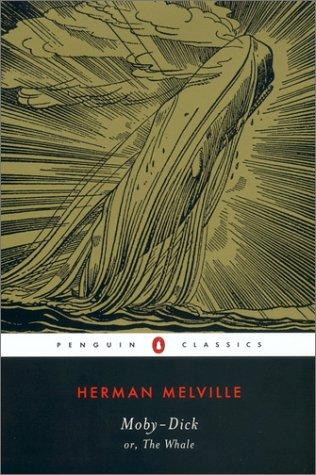
Moby-Dick
by Herman Melville · 1851
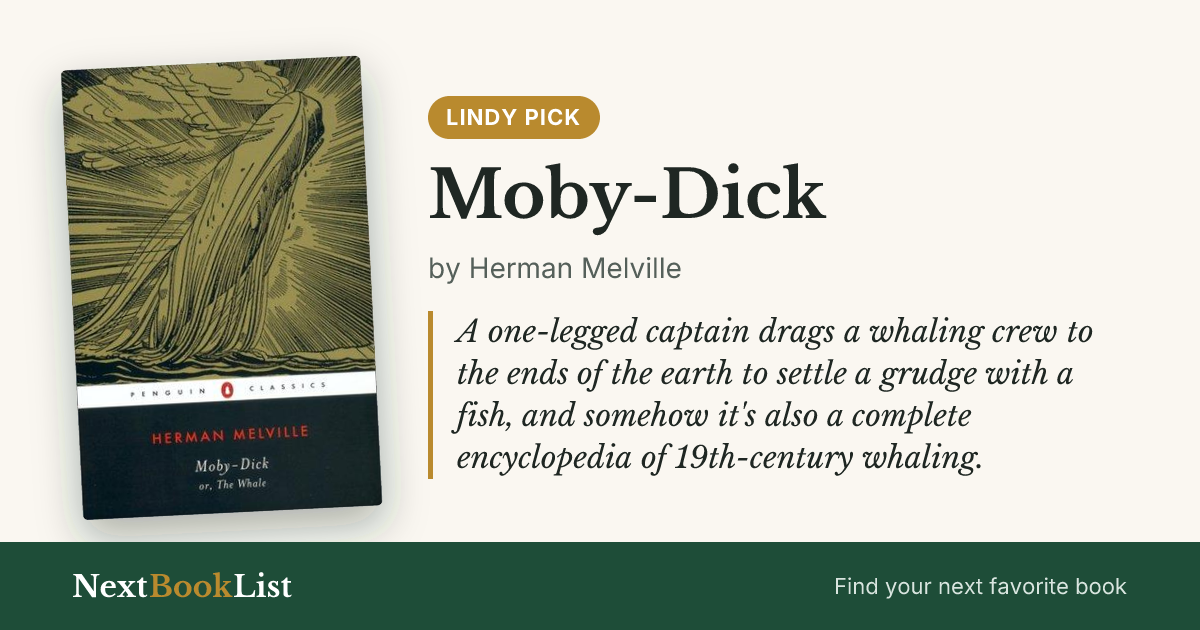
A one-legged captain drags a whaling crew to the ends of the earth to settle a grudge with a fish, and somehow it's also a complete encyclopedia of 19th-century whaling.
Worth reading? Moby-Dick is the book people quote (Call me Ishmael, the white whale) without having read, and that's a shame, because the parts that survive are genuinely great -- Ahab's monomania is one of the best character studies in American fiction. It's slower and stranger than its reputation as an adventure novel suggests; think of it as part sea voyage, part philosophical essay, part whaling manual. If you want pure narrative momentum, read Treasure Island instead. If you want the book that's still teaching MFA programs how to build an obsessive narrator, this is it.
| Full Title | Moby-Dick; or, The Whale |
|---|---|
| Author | Herman Melville |
| Published | 1851 |
| Publisher | Penguin Classics |
| Category | Fiction |
| Favorite quote | “Call me Ishmael.” |
The Verdict
The whale itself barely appears until the final chapters, and that’s the point – this is a book about the story Ahab builds around an animal, not the animal. Skip the cetology chapters if you must, but don’t skip Ahab’s monologues; they’re the reason this book outlasted every faster whaling adventure written alongside it.
you want the great American novel about obsession, and you're willing to sit through digressions on cetology to earn the ending
you want a tight, fast-moving sea adventure -- entire chapters stop the plot cold to classify whale anatomy, and that's a dealbreaker for some readers
Book Summary
Ahab's hunt for the white whale isn't really about the whale. Moby Dick becomes a screen onto which Ahab projects every wrong the universe has ever done him, and the novel is a study of what happens when a man decides one target can settle an unsettleable account.
Ishmael's narration constantly widens the lens -- from the specific voyage of the Pequod out to essays on whale biology, race, religion, and labor. The novel argues that you can't understand any single obsession without understanding the whole world that produced it.
The Pequod's multiethnic crew (Queequeg, Tashtego, Daggoo, Fedallah) and Ishmael's genuine affection for Queequeg push against the racial assumptions of Melville's own era. The ship is a floating microcosm of American commerce, chasing profit into self-destruction.
Top 8 Lessons from Moby-Dick
- Obsession replaces reason -- Ahab reads personal meaning into an animal that has none.
- A charismatic leader can talk a crew into their own destruction if the cause feels righteous enough.
- Ishmael survives specifically because he stays a curious observer instead of a true believer in Ahab's quest.
- The whaling industry chapters aren't filler -- they root the myth in unglamorous, dangerous labor and commerce.
- Queequeg's friendship with Ishmael argues that genuine human connection crosses every boundary the era insisted on keeping.
- Nature (the whale) is indifferent to human meaning-making, no matter how much story Ahab piles onto it.
- The Pequod is a microcosm of a profit-driven society sailing toward its own wreck.
- Starbuck represents reasonable dissent that never quite becomes action -- caution without courage still loses.
Top 6 Quotes from Moby-Dick
"Call me Ishmael."
Herman Melville, Moby-Dick
"It is not down on any map; true places never are."
Herman Melville, Moby-Dick
"I know not all that may be coming, but be it what it will, I'll go to it laughing."
Herman Melville, Moby-Dick
"Some men die at ebb tide; some at low water; some at the top of flood; and I feel now like a billow that's all one crested comb of foam."
Herman Melville, Moby-Dick
"To the last, I grapple with thee; from hell's heart I stab at thee; for hate's sake I spit my last breath at thee."
Herman Melville, Moby-Dick
"There is a wisdom that is woe; but there is a woe that is madness."
Herman Melville, Moby-Dick
Frequently Asked Questions
Is Moby-Dick worth reading?
Yes, if you want the foundational American novel about obsession and are willing to work for it. It's slower than its reputation, with long digressions on whaling that reward patience.
Is Moby-Dick hard to read?
Yes, relative to most novels. The prose is dense, chapters shift between narrative and encyclopedic digression, and it's a genuine time commitment at over 700 pages.
What is the main theme of Moby-Dick?
Obsession that consumes reason -- Ahab's hunt for the whale becomes a stand-in for every grievance a person can have against an indifferent universe.
Why does Moby-Dick start with 'Call me Ishmael'?
It's one of the most famous opening lines in literature because it immediately establishes an intimate, first-person narrator before the novel widens into its larger essays and adventure.
Ready to read it?
Get Moby-Dick on Amazon