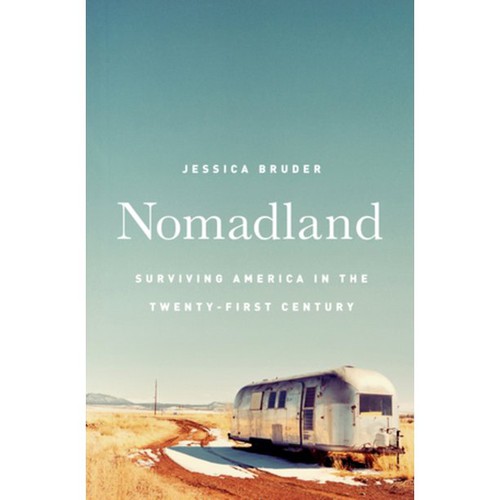
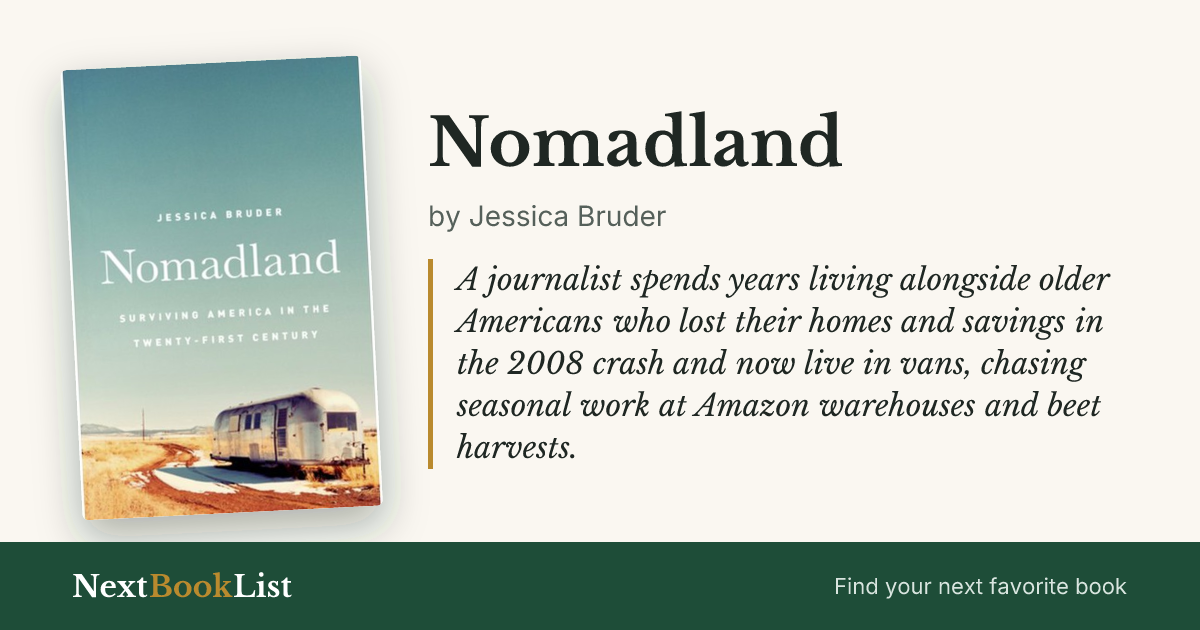
Nomadland
by Jessica Bruder · 2017
A journalist spends years living alongside older Americans who lost their homes and savings in the 2008 crash and now live in vans, chasing seasonal work at Amazon warehouses and beet harvests.
Worth reading? Bruder's method is embedded, years-long reporting -- she lived in a van herself, worked the same seasonal jobs (Amazon's CamperForce program, sugar beet harvests, campground hosting) alongside her subjects, and got close enough to specific people, especially a woman she calls Linda May, to follow their economic reality in real detail rather than treat vandwelling as a lifestyle trend. The book is clear-eyed about what's actually driving this: the 2008 financial crash wiped out retirement savings and home equity for a generation of older Americans, and 'workamping' in a van became a survival strategy dressed up, sometimes by the workers themselves, in the language of freedom and adventure. It beats the film adaptation (which softened and aestheticized the material) by staying specific about wages, working conditions, and the economic forces that put these particular people on the road in the first place.
| Full Title | Nomadland: Surviving America in the Twenty-First Century |
|---|---|
| Author | Jessica Bruder |
| Published | 2017 |
| Publisher | W. W. Norton & Company |
| Category | Sociology & Culture |
| Favorite quote | “Being human means yearning for more than subsistence. As much as food or shelter, we require hope.” |
The Verdict
Bruder’s decision to actually live the reporting – van, warehouse shifts, beet harvest and all – is what keeps this from reading like a trend piece. If you only know the softened film version, the book is the harder, more economically specific original.
you want deeply reported, embedded journalism on the economic precarity behind America's 'vandwelling' movement, not a romanticized road-trip story
you saw the film adaptation and assume you already know the book -- Bruder's reporting is denser, more economically specific, and less romantic about the lifestyle than the movie's framing
Book Summary
The "vandwelling" or "workamping" movement Bruder documents is largely a survival response to the 2008 financial crash, which wiped out home equity and retirement savings for a significant number of older Americans who then couldn't afford stable housing on typical retirement income.
Amazon's CamperForce program actively recruits vandwellers for seasonal warehouse work during peak shipping periods, offering camper hookups and modest pay for physically demanding labor -- a direct example of a major corporation building a labor supply chain around this specific population's economic precarity.
Bruder's embedded reporting method -- living in a van and working the same seasonal jobs as her subjects for years -- surfaces detail and economic specificity that distance journalism would miss, particularly around wages, physical strain, and the gap between the freedom narrative some workers adopt and the economic necessity actually driving their choices.
The freedom and adventure framing that some vandwellers themselves use to describe their lifestyle coexists, often within the same person, with real economic hardship and insecurity -- Bruder resists resolving this tension into either pure victimhood or pure liberation, presenting both as simultaneously true.
Top 7 Lessons from Nomadland
- The vandwelling movement Bruder documents is largely a survival response to home equity and retirement savings wiped out in the 2008 financial crash.
- Amazon's CamperForce program specifically recruits vandwellers for seasonal warehouse labor, building a labor pipeline around this population's economic precarity.
- Bruder lived in a van and worked the same seasonal jobs as her subjects for years, grounding the book in embedded, first-hand reporting rather than distance journalism.
- Workers in the book often describe their lifestyle using freedom and adventure language even while facing genuine economic hardship -- both can be true at once.
- Seasonal work like sugar beet harvesting and campground hosting supplements warehouse labor as part of the vandwelling economic cycle Bruder documents.
- The book follows specific individuals, especially a woman referred to as Linda May, in enough depth to track their economic reality over years, not just as a single snapshot.
- Vandwelling as documented here is presented as a structural economic story, not primarily a lifestyle or travel trend.
Top 2 Quotes from Nomadland
"Being human means yearning for more than subsistence. As much as food or shelter, we require hope."
Jessica Bruder, Nomadland
"A deepening class divide makes social mobility all but impossible. The result is a de facto caste system."
Jessica Bruder, Nomadland
Frequently Asked Questions
Is Nomadland worth reading?
Yes -- it's deeply embedded, years-long reporting on the economic precarity behind the vandwelling movement, with more specific detail on wages and working conditions than the film adaptation covers.
Is the Nomadland book the same as the movie?
No -- the film adaptation softens and aestheticizes much of the material. Bruder's book is denser and more economically specific about wages, working conditions, and the 2008-crash origins of the movement.
What is Nomadland about?
Jessica Bruder's embedded reporting on older Americans who lost homes and retirement savings in the 2008 financial crash and now live in vans, working seasonal jobs like Amazon's CamperForce program to survive.
Does Nomadland romanticize the vandwelling lifestyle?
No -- while it captures the freedom language some workers use to describe their choices, Bruder keeps the economic hardship and necessity driving those choices squarely in view throughout.
Ready to read it?
Get Nomadland on Amazon