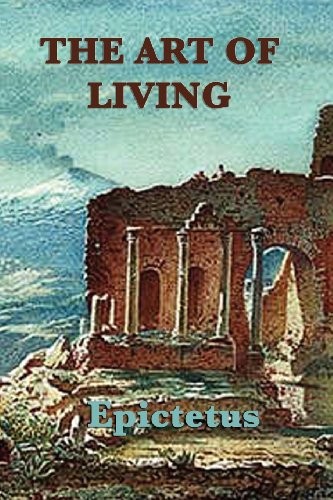
The Art of Living
by Epictetus · 135
A former slave's handbook on what's yours to control and what isn't, still the sharpest manual ever written on not losing your mind to things you can't change.
Worth reading? Epictetus was born enslaved, freed, then exiled, and somehow produced the most durable instruction manual for not caring about the wrong things ever written. The Enchiridion (handbook) is a list of small, brutal reminders, not a argument, and that's why it works. If you only read one Stoic after Meditations, make it this. Where Marcus Aurelius is a man arguing with himself, Epictetus is a teacher handing you a tool: the control test. Drag every worry to the line between what's yours and what isn't, and most of your anxiety falls off the table. It's unpopular advice because it puts the work on you. You can't blame your boss, the market, or your ex for your peace of mind. That's exactly why it's lasted 1,900 years, it's the only version that's true.
| Full Title | The Art of Living: The Classic Manual on Virtue, Happiness, and Effectiveness (Enchiridion) |
|---|---|
| Author | Epictetus |
| Published | 135 |
| Publisher | Dover Publications |
| Category | Self-Improvement & Psychology |
The Verdict
Epictetus was born a slave and taught that no master could own his mind. The Enchiridion is his student’s notebook of that teaching, a set of small, brutal reminders that have outlived every empire since.
Read it if you lose sleep over other people's behavior, the news, or outcomes you don't control, and want a filter that actually works.
Skip it if you want comfort or validation. Epictetus offers a cold, clean tool, not a hug.
Book Summary
The foundation: some things are within your control (your judgments, your reactions) and some are not (your body, your reputation, what others do). Peace comes from dragging every worry to that line and dropping the ones on the wrong side.
Epictetus was born a slave and taught that your inner freedom can't be taken by any master, emperor, or circumstance. That's why the book has outlived every empire that tried to silence it.
He's practical, not mystical. Don't tell yourself you're ruined by a bad event; tell yourself you've assigned it more meaning than it earns. The event is neutral; your story about it is the suffering.
Top 10 Lessons from The Art of Living
- Split the world into what you control and what you don't. Then stop paying rent in anxiety on the second pile.
- It's not what happens to you, it's what you tell yourself about what happens. The event is neutral; the story is the suffering.
- You can't lose inner freedom to any master. Epictetus was a slave and still called himself free, because his mind wasn't owned.
- Don't demand that events match your wishes. Wish for events to match what is, and you'll be unbreakable.
- Anger at someone is anger at your own inability to control them. Pointless and exhausting.
- We are disturbed not by things, but by the views we take of things.
- Want something too badly and you've handed a stranger your peace. Train desire like a muscle, not a leak.
- Hardship is the gym of character. The obstacle you resent is the rep that strengthens you.
- Don't explain your philosophy. Live it. Talking about virtue while raging in traffic proves nothing.
- Death and exile and pain aren't evils; your terror of them is. Separate the fact from the fear you glued to it.
Top 4 Quotes from The Art of Living
"It's not what happens to you, but how you react to it that matters."
Epictetus, The Art of Living
"We are disturbed not by things, but by the views which we take of things."
Epictetus, The Art of Living
"First say to yourself what you would be; and then do what you have to do."
Epictetus, The Art of Living
"No man is free who is not master of himself."
Epictetus, The Art of Living
Frequently Asked Questions
Is The Art of Living the same as the Enchiridion?
Yes. The Enchiridion (Greek for 'handbook') is Epictetus's condensed teachings, written down by his student Arrian around 135 AD. Most modern editions titled The Art of Living are this text, often with commentary.
Why is a slave's book so popular with CEOs?
Because the lesson, that your inner freedom can't be taken by any circumstance, is the most useful thing a person under pressure can hear. Powerful people love it because it tells them they're still not in control of the only thing that matters: their own reaction.
Is it hard to read?
No, it's short and plain. It reads like bullet points from a tough coach. The difficulty is living it, not understanding it.
Ready to read it?
Get The Art of Living on Amazon