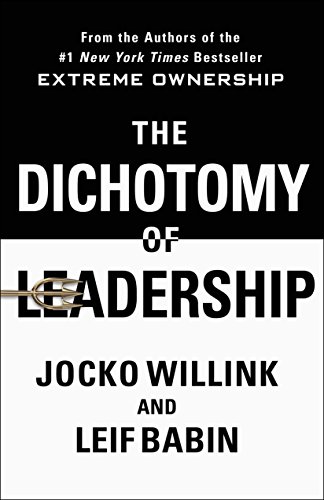
The Dichotomy of Leadership
by Jocko Willink and Leif Babin · 2018
Every leadership principle has aEqual and opposite failure mode, and the job is living in the middle.
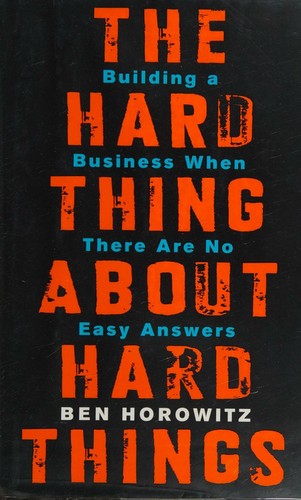
Worth reading? The Dichotomy of Leadership is the necessary sequel to Extreme Ownership, and it's better for experienced managers. Willink and Babin's core move is to show that every principle, own everything, decentralize command, care for your people, has a failure mode if taken too far. 'Extreme ownership' becomes micromanagement; 'decentralize' becomes chaos. The book is really a manual for finding the center line under pressure. Read it after Horowitz, not instead of him. Horowitz is the fire, this is the steady hand.
| Full Title | The Dichotomy of Leadership: Balancing the Challenges of Extreme Ownership |
|---|---|
| Author | Jocko Willink and Leif Babin |
| Published | 2018 |
| Category | Business & Money |
| Favorite quote | “The best leaders are not driven by ego. They are driven by a desire to serve those under their command and to accomplish the mission.” |
The Verdict
Willink came out of Navy SEAL command and writes like it, direct, no fluff, a little too sure of himself. The saving grace of this book is the humility to admit the first book’s ideas can be abused. If you manage humans, the dichotomy frame (too much of any good thing breaks) is the most useful thing in it.
managers and founders who already read Extreme Ownership and want the nuance
you haven't read Extreme Ownership yet, start there, this is the advanced course
Book Summary
Leadership is a set of dichotomies. Own the outcome completely, but don't blame your people into the ground. Empower your team, but stay close enough to catch the drift. Every virtue flips into a vice past its limit.
The leader must care for people and mission at once, coddling loses the mission, grinding people loses the team. Balance is the daily work, not a one-time decision.
Discipline and freedom sound opposed, but a disciplined team earns real autonomy. And 'checking the ego' isn't self-erasure; it's the only way to see the situation clearly enough to lead it.
Top 8 Lessons from The Dichotomy of Leadership
- Every principle has an equal and opposite failure mode, live in the middle.
- Extreme ownership becomes micromanagement if you don't also empower.
- Care for the mission and the people, never trade one for the other.
- Decentralize command, but stay close enough to catch drift.
- Discipline buys the team real freedom; slack buys chaos.
- Planning and execution both need a leader in the loop.
- Ego is the enemy of seeing the situation clearly.
- Leaders must be both decisive and willing to be wrong.
Top 4 Quotes from The Dichotomy of Leadership
"The best leaders are not driven by ego. They are driven by a desire to serve those under their command and to accomplish the mission."
Jocko Willink and Leif Babin, The Dichotomy of Leadership
"There are two ends of the spectrum, and the leader must find the balance in between."
Jocko Willink and Leif Babin, The Dichotomy of Leadership
"You must care, but not so much that you lose the ability to make the hard call."
Jocko Willink and Leif Babin, The Dichotomy of Leadership
"If mistakes happen, effective leaders don't place blame on others. They take ownership of the mistakes, determine what went wrong, develop solutions to correct those mistakes and prevent them from happening again as they move forward."
Jocko Willink and Leif Babin, The Dichotomy of Leadership
Frequently Asked Questions
Is The Dichotomy of Leadership worth reading?
Yes, if you already lead people and read Extreme Ownership. It fixes the most common failure of the first book, that 'own everything' taken literally turns you into a micromanager. This one teaches the balance. Skip it if you haven't read Extreme Ownership first.
What is the main idea of The Dichotomy of Leadership?
Every leadership principle has an opposite failure mode. The job isn't to apply a rule, it's to hold the center between two extremes, own the outcome without crushing your team, empower without losing control.
How is it different from Extreme Ownership?
Extreme Ownership says take total responsibility and lead decisively. The Dichotomy says each of those can be taken too far, and great leadership is the balancing act between the extremes. It's the more mature, experienced-manager book.
Should I read this or The Hard Thing About Hard Things?
Both. Horowitz is the war story of leading when there's no right answer; Willink and Babin give you the operating principles for doing it daily. Read Horowitz for the scare, this for the system.
Ready to read it?
Get The Dichotomy of Leadership on Amazon