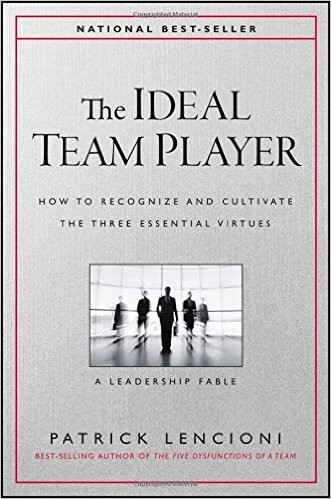
The Ideal Team Player
by Patrick Lencioni · 2016
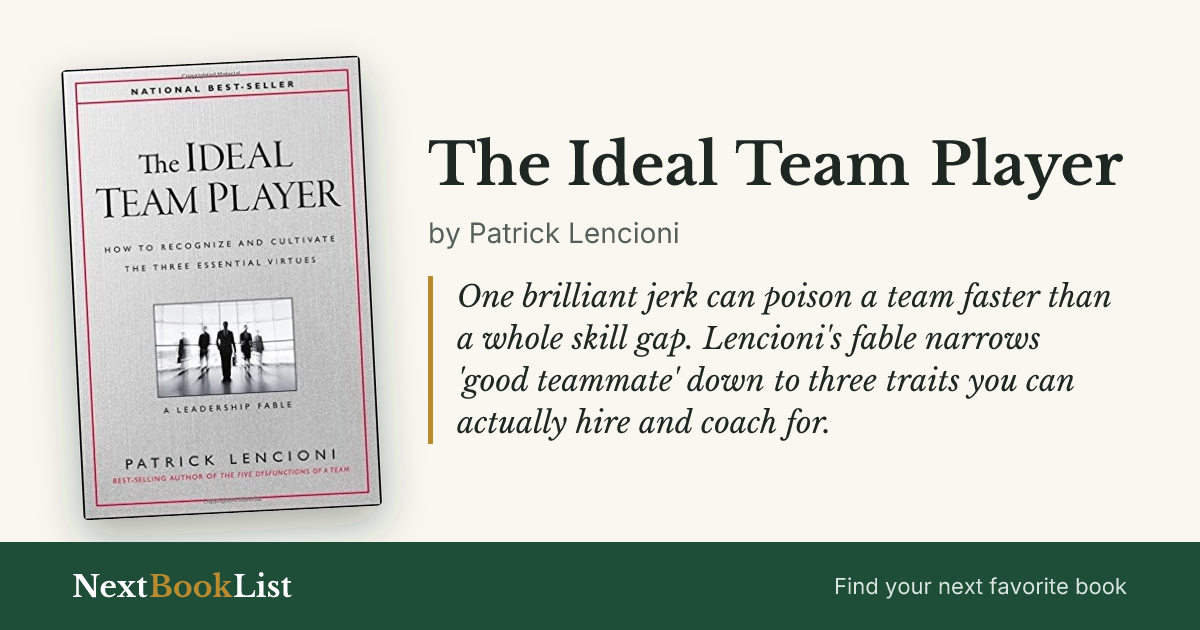
One brilliant jerk can poison a team faster than a whole skill gap. Lencioni's fable narrows 'good teammate' down to three traits you can actually hire and coach for.
Worth reading? Lencioni boils 'good teammate' down to three traits, humble, hungry, smart, and that's the whole book. Read The Five Dysfunctions first if you want the team-system view; this is the sharper companion on who to actually put on the team. Skip it if you already live the model and just want a deeper framework.
| Full Title | The Ideal Team Player: How to Recognize and Cultivate the Three Essential Virtues |
|---|---|
| Author | Patrick Lencioni |
| Published | 2016 |
| Category | Business & Money |
| Favorite quote | “Hire for humility over raw talent -- a brilliant jerk poisons the team faster than a skill gap.” |
The Verdict
Lencioni boils ‘good teammate’ down to three traits, humble, hungry, smart, and that’s the whole book. Read The Five Dysfunctions first if you want the team-system view; this is the sharper companion on who to actually put on the team. Skip it if you already live the model and just want a deeper framework.
you hire or manage teams and keep getting burned by talented people who can't collaborate
you've already read The Five Dysfunctions of a Team and want the team-system view -- this is the sharper, narrower companion on who to put on the team, not how the team functions as a whole
Book Summary
Lencioni reduces "good teammate" to three interdependent virtues: humble (shares credit, doesn't make everything about themselves), hungry (self-motivated, does the work without being pushed), and smart (people-smart, reads the room and manages relationships well). Missing any one of the three breaks the model -- a humble, hungry person who's not people-smart still causes friction, and a smart, hungry person who's not humble is the classic brilliant jerk.
The practical edge is in what's coachable: hunger and people-smarts can be developed with the right environment and feedback, but humility is much harder to instill in someone who doesn't already have it, which is why Lencioni argues for hiring on humility first and coaching the other two.
Top 9 Lessons from The Ideal Team Player
- A great teammate is humble first, they share credit and don't make it about themselves.
- Hunger means self-motivated drive; they do the work without being pushed.
- Smart is people-smart, not book-smart, they read the room and manage relationships.
- The three virtues are interdependent; missing any one breaks the model.
- Hire for humility over raw talent, a brilliant jerk poisons the team faster than a skill gap.
- You can coach hunger and smarts; you can't easily coach humility into someone.
- The book models its ideas as a fable so the lessons stick without feeling like a manual.
- Assess current team members honestly against the three virtues and name the gaps.
- Leaders must model humility or the whole system rots from the top.
Top 1 Quotes from The Ideal Team Player
"Hire for humility over raw talent -- a brilliant jerk poisons the team faster than a skill gap."
Patrick Lencioni, The Ideal Team Player
Frequently Asked Questions
Is The Ideal Team Player worth reading?
Yes if you hire or manage teams; it's a fast, practical read that gives you a simple lens to judge fit.
What is the main idea of The Ideal Team Player?
That the best team members are simultaneously humble, hungry, and smart, and you should hire and manage against those three traits.
Who should read The Ideal Team Player?
Managers, founders, and anyone who builds or leads teams and is tired of brilliant loners who can't collaborate.
What are the three virtues in The Ideal Team Player?
Humble, hungry, and smart -- humble meaning they share credit, hungry meaning self-motivated drive, and smart meaning people-smart (not book-smart). Lencioni argues all three are required; missing any one undermines the other two.
Ready to read it?
Get The Ideal Team Player on Amazon