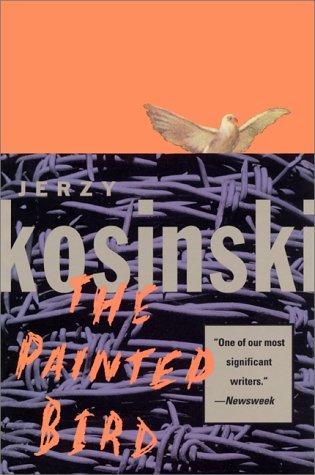
The Painted Bird
by Jerzy Kosinski · 1965
A boy wanders alone through Nazi-occupied Eastern European villages in this brutal, controversial novel about what unsupervised cruelty does to a child.
Worth reading? Kosinski's novel follows an unnamed boy, dark-haired and dark-eyed in a region where that marks him as an outsider, wandering alone through village after village during World War II, encountering escalating cruelty from the very people who should protect a child. Whether Kosinski's own wartime claims about the book were autobiography or invention became a major controversy after publication, but the novel's power doesn't depend on that question, it works as a study of what happens to innocence with no institution left to protect it. Read it as one of the starkest fictional treatments of unsupervised human cruelty ever written. Skip it if you're not prepared for sustained, graphic material.
| Author | Jerzy Kosinski |
|---|---|
| Published | 1965 |
| Category | Fiction |
The Verdict
This is not an easy recommendation, and it isn’t meant to be. Kosinski’s novel earns its reputation as one of the darkest books on any reading list by refusing every comfort, every redemption arc, every institutional safety net a reader might expect. Approach it knowing exactly what you’re signing up for.
readers prepared for one of the most unflinchingly dark novels of the 20th century
you're not in a place to read sustained, graphic depictions of cruelty toward a child
Book Summary
The novel's structure, an unnamed boy moving from village to village with no lasting protector, strips away every institution (family, church, state) that normally buffers a child from cruelty, and shows what fills that vacuum: superstition, scapegoating, and violence directed at whoever is marked as different.
Kosinski originally presented the book as closely autobiographical; it later emerged as substantially fictionalized, sparking a controversy that shadowed his reputation. The novel's continued relevance rests less on factual accuracy and more on its unflinching depiction of how quickly a community strips protection from anyone it decides doesn't belong.
Top 7 Lessons from The Painted Bird
- Removing every protective institution from a child reveals how quickly cruelty fills the vacuum.
- Being marked as 'different' (in this case, dark features in a region that feared it) can be enough to invite violence.
- Superstition and fear often justify cruelty that has nothing to do with actual guilt or danger.
- A story's power doesn't require literal autobiography, even after the Kosinski authenticity controversy, the novel's insight holds.
- Sustained exposure to violence changes a child's understanding of the world faster and more permanently than isolated incidents.
- Institutions (family, church, state) exist partly to prevent exactly the vacuum this novel depicts.
- The reader's discomfort is not incidental to the book's purpose, it's the point.
Frequently Asked Questions
Is The Painted Bird worth reading?
Yes, as one of the starkest literary treatments of unsupervised cruelty toward a child, but only if you're prepared for sustained, graphic material.
Is The Painted Bird a true story?
Kosinski originally presented it as closely autobiographical, but it was later shown to be substantially fictionalized, a controversy that followed him for the rest of his career. The novel's literary power doesn't depend on it being literal autobiography.
Why is The Painted Bird controversial?
Beyond its graphic content, the book's authenticity as autobiography was seriously challenged after publication, and separately, its unrelenting depictions of cruelty have divided readers since it first appeared.
Ready to read it?
Get The Painted Bird on Amazon