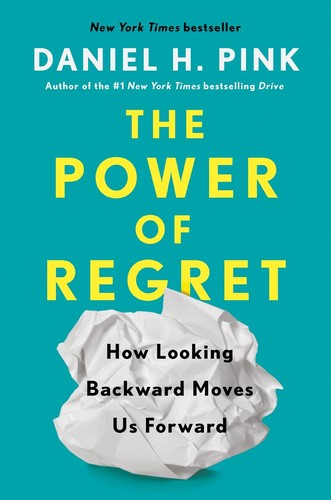
The Power of Regret
by Daniel Pink · 2022
Pink surveyed over 16,000 people across 105 countries about their regrets and found the same four categories every time.
Worth reading? The Power of Regret is the best argument against the 'no regrets' mantra: regret, done right, is a tool that clarifies values and improves future decisions, not a wound to avoid feeling. Pink's World Regret Survey data (four consistent categories across cultures) gives the argument real backing instead of just vibes. Skip it if you're processing one specific, acute regret and need grief support; this is a broader framework, not a targeted intervention.
| Full Title | The Power of Regret: How Looking Backward Moves Us Forward |
|---|---|
| Author | Daniel Pink |
| Published | 2022 |
| Publisher | Riverhead Books |
| Category | Self-Improvement & Psychology |
| Favorite quote | “If we know what we truly regret, we know what we truly value.” |
The Verdict
Pink built the World Regret Survey specifically to test whether regret has a consistent shape across cultures, and it does: the same four categories show up whether he’s surveying someone in Ohio or Osaka. That’s a stronger foundation than the usual regret-essay, which tends to generalize from the author’s own life.
The most useful finding is the size of connection regrets, letting a friendship lapse, not repairing a rift, staying quiet when you should have reached out. It’s the biggest bucket by a wide margin, and it’s also the most fixable: a single text message resolves more regret than most people expect. That’s a more actionable takeaway than the usual “follow your passion, no regrets” noise.
Skip it if you’re in the middle of processing one specific, acute regret and need grief support, this is a broader framework for understanding regret’s function, not a targeted intervention. For everyone else who was taught to bury the feeling, it’s a useful correction.
you've been taught to suppress regret ('no regrets!') and want a more honest, useful relationship with it
you want a book about a single specific regret to process -- this is a research survey of regret's structure, not a grief-processing guide

Book Summary
"No regrets" is bad advice. Regret is a universal, healthy emotion that shows up in every culture Pink surveyed, and suppressing it just wastes the information it's carrying about what you actually value.
Nearly all regret sorts into four categories: foundation regrets (not being responsible, disciplined, or prudent), boldness regrets (not taking the chance), moral regrets (choosing wrong over right), and connection regrets (letting relationships lapse). Connection regrets are the largest group by far.
Regret is useful precisely because it's uncomfortable. Handled with the right process, naming it, extracting the lesson, extending yourself compassion, it sharpens decision-making, boosts performance, and strengthens your sense of what actually matters, rather than just dragging you down.
Top 8 Lessons from The Power of Regret
- Drop the 'no regrets' mantra -- regret is a normal, useful signal about what you value, not a weakness to suppress.
- Nearly all regret fits four categories: foundation, boldness, moral, and connection regrets.
- Connection regrets (letting a relationship lapse, not reaching out) are the single largest category people report.
- Regret clarifies values: what you regret not doing tells you what you actually care about.
- Boldness regrets (the chance not taken) tend to grow more painful over time, unlike regrets over actions taken.
- Reframe regret as feedback for the next decision, not a verdict on your character.
- A life balancing obligation and opportunity produces the fewest lasting regrets; too much of either creates its own regret.
- Reaching out to repair a lapsed connection resolves more regret, faster, than almost any other single action.
Top 5 Quotes from The Power of Regret
"If we know what we truly regret, we know what we truly value."
Daniel Pink, The Power of Regret
"A life of obligation and no opportunity is crimped. A life of opportunity and no obligation is hollow. A life that fuses opportunity and obligation is true."
Daniel Pink, The Power of Regret
"Regret is not dangerous or abnormal, a deviation from the steady path to happiness. It is healthy and universal, an integral part of being human."
Daniel Pink, The Power of Regret
"When feeling is for thinking and thinking is for doing, regret is for making us better."
Daniel Pink, The Power of Regret
"Connection regrets are the largest category in the deep structure of human regret."
Daniel Pink, The Power of Regret
Frequently Asked Questions
Is The Power of Regret worth reading?
Yes, especially if you've internalized 'no regrets' as a life philosophy. Pink's survey data makes a convincing case that regret, used well, is a tool, not a flaw.
What are the four core regrets Pink identifies?
Foundation regrets (not being disciplined or prudent), boldness regrets (not taking the chance), moral regrets (choosing wrong over right), and connection regrets (letting relationships lapse) -- connection regrets are the largest group.
Is this a grief-processing book?
No. It's a research-driven framework for regret's structure and usefulness, not a targeted guide for processing one specific, acute loss.
Who should read The Power of Regret?
Anyone who suppresses regret rather than learning from it. Skip it if you need help with one specific grief rather than a general framework.
Ready to read it?
Get The Power of Regret on Amazon