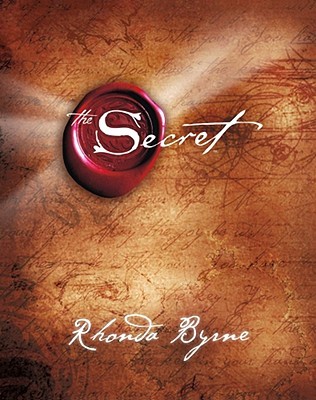
The Secret
by Rhonda Byrne · 2006
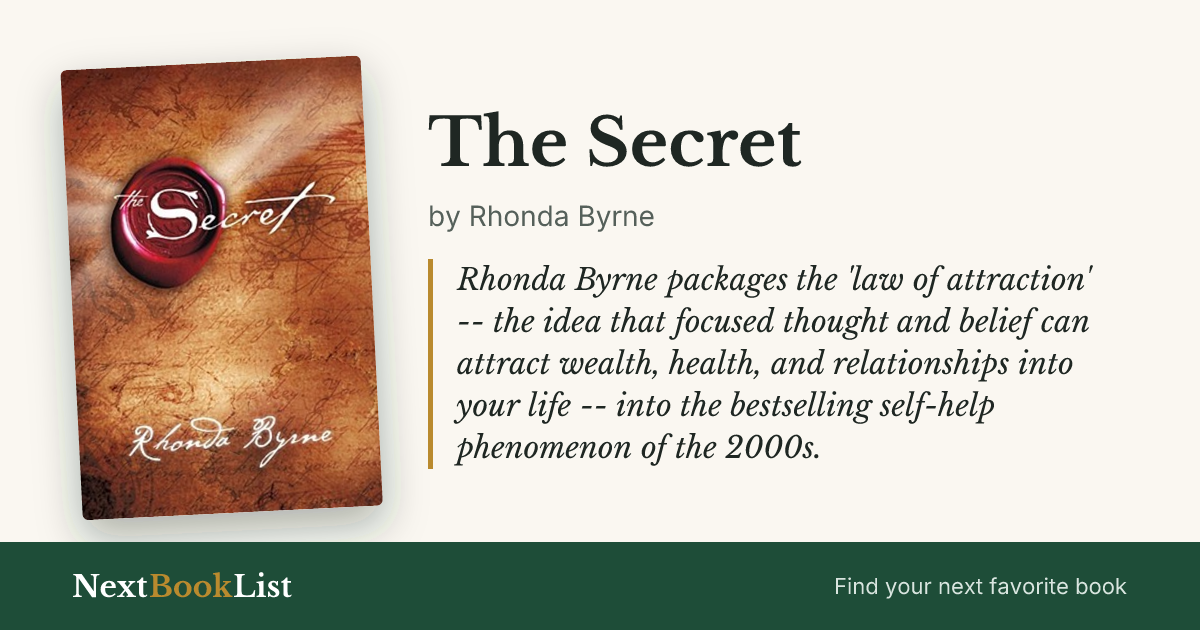
Rhonda Byrne packages the 'law of attraction' -- the idea that focused thought and belief can attract wealth, health, and relationships into your life -- into the bestselling self-help phenomenon of the 2000s.
Worth reading? The Secret is worth understanding as a cultural phenomenon more than as advice to follow literally. Its actual claim -- that focused belief and positive thinking directly attract matching outcomes into your life through something like a physical law -- isn't supported by evidence, and the book states it as fact rather than metaphor. Where it does something real is in nudging readers toward clearer goals, gratitude, and visualization, which have some genuine psychological backing as motivational tools. The book just wraps that real, modest benefit in a much bigger, unsupported claim.
| Author | Rhonda Byrne |
|---|---|
| Published | 2006 |
| Publisher | Atria Books/Beyond Words |
| Category | Self-Improvement & Psychology |
| Favorite quote | “Thoughts become things.” |
The Verdict
The Secret’s actual influence is bigger than its argument deserves. “Ask, believe, receive” became cultural shorthand, but the underlying claim, that focused thought attracts matching real-world outcomes through something like a physical law, isn’t something the book demonstrates. It asserts it.
What’s genuinely useful gets smuggled in underneath the bigger claim: setting clear goals, practicing gratitude, visualizing outcomes. Those have real, modest psychological support as motivational tools. You don’t need the law of attraction framing to use them.
Read it if you’re curious about the most influential popular version of “law of attraction” thinking and can separate the real (goal clarity, gratitude) from the unsupported (thoughts as a literal attracting force). Skip it if you want claims backed by evidence instead of assertion.
you want the most influential popular version of 'law of attraction' thinking, and you're going in aware it's a belief system, not a body of evidence
you want claims backed by actual research -- The Secret's central mechanism (that thoughts directly attract matching real-world outcomes) has no scientific support, and the book presents it as established fact rather than a metaphor for mindset and motivation
Book Summary
Byrne's central claim is the "law of attraction": the idea that thoughts and feelings emit a kind of energy that attracts corresponding real-world circumstances, so that focusing on wealth, health, or love will draw those things toward you, and focusing on lack or fear will attract more of the same.
The book presents a three-step process -- ask, believe, receive -- treating clear intention-setting, genuine belief the outcome will happen, and openness to receiving it, as the mechanism by which the law of attraction supposedly operates.
Visualization and gratitude practices are recommended throughout as ways to reinforce belief and positive feeling, which the book frames as strengthening the attraction effect, though these same practices have separate, more modest support in psychology as tools for motivation and goal clarity, independent of any attraction mechanism.
The book presents its claims as an ancient secret suppressed by powerful interests and rediscovered by successful people throughout history, a framing that gives the ideas a sense of hidden authority the underlying claims don't independently earn.
Top 10 Lessons from The Secret
- The book's central 'law of attraction' claim -- that focused thought and belief directly attract matching real-world outcomes -- has no established scientific support, and readers should treat it as a belief system, not a factual mechanism.
- Clear goal-setting and visualization, two practices the book recommends, do have some genuine psychological support as motivational tools, separate from any claim about thoughts attracting outcomes through an energy-like mechanism.
- Gratitude practices are associated in psychological research with modest well-being benefits, which is a real, if much smaller, benefit than the book's broader promises.
- A risk of the book's framing is that it can imply illness, poverty, or misfortune result from a person's own negative thinking, which is a harmful oversimplification of circumstances often driven by factors entirely outside an individual's control.
- The book's 'ancient secret' framing borrows authority from historical figures and traditions without independently establishing that the underlying claims are true.
- Positive thinking and optimism have real, if modest, associations with resilience and motivation in psychological research -- distinct from the book's much larger claim that thought alone reshapes external reality.
- The book's 'ask, believe, receive' framework is really just goal-setting, self-belief, and openness to opportunity relabeled as a cosmic law -- the practical value survives even if you discard the metaphysics.
- Byrne treats every historical and cultural touchstone she cites, from Newton to Shakespeare, as evidence for the same literal law of attraction, when at most they demonstrate ordinary ambition and focus, not a physical force.
- The book offers no mechanism for why negative thinking wouldn't equally attract the bad outcomes proponents already fear, an internal inconsistency it never really addresses.
- Because the book states an unfalsifiable claim as fact, any failure to get the outcome you visualized can be blamed on insufficient belief rather than the method itself -- a structure that insulates the claim from being tested.
Top 4 Quotes from The Secret
"Thoughts become things."
Rhonda Byrne, The Secret
"You are the most powerful magnet in the Universe! You contain a magnetic power within you that is more powerful than anything else in this world."
Rhonda Byrne, The Secret
"Feeling good attracts to you good things, people, circumstances, and events, because you are in vibrational harmony with them."
Rhonda Byrne, The Secret
"The law of attraction is always working, whether you believe it or understand it or not."
Rhonda Byrne, The Secret
Frequently Asked Questions
Is The Secret worth reading?
As a cultural phenomenon and a snapshot of popular 'law of attraction' thinking, yes -- as literal advice to follow, treat its central claims with real skepticism, since they aren't supported by evidence.
What is The Secret about?
Rhonda Byrne's self-help book argues that focused thought and belief can attract matching real-world outcomes, framed around a three-step process of ask, believe, receive.
Is the law of attraction in The Secret backed by science?
No -- the book's central claim that thoughts directly attract matching real-world circumstances has no established scientific support, though some recommended practices like goal-setting and gratitude have separate, more modest psychological backing.
Why is The Secret controversial?
Critics point out it presents an unsupported claim as established fact, and that its framing can imply misfortune results from a person's own negative thinking, which oversimplifies circumstances often outside anyone's control.
Ready to read it?
Get The Secret on Amazon