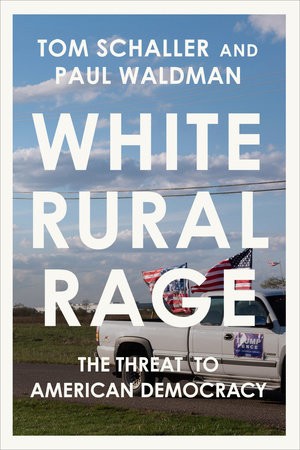
White Rural Rage
by Tom Schaller and Paul Waldman · 2024
Two political writers argue that rural white America -- despite holding outsized political power through the Senate and Electoral College -- has become the demographic most receptive to authoritarian populism, and the most likely to abandon democratic norms.
Worth reading? Schaller and Waldman's core argument is structural before it's cultural: rural America, and rural white America specifically, holds political power wildly disproportionate to its population share, thanks to the Senate's two-seats-per-state design and the Electoral College's small-state weighting. Layered on top of that structural advantage, they argue rural white voters have become disproportionately receptive to authoritarian populism, conspiracy theories, and anti-democratic rhetoric, driven by economic decline, demographic anxiety, and a right-wing media ecosystem that stokes resentment daily. It became a bestseller and a lightning rod at once -- several academics whose research the authors cited publicly said their work was mischaracterized or overstated to fit the book's thesis, which is a real credibility problem worth knowing about going in. The structural argument about Senate and Electoral College power is on solid ground; the sweeping characterization of an entire regional and racial demographic's political psychology is the part that drew the most substantive criticism, and readers should weigh both sides of that debate rather than take the book's framing uncritically.
| Full Title | White Rural Rage: The Threat to American Democracy |
|---|---|
| Author | Tom Schaller and Paul Waldman |
| Published | 2024 |
| Publisher | Random House |
| Category | Sociology & Culture |
The Verdict
This is a book you should read with the controversy already in view. The structural argument – that the Senate and Electoral College hand rural, disproportionately white states more power per capita than anywhere else in the system – is well documented and hard to dispute. Where it gets shakier is the broader psychological and demographic claims about an entire region’s politics, several of which the researchers cited in the book have publicly pushed back on. Read it for the structural case. Read the criticism too before you adopt the rest of the argument wholesale.
Read it if you want the clearest documented case for how the Senate and Electoral College disproportionately empower rural, white America, and you’re willing to weigh a genuinely contested thesis. Skip it if you want a sympathetic account of rural economic decline, or a book without a live, public academic controversy attached to its sourcing.
you want a data-driven, unflinching argument about rural American political attitudes and their disproportionate structural power in the Senate and Electoral College, and you're comfortable with a book that generated real academic pushback
you want a sympathetic or explanatory account of rural economic decline and resentment -- this book's argument is pointed and prosecutorial rather than empathetic, and it drew public criticism from some of the researchers it cites for allegedly misrepresenting their work
Book Summary
The U.S. Senate's two-seats-per-state structure and the Electoral College's small-state weighting give rural, disproportionately white states far more political power per capita than urban and diverse states -- Schaller and Waldman argue this isn't incidental but has become central to how national policy and elections are shaped.
Rural economic decline (manufacturing loss, agricultural consolidation, population outmigration, hospital and school closures) has produced real grievances, but the authors argue those grievances have been channeled by right-wing media and political figures toward scapegoating (immigrants, urban elites, racial minorities) rather than toward the policy actors more directly responsible for rural disinvestment.
The combination of outsized structural power and susceptibility to anti-democratic rhetoric is, in the authors' framing, a distinct threat to democratic stability -- not because rural voters are a monolith, but because a demographic with this much leverage embracing authoritarian-friendly positions has more capacity to reshape national institutions than a similarly sized urban demographic would.
Top 9 Lessons from White Rural Rage
- The U.S. Senate gives every state two seats regardless of population, which structurally overweights rural, less populous, and disproportionately white states in national legislation.
- The Electoral College's allocation (tied to congressional representation, including each state's guaranteed minimum) similarly overweights smaller, more rural states in presidential elections relative to their population share.
- Rural economic decline -- manufacturing loss, agricultural consolidation, hospital and school closures, population outmigration -- is treated as a real and significant grievance, not dismissed by the authors as illegitimate.
- The authors argue right-wing media has directed rural economic anger toward cultural scapegoats (immigration, urban elites, racial minorities) rather than toward the corporate consolidation and policy choices more directly tied to rural disinvestment.
- Rural areas are shown polling higher on certain measures of support for political violence and distrust in election outcomes compared to some other demographics, which the authors treat as central evidence for their thesis.
- The book argues rural political identity has become increasingly nationalized -- shaped more by national partisan media than by local community concerns -- a shift they tie to the decline of local newspapers and rise of nationalized cable and online media.
- Several academics whose research the authors cited (on rural political attitudes and violence) publicly stated their findings were mischaracterized or overstated in the book, which is a documented and relevant credibility issue for readers to weigh.
- The authors distinguish between individual rural voters (whom they don't treat as a monolith) and rural America's aggregate structural political power, arguing the danger lies primarily in the combination of the two rather than in any single rural voter's views.
- The book situates its argument within a broader concern about democratic backsliding in the U.S., treating rural political trends as one significant contributing factor rather than the sole cause.
Frequently Asked Questions
Is White Rural Rage worth reading?
It's worth reading with a critical eye -- the structural argument about Senate and Electoral College power is well documented, but the book drew real academic criticism for how it characterized cited research, so it's best read alongside that pushback rather than at face value.
What is White Rural Rage about?
Tom Schaller and Paul Waldman argue that rural white America holds outsized political power through the Senate and Electoral College while becoming disproportionately receptive to authoritarian populism, a combination they frame as a threat to American democracy.
Was White Rural Rage controversial?
Yes. Several academics whose research the authors cited on rural political attitudes and violence publicly said their work was mischaracterized or overstated to fit the book's argument, which drew significant pushback in press coverage.
Does White Rural Rage claim all rural voters are the same?
The authors say they're describing aggregate political trends and structural power dynamics, not making a claim about every individual rural voter, though critics argue the book's framing sometimes reads as broader than that distinction allows.
Is White Rural Rage focused on economics or politics?
Both -- it connects rural economic decline (manufacturing loss, agricultural consolidation, hospital closures) to political attitudes, arguing the two are linked through how right-wing media has channeled rural economic grievance.
Ready to read it?
Get White Rural Rage on Amazon