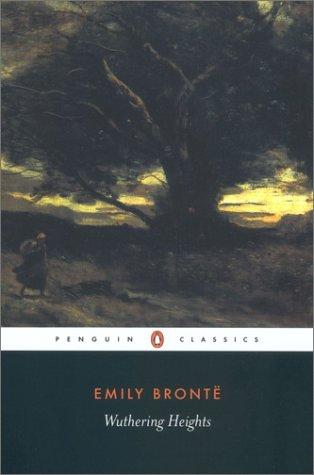
Wuthering Heights
by Emily Bronte · 1847
Not a love story -- a revenge story with a love story's reputation, and darker than most people remember.
Worth reading? Wuthering Heights gets recommended as a romance and that's a mismarketing that's lasted 175 years. It's closer to a study of how obsession curdles into cruelty across two generations. It's a rougher, meaner read than Jane Eyre, and it beats most gothic fiction that followed because Bronte never softens Heathcliff into an antihero you're supposed to like. Skip it if you need likable leads -- this book has none.
| Author | Emily Bronte |
|---|---|
| Published | 1847 |
| Publisher | Penguin Classics |
| Category | Fiction |
| Favorite quote | “Whatever our souls are made of, his and mine are the same.” |
The Verdict
Most people go in expecting a love story and come out unsettled by how little love actually has to do with it. Heathcliff’s devotion to Catherine is real, but so is the multi-generational cruelty he inflicts once she’s gone, and the novel never asks you to forgive him for it.
It’s a harder, colder read than Jane Eyre, and that’s exactly the reason to read it. Bronte wrote obsession as a destructive force a full century before that became a common literary move.
you want gothic, obsessive, morally ugly fiction about a love that destroys everyone near it, told through a deliberately unreliable narrator
you want characters to root for -- Heathcliff and Catherine are both cruel, and the second half follows their damage landing on an entirely new generation
Book Summary
Heathcliff, a foundling raised alongside Catherine Earnshaw, grows up loving her with an intensity the novel treats as almost supernatural. When Catherine marries Edgar Linton for social status instead, Heathcliff disappears, returns wealthy, and spends the rest of the novel systematically destroying both families out of a mix of grief and vengeance.
The novel's structure, told secondhand through the housekeeper Nelly Dean to an outside narrator, keeps the reader at a distance from Heathcliff and Catherine's obsession rather than inviting the reader to root for it. That distance is the point: the novel is diagnosing a destructive love, not celebrating one.
The second half follows the next generation -- Catherine's daughter, Heathcliff's son, Hindley's son Hareton -- as they inherit the damage their parents caused. The book's actual resolution is that obsession burns out over two generations, not that it's redeemed.
Top 8 Lessons from Wuthering Heights
- Heathcliff and Catherine's bond is written as consuming rather than nurturing -- the novel treats intensity and love as separate, often opposed, qualities.
- Catherine marries Edgar Linton for social position while insisting her real soul-bond is with Heathcliff -- the novel doesn't let her have both.
- Heathcliff's revenge plot spans two families and roughly twenty years, showing how a single grievance can metastasize across a generation that had nothing to do with the original wrong.
- The novel is told secondhand, through Nelly Dean's account to Mr. Lockwood, which deliberately keeps the reader from fully trusting either narrator's read on events.
- Hindley Earnshaw's abuse of young Heathcliff is the origin of the cruelty Heathcliff later inflicts on Hindley's own son, Hareton -- the novel draws a direct line from being abused to becoming abusive.
- Catherine's ghost haunting the moors at the novel's opening frames the whole story as already tragic before the reader knows why.
- The second-generation romance between young Cathy and Hareton is the book's one gesture toward healing -- love without the original generation's obsession or cruelty.
- The moors themselves function almost as a character -- wild, isolating, and indifferent to the human drama playing out on them.
Top 5 Quotes from Wuthering Heights
"Whatever our souls are made of, his and mine are the same."
Emily Bronte, Wuthering Heights
"I cannot live without my life! I cannot live without my soul!"
Emily Bronte, Wuthering Heights
"He's more myself than I am."
Emily Bronte, Wuthering Heights
"I have not broken your heart -- you have broken it; and in breaking it, you have broken mine."
Emily Bronte, Wuthering Heights
"If all else perished, and he remained, I should still continue to be; and if all else remained, and he were annihilated, the universe would turn to a mighty stranger."
Emily Bronte, Wuthering Heights
Frequently Asked Questions
Is Wuthering Heights a love story?
Not really, despite its reputation. It's closer to a study of obsession curdling into revenge -- Heathcliff and Catherine are both cruel, not just passionate.
Is Wuthering Heights worth reading?
Yes, if you want a rougher, meaner gothic classic than Jane Eyre. It doesn't ask you to like its leads, which is unusual for the period and still effective.
Why is Wuthering Heights considered dark?
Heathcliff spends most of the novel taking revenge on two families, including people who had nothing to do with the original wrong done to him -- the damage spans two generations.
Who should read Wuthering Heights?
Readers who want gothic, morally ugly fiction rather than a redemptive romance. Skip it if you need characters you can actually root for.
Ready to read it?
Get Wuthering Heights on Amazon