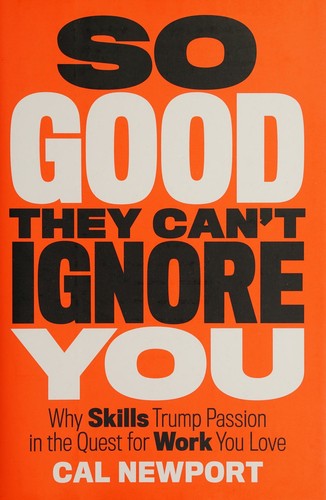
So Good They Can't Ignore You
by Cal Newport · 2012
Cal Newport's case against 'follow your passion': build rare, valuable skills first, and the passion follows the mastery, not the other way around.
Worth reading? Newport's first real career book, and the one that sets up everything he wrote afterward. The 'follow your passion' myth-busting is genuinely useful for anyone stuck pre-career waiting for a calling. It's less immediately actionable than Deep Work, which is the execution manual for the career capital this book tells you to build. Read this first if you're choosing a path; read Deep Work once you're on one.
| Full Title | So Good They Can't Ignore You: Why Skills Trump Passion in the Quest for Work You Love |
|---|---|
| Author | Cal Newport |
| Published | 2012 |
| Publisher | Business Plus |
| Category | Self-Improvement & Psychology |
| Favorite quote | “Passion comes after you put in the hard work to become excellent at something valuable, not before.” |
The Verdict
Newport’s first swing at the career-advice genre, and it’s aimed squarely at the advice everyone gives and almost nobody can back up: follow your passion. He shows the passion hypothesis doesn’t hold up against how people who actually love their work got there, which is by getting good at something rare and valuable first.
The craftsman mindset versus passion mindset distinction is the book’s most useful takeaway: stop asking what your work can offer you, start asking what you can offer it. Skill accumulates into leverage, and leverage is what eventually buys the autonomy people mistake for “finding their passion.”
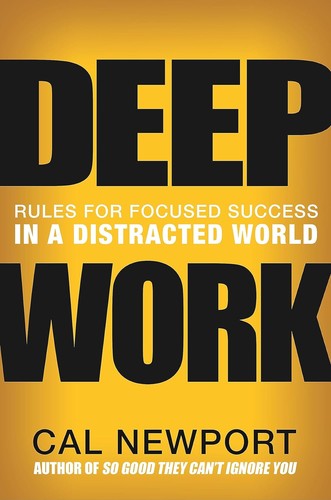
It’s the setup book. Deep Work is the execution manual for the capital this one tells you to build. Read them in that order if you’re starting from scratch.
anyone anxious about finding their 'true calling' before committing to a career path
you already have deep, marketable skills and just need to schedule the work -- read Deep Work instead
Book Summary
"Follow your passion" is bad advice for almost everyone, because passion is usually the side effect of getting good at something valuable, not a prerequisite for choosing it. Newport calls this the passion hypothesis and shows how rarely it matches how people who love their work actually got there.
Career capital theory: rare and valuable skills are the currency that buys you the traits of great work -- autonomy, impact, creativity. Passion doesn't buy any of that. Skill does, and skill is built through deliberate practice, not years of just showing up.
Once you have career capital to spend, expect resistance when you try to cash it in for autonomy -- Newport calls this the control trap, because employers resist giving up their most valuable people's time and output.
Top 9 Lessons from So Good They Can't Ignore You
- Passion is usually the effect of mastery, not the cause -- stop waiting for a calling.
- Treat your skills as career capital you build deliberately, not talent you're waiting to discover.
- "Follow your passion" is bad advice for almost anyone without deep skill already.
- Deliberate practice, not just years on the job, is what actually builds capital.
- Autonomy has to be earned with capital -- expect resistance when you try to claim it.
- A clear mission usually emerges after skill, not before -- don't wait for it to appear first.
- Small side bets reveal what's genuinely adjacent to your real capital.
- Chasing a job that looks good on paper without capital to back it up leads nowhere.
- Adopt the craftsman mindset (what can I offer) over the passion mindset (what can this offer me).
Top 4 Quotes from So Good They Can't Ignore You
"Passion comes after you put in the hard work to become excellent at something valuable, not before."
Cal Newport, So Good They Can't Ignore You
"If you want to love what you do, abandon the passion mindset ('what can the world offer me?') and instead adopt the craftsman mindset ('what can I offer the world?')."
Cal Newport, So Good They Can't Ignore You
"Don't follow your passion; rather, let it follow in your quest to become, in the words of my favorite Steve Martin quote, 'so good that they can't ignore you.'"
Cal Newport, So Good They Can't Ignore You
"Working right trumps finding the right work. He didn't need to have a perfect job to find occupational happiness -- he needed instead a better approach to the work already available to him."
Cal Newport, So Good They Can't Ignore You
Frequently Asked Questions
Is So Good They Can't Ignore You worth reading?
Yes, especially if you're choosing a career path and feel behind for not having a 'passion' yet. It's the most direct debunking of that myth in print.
What is the main idea of So Good They Can't Ignore You?
Skill, not passion, is the real path to work you love. Build rare, valuable career capital first; passion and autonomy follow from that, not the other way around.
How does this compare to Deep Work by the same author?
This book tells you what to build (career capital, via skill); Deep Work tells you how to build it (via scheduled, distraction-free concentration). Read this one first if you haven't picked a direction yet.
Who should read So Good They Can't Ignore You?
Students, early-career professionals, and anyone stalled waiting to feel passionate about something before committing to it.
Ready to read it?
Get So Good They Can't Ignore You on Amazon