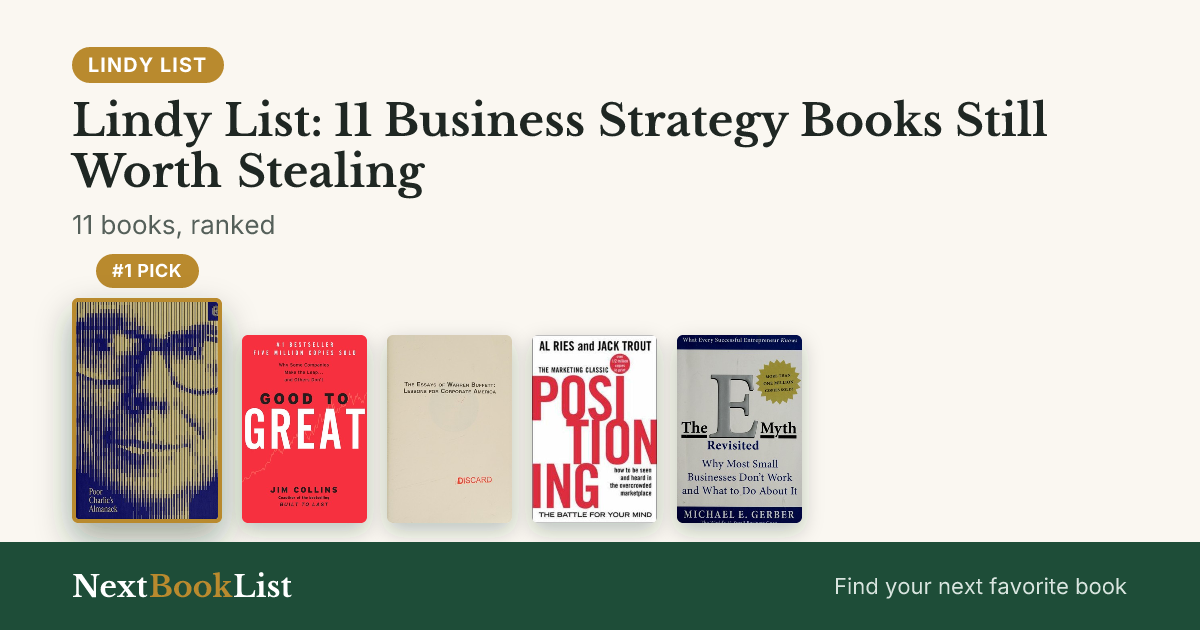
Lindy List: 11 Business Strategy Books Still Worth Stealing

Updated July 24, 2026 · 11 books

Lindy List: 11 Business Strategy Books Still Worth Stealing: ranked list of 11 books

Business books usually die with the company they profiled. These eleven kept getting read after the case studies went stale, because the underlying framework survived the example.

Start with Poor Charlie’s Almanack if you want the deepest well: Munger’s mental models apply to more than investing. If you want something narrower and faster to apply, Positioning (1981) is still the default playbook for how to own a word in a customer’s head, and Breakthrough Advertising is still what direct-response marketers study to understand why people actually buy.

The genre warning: business books sell certainty they don’t always have. Good to Great’s case studies partly didn’t hold up; Rich Dad Poor Dad’s author claims get disputed. Take the framework, verify the specifics yourself, and don’t treat a bestseller list as due diligence.

Quick Comparison

#BookBest for
1Poor Charlie's AlmanackCharlie Munger (ed. Peter D. Kaufman)readers who want to think better across disciplines, not just invest betterAmazon
2Good to GreatJim Collinsleaders and operators who want evidence-based strategy, not motivational leadership fluffAmazon
3The Essays of Warren BuffettWarren Buffett & Lawrence A. Cunninghaminvestors who want Buffett's actual thinking instead of books about himAmazon
4PositioningAl Ries and Jack Troutmarketers, founders, and anyone launching something into a noisy categoryAmazon
5The E-Myth RevisitedMichael E. Gerbersmall business owners drowning in their own operationsAmazon
6The Innovator's DilemmaClayton M. Christensenfounders, operators, and investors who need to understand why incumbents dieAmazon
7Naked EconomicsCharles Wheelanreaders who want economics explained without equations or jargonAmazon
8Rich Dad Poor DadRobert T. Kiyosakicomplete beginners who need a mindset shift about earning versus owningAmazon
9Sam Walton: Made in AmericaSam Waltonoperators who want to see obsessive retail execution from the insideAmazon
10Breakthrough AdvertisingEugene Schwartzyou write copy or ads and want the deepest, hardest book on why people actually buyAmazon
11The Boron LettersGary Halbertyou write sales copy, emails, or ads and want the underground classic every working copywriter has already readAmazon

The Books

Poor Charlie's Almanack by Charlie Munger (ed. Peter D. Kaufman) book cover

1. Poor Charlie's Almanack

Charlie Munger (ed. Peter D. Kaufman) · 2005

Munger's mental models and the psychology of human misjudgment, in one strange, wonderful book.

Munger’s talk on the 25 psychological tendencies that cause misjudgment is worth the whole volume, and the “latticework of mental models” idea launched a thousand blogs. The Stripe Press edition trimmed it well. Not really an investing book. A thinking book that happens to be written by an investor.

Read it if: readers who want to think better across disciplines, not just invest better

Skip it if: you want a linear how-to book (this is speeches, talks, and tangents)

Full verdict: Poor Charlie's Almanack →

Good to Great by Jim Collins book cover

2. Good to Great

Jim Collins · 2001

The companies that became great had no dream, no breakthrough, and no charismatic savior, they had discipline.

Collins built this on a 5-year research project, not a TED talk. The uncomfortable part for ambitious people is that the great companies weren’t heroic, they were relentlessly, boringly disciplined. The Hedgehog Concept alone (one thing, done better than anyone) will cut more from your to-do list than any productivity book.

Read it if: leaders and operators who want evidence-based strategy, not motivational leadership fluff

Skip it if: you want a fast narrative business book; this is a 300-page research study with charts

Full verdict: Good to Great →

The Essays of Warren Buffett by Warren Buffett & Lawrence A. Cunningham book cover

3. The Essays of Warren Buffett

Warren Buffett & Lawrence A. Cunningham · 1997

Buffett's shareholder letters, organized by theme. The closest thing to a book he ever wrote.

Cunningham arranged decades of Berkshire shareholder letters by topic: governance, valuation, accounting, acquisitions. Buffett explains more clearly than any textbook because he’s writing to persuade partners, not impress academics. Read it slowly. One section per sitting beats bingeing it.

Read it if: investors who want Buffett's actual thinking instead of books about him

Skip it if: you're brand new to investing (the letters assume you know the basics)

Full verdict: The Essays of Warren Buffett →

Positioning by Al Ries and Jack Trout book cover

4. Positioning

Al Ries and Jack Trout · 1981

The easiest way to win in a crowded market is to own a word in someone's head.

Ries and Trout wrote this when there were three TV networks and a handful of car brands. The mind has only gotten fuller since. The lesson that survived: you don’t out-feature the leader, you out-position them. Find the hole, name it, and stop screaming the same thing everyone else is screaming.

Read it if: marketers, founders, and anyone launching something into a noisy category

Skip it if: you already run paid ads daily and want a tactics book, not a strategy one

Full verdict: Positioning →

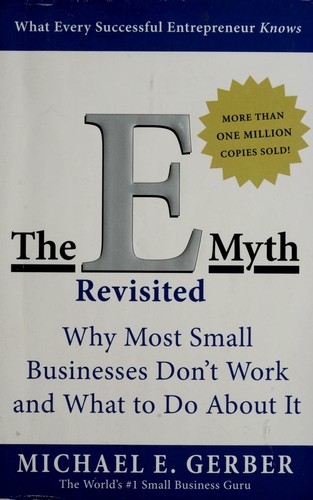
The E-Myth Revisited by Michael E. Gerber book cover

5. The E-Myth Revisited

Michael E. Gerber · 1995

You don't own a business. You own a job. Gerber explains how to fix that.

The core insight has saved thousands of small businesses: being good at the work (the technician) is not the same as building a business that does the work. Work on your business, not in it. Systematize everything as if you’ll franchise it. The fictional dialogue with Sarah the pie shop owner gets repetitive, but the framework underneath is permanent.

Read it if: small business owners drowning in their own operations

Skip it if: you're building a venture-backed startup (this is for bakeries, agencies, and trades)

Full verdict: The E-Myth Revisited →

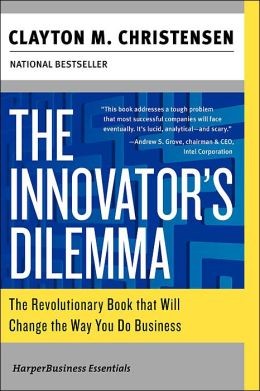
The Innovator's Dilemma by Clayton M. Christensen book cover

6. The Innovator's Dilemma

Clayton M. Christensen · 1997

The best-run companies fail for doing exactly the right things, that's the dilemma.

Christensen was a Harvard professor who started with a simple puzzle: why do capable managers at capable firms lose to upstarts they saw coming? The answer, that their very competence is the trap, is the kind of idea that reorders how you see every industry. It’s a slower read than the startup memoirs, but it ages better than all of them.

Read it if: founders, operators, and investors who need to understand why incumbents die

Skip it if: you want a light business read; this is a rigorous study with cases and charts

Full verdict: The Innovator's Dilemma →

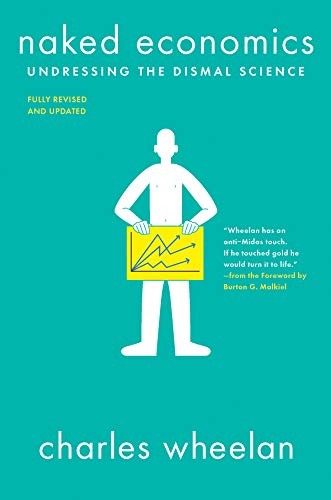
Naked Economics by Charles Wheelan book cover

7. Naked Economics

Charles Wheelan · 2002

Wheelan's plain-English tour of how markets, trade, and government policy actually work.

Naked Economics does what most economics writing fails to: makes supply and demand, trade, and monetary policy genuinely readable without dumbing the ideas down. Wheelan uses real-world examples instead of abstract graphs, which is why the book has stayed a go-to recommendation for two decades. Skip it if you already have formal training, this is an on-ramp, not an advanced text.

Read it if: readers who want economics explained without equations or jargon

Skip it if: you already have formal economics training and want depth, not an overview

Full verdict: Naked Economics →

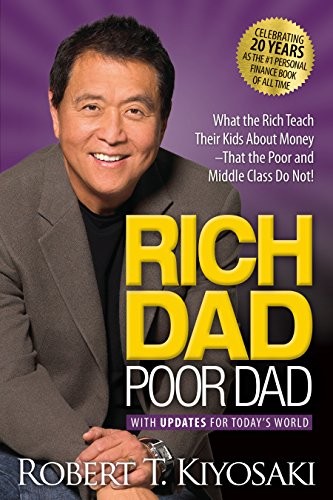
Rich Dad Poor Dad by Robert T. Kiyosaki book cover

8. Rich Dad Poor Dad

Robert T. Kiyosaki · 1997

The book that taught a generation the difference between assets and liabilities.

The advice is simple and the storytelling is loose with facts, but the core lesson survives every criticism: buy assets that pay you, avoid liabilities that drain you, and don’t confuse your house with an investment. Read it in a weekend, take the mindset, then graduate to better books for the how.

Read it if: complete beginners who need a mindset shift about earning versus owning

Skip it if: you want specific, actionable investment steps (the details here are thin and dated)

Full verdict: Rich Dad Poor Dad →

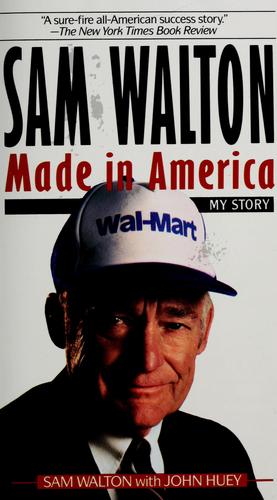
Sam Walton: Made in America by Sam Walton book cover

9. Sam Walton: Made in America

Sam Walton · 1992

The Walmart founder's memoir, finished weeks before he died. Zero polish, all substance.

Walton wrote this knowing he was dying, which stripped out the spin. He visited competitors’ stores with a tape recorder, flew a small plane to scout locations, and copied every good idea he ever saw, and says so plainly. Bezos built Amazon’s principles partly from this book. Frugality and customer obsession, straight from the source.

Read it if: operators who want to see obsessive retail execution from the inside

Skip it if: you want strategy theory (Walton distrusted theory and it shows)

Full verdict: Sam Walton: Made in America →

Breakthrough Advertising by Eugene Schwartz book cover

10. Breakthrough Advertising

Eugene Schwartz · 1966

The 1966 copywriting bible that says your ad can't create desire, only channel desire that already exists.

Eugene Schwartz wrote this in 1966, and it went out of print for years, which is exactly how it turned into the book working copywriters pass around like a trade secret instead of a bestseller everyone’s already read. The central claim (that an ad’s power comes from the market’s pre-existing desire, not the writer’s cleverness) reframes the entire job of writing copy, from “invent something persuasive” to “find what’s already there and point at it correctly.”

It’s genuinely hard reading. Schwartz repeats himself, circles back, and assumes you already understand basic marketing concepts before he’ll take you further. This isn’t a flaw so much as the design: the book rewards rereading over months, not a single weekend pass.

Skip it if you’re new to marketing and haven’t read something more foundational yet, Influence or even Made to Stick will make more sense on a first pass. Come back to this one once you’re actually writing ads for money, because that’s who it was written for.

One note on sourcing: this is a decades-old, cult-classic direct-response text with a genuinely tangled print history (long out-of-print stretches, multiple reprint editions); the ASIN above points to a widely-circulated reprint edition, not necessarily the original 1966 printing.

Read it if: you write copy or ads and want the deepest, hardest book on why people actually buy

Skip it if: you're new to marketing and haven't read Influence or a beginner copywriting guide yet (this book assumes you already know the basics and rewards you for rereading it, it does not hold your hand)

Full verdict: Breakthrough Advertising →

The Boron Letters by Gary Halbert book cover

11. The Boron Letters

Gary Halbert · 2013

A father teaches his son direct-response copywriting through prison letters, and it's still the most-quoted copywriting book alive.

Halbert wrote these letters to his son Bond from a federal prison camp in Boron, California, meaning to teach him the trade before Gary could teach him in person. Forty years later, copywriters still pass this book around like contraband, because the advice inside (the starving crowd, writing to one person, list over copy) has outlived every marketing trend that came after it.

It’s not polished. The letters ramble, repeat themselves, and occasionally wander into Halbert’s personal grievances. That’s the honest trade-off: you’re reading a real father’s real advice to his real kid, not a ghostwritten business book optimized for a chapter-by-chapter table of contents.

Skip it if you want something conventionally structured, but if you write copy for a living and haven’t read this yet, you’re missing the book most of your competitors already have.

One note on sourcing: this book has a murky, self-published print history (Halbert died in 2007; his son compiled and released the letters afterward), so treat the print edition as the best available version rather than a definitively “final” text.

Read it if: you write sales copy, emails, or ads and want the underground classic every working copywriter has already read

Skip it if: you want a polished, professionally edited business book (this is a photocopied prison letter collection, and that's part of its charm)

Full verdict: The Boron Letters →
Frequently Asked Questions

What's the single best business book on this list?

Poor Charlie's Almanack. It's Charlie Munger's collected speeches on mental models, worldly wisdom, and how to think in a business context, and it's the book most repeat entrepreneurs and investors say they reread. Dense, but nothing else compresses that much judgment into one place.

Isn't Good to Great discredited since some of its 'great' companies failed later?

Partly, and that's the honest caveat: a few of Collins' case studies (Fannie Mae, Circuit City) didn't age well. The framework, the Hedgehog Concept, Level 5 leadership, disciplined people before disciplined action, still gets used and taught independent of which specific companies it was built on.

Why is a 1966 advertising book on a business list?

Because Breakthrough Advertising is still the book working copywriters and direct-response marketers pass around, decades after Eugene Schwartz wrote it and long after the physical book itself became a collector's item selling for hundreds of dollars used. The psychology of what makes people act hasn't changed even though the media has.

Is Rich Dad Poor Dad still worth reading given the criticism it gets?

Read it for the mindset shift (assets vs. liabilities, work to learn not just to earn), not as a technical finance manual. It's sold 40+ million copies over nearly 30 years precisely because the framing sticks, even though some of Kiyosaki's specific claims and credentials have been challenged.

What's the newest book here, and does it belong on a Lindy list?

Boron Letters (2013 book form, though the letters were written in the 1980s). It's young by Lindy standards, but the content is Gary Halbert's actual direct-mail teaching from decades earlier, and it's already become a cult reference in marketing circles, which is why it earns a spot.

Keep Reading