Best Business Disaster Books: 8 Cautionary Tales Worth Studying

Updated July 19, 2026 · 8 books

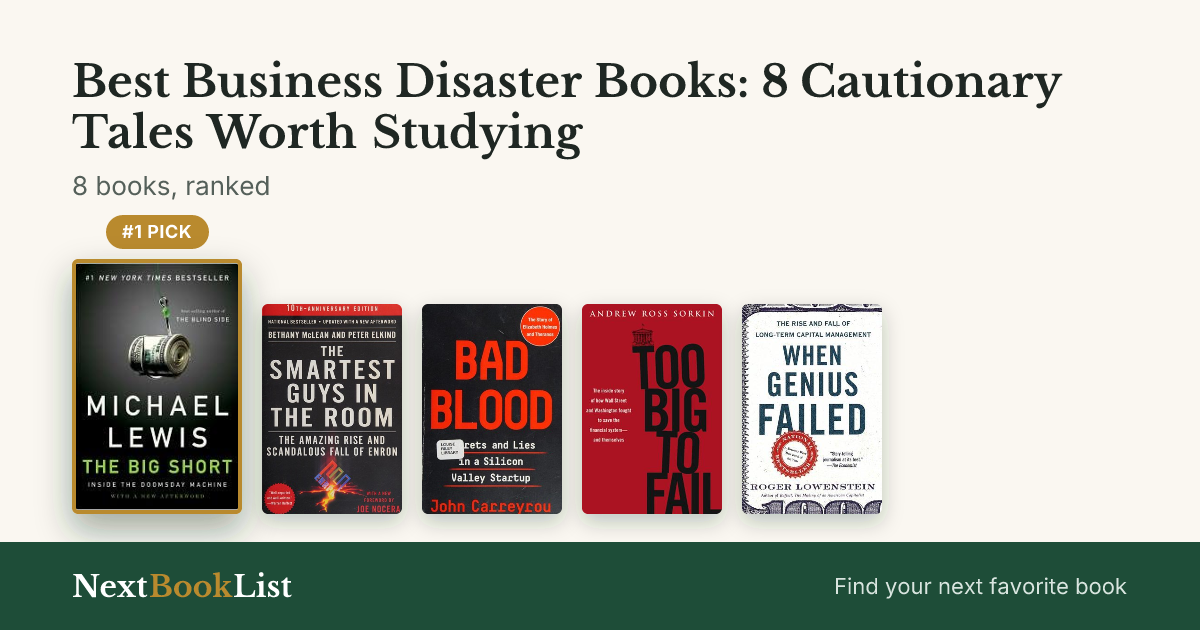
Best Business Disaster Books: 8 Cautionary Tales Worth Studying: ranked list of 8 books

The best business disaster book is The Big Short, because Michael Lewis does the hardest thing in the genre: make mortgage-backed securities and credit default swaps into a story you can’t put down. Burry, Eisman, and the Cornwall Capital pair saw the subprime bubble years before it collapsed, and staying in that trade while everyone called them crazy is the real story.

The Smartest Guys in the Room and Bad Blood are the fraud half of this list. Enron and Theranos, twenty years apart, run on the same fuel: charisma, complexity nobody outside the room understood, and investors who wanted to believe. Den of Thieves and F.I.A.S.C.O. cover the 1980s and 90s versions of the same pattern. Milken and Boesky’s insider-trading ring, and derivatives complexity deliberately used to obscure risk and fees at Morgan Stanley. Too Big to Fail and When Genius Failed cover the systemic version of the same failure, at Wall Street scale and hedge-fund scale respectively, brilliant models that worked until the one weekend they didn’t.

Close with Disrupted. It’s not a fraud story at all, just Dan Lyons’s bitter, funny memoir of what startup culture looks like from the inside when you’re twice the average age in the room. A lighter note after five books about people losing other people’s money.

One warning: these books are compelling because hindsight makes bad decisions look obvious. They weren’t, to the people living through them. Read for the mechanism, not the smug certainty that you’d have seen it coming.

Quick Comparison

#BookBest for
1The Big ShortMichael Lewisanyone who wants the 2008 crash explained through the people who correctly bet against itAmazon
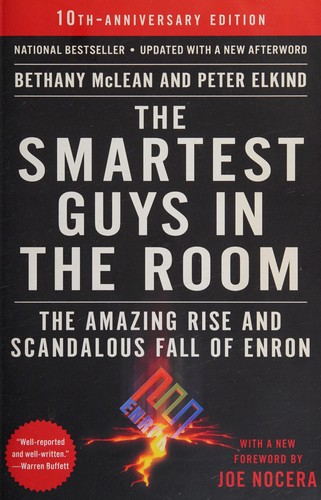
2The Smartest Guys in the RoomBethany McLeaninvestors and managers who need a crash course in financial illusionAmazon
3Bad BloodJohn Carreyroufounders, investors, and anyone seduced by charismatic vision over proofAmazon
4Too Big to FailAndrew Ross Sorkinanyone who wants to understand how close the system came to collapsingAmazon
5When Genius FailedRoger Lowensteininvestors who trust models a little too muchAmazon
6DisruptedDan Lyonsanyone considering joining a hip startup and wanting the unvarnished truthAmazon
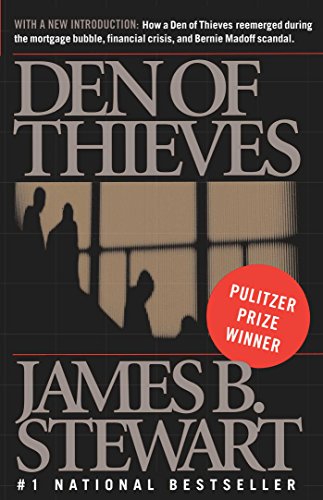
7Den of ThievesJames B. Stewartyou want a meticulously reported, thriller-paced account of how the biggest insider-trading and securities fraud case of the 1980s actually unfoldedAmazon
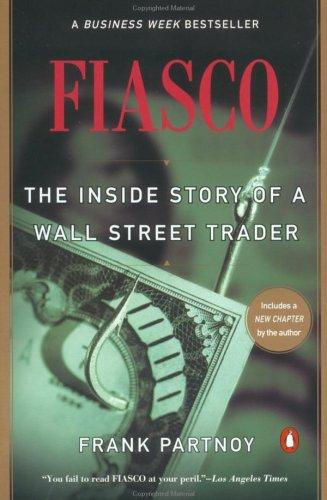
8F.I.A.S.C.O.Frank Partnoyyou want a firsthand, insider account of how derivatives desks operated and misled clients in the 1990s, ahead of later crises the same dynamics contributed toAmazon

The Books

The Big Short by Michael Lewis book cover

1. The Big Short

Michael Lewis · 2010

How a handful of contrarian investors saw the 2008 mortgage collapse coming years before Wall Street did.

Lewis turns credit default swaps and CDOs into a genuine page-turner by following the handful of investors. Michael Burry, Steve Eisman, the Cornwall Capital duo, who saw the subprime bubble for what it was and bet against the entire financial system. It’s the most readable explanation of the 2008 crisis that exists, though it’s a story about a specific catastrophe, not a repeatable investing method. Skip it if you want tactics rather than the postmortem.

Read it if: anyone who wants the 2008 crash explained through the people who correctly bet against it

Skip it if: you want a step-by-step personal-finance guide, not a financial-system autopsy
Full verdict: The Big Short →

The Smartest Guys in the Room by Bethany McLean book cover

2. The Smartest Guys in the Room

Bethany McLean · 2003

How Enron's brilliant minds engineered the biggest bankruptcy of their era.

McLean and Elkind’s Smartest Guys is the Enron post-mortem: how smart people built a house of marks and special-purpose entities. Terrifying and educational. Skip it if you already distrust clever financial engineering.

Read it if: investors and managers who need a crash course in financial illusion

Skip it if: you want a neutral accounting text

Full verdict: The Smartest Guys in the Room →

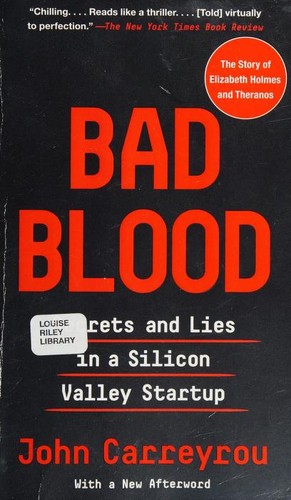
Bad Blood by John Carreyrou book cover

3. Bad Blood

John Carreyrou · 2018

The gripping autopsy of Theranos, how a $9B fraud stayed alive for years.

Carreyrou’s Bad Blood is the essential cautionary tale: when secrecy, fear, and a compelling story override data, smart people believe anything. Required reading before you trust a visionary. Skip it only if you’ve made it your personal case study.

Read it if: founders, investors, and anyone seduced by charismatic vision over proof

Skip it if: you already know the Theranos story cold

Full verdict: Bad Blood →

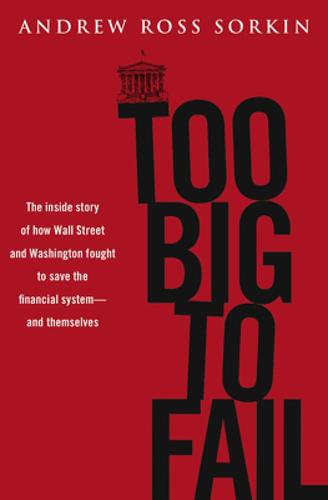
Too Big to Fail by Andrew Ross Sorkin book cover

4. Too Big to Fail

Andrew Ross Sorkin · 2009

The inside story of the 2008 meltdown and the weekend that saved Wall Street.

Sorkin’s Too Big to Fail is the definitive tick-tock of 2008: egos, panic, and the bailouts. More drama than doctrine, but you’ll understand systemic risk better than from any textbook. Skip it if you only want personal-finance lessons.

Read it if: anyone who wants to understand how close the system came to collapsing

Skip it if: you want a dry economic treatise, not a character-driven narrative

Full verdict: Too Big to Fail →

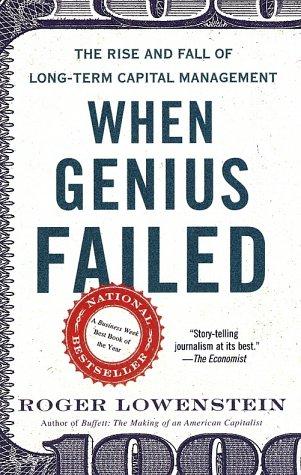
When Genius Failed by Roger Lowenstein book cover

5. When Genius Failed

Roger Lowenstein · 2000

The rise and spectacular fall of Long-Term Capital's geniuses and their models.

Lowenstein’s When Genius Failed is the LTCM story: Nobel laureates whose models ignored tail risk and nearly broke the system. The lesson, models fail when everyone uses them, is timeless. Skip it if you already respect black-swan risk.

Read it if: investors who trust models a little too much

Skip it if: you want options-pricing theory, not a narrative

Full verdict: When Genius Failed →

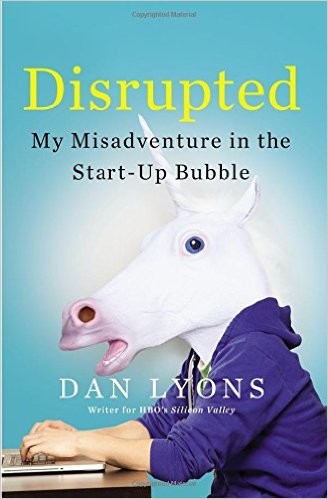
Disrupted by Dan Lyons book cover

6. Disrupted

Dan Lyons · 2017

Dan Lyons's comic, bitter memoir of aging out of journalism into startup hell.

Disrupted is a funny, cynical inside look at a toxic unicorn: jargon, ageism, and fake productivity. A useful antidote to Silicon Valley romance. Skip it if you want to keep believing the hype.

Read it if: anyone considering joining a hip startup and wanting the unvarnished truth

Skip it if: you love startup culture uncritically

Full verdict: Disrupted →

Den of Thieves by James B. Stewart book cover

7. Den of Thieves

James B. Stewart · 1991

The definitive account of the 1980s insider-trading scandal that took down Michael Milken and Ivan Boesky, reported like a thriller, sourced like investigative journalism.

Stewart’s reporting holds up because it’s genuinely sourced, not reconstructed from press clippings – he had access most journalists covering the case didn’t, and it shows in the granular detail of how the scheme actually operated and unraveled. Read it as the definitive account of a case that reshaped securities enforcement for a generation.

Read it if: you want a meticulously reported, thriller-paced account of how the biggest insider-trading and securities fraud case of the 1980s actually unfolded

Skip it if: you want investment or business strategy advice, this is investigative journalism about financial crime, not a how-to book

Full verdict: Den of Thieves →

F.I.A.S.C.O. by Frank Partnoy book cover

8. F.I.A.S.C.O.

Frank Partnoy · 1997

A former derivatives salesman's insider account of how 1990s Wall Street sold complex, opaque financial products to clients who had no idea what they were actually buying.

Partnoy had a front-row seat to exactly the kind of incentive misalignment that would matter at a much bigger scale a decade later, and the book reads today as an early warning most of Wall Street didn’t heed. It’s a sharper, more specifically technical companion to Liar’s Poker – read both if you want the full trading-floor-to-derivatives-desk picture of the era.

Read it if: you want a firsthand, insider account of how derivatives desks operated and misled clients in the 1990s, ahead of later crises the same dynamics contributed to

Skip it if: you want current, technical derivatives education, this is a memoir-style exposé of a specific era's sales culture, not a textbook on how derivatives actually work today

Full verdict: F.I.A.S.C.O. →

Frequently Asked Questions

What is the best book about a business disaster?

The Big Short. Michael Lewis makes the 2008 mortgage collapse comprehensible by following the handful of investors who saw it coming and bet against the whole system. It's the most readable disaster book on this list, and the mechanics it explains (mispriced risk, complexity hiding fraud) show up in every other book here too.

The Smartest Guys in the Room is about Enron. Why read a 20-year-old corporate scandal?

Because the mechanism hasn't aged: brilliant people convinced themselves their financial engineering was innovation instead of fraud, and nobody outside the company caught it until it was too late. Swap 'mark-to-market accounting' for whatever this decade's version is, and the pattern repeats.

Is Bad Blood worth reading if I already know the Theranos story?

Yes. Carreyrou was the reporter who broke it, and the book has detail no summary captures: how long a fraud can survive on charisma and investor credulity alone, and how many smart people looked away. It's the most recent and most personally uncomfortable book on this list.

Which of these should I read if I only have time for two?

The Big Short and Bad Blood. One shows how an entire system convinced itself a lie was fine; the other shows how a single company did the same thing on a smaller, more personal scale. Together they cover the range from systemic failure to individual fraud.

Are there any 1980s Wall Street scandal books on this list?

Den of Thieves. James B. Stewart's account of the Milken-Boesky insider-trading ring is the 1980s counterpart to Bad Blood and Smartest Guys in the Room, genuine financial innovation (junk bonds) running parallel to, and eventually enabling, systemic fraud.

What's the most technical, derivatives-focused disaster book here?

F.I.A.S.C.O. Frank Partnoy's insider account of derivatives sales at Morgan Stanley shows how product complexity was sometimes used deliberately to obscure risk and justify fees, an early, specific warning about incentive dynamics that mattered again, at much larger scale, in 2008.

Keep Reading