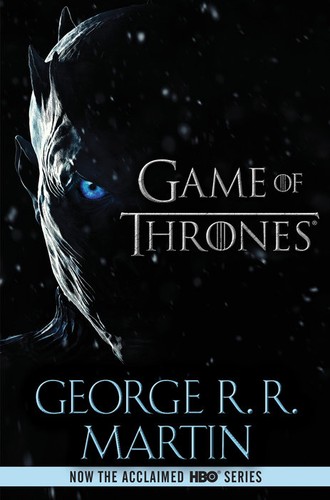
A Game of Thrones
by George R.R. Martin · 1996
Seven noble families fight for control of a fractured kingdom while an ancient threat gathers unnoticed beyond a massive ice wall in the north -- the novel that redefined epic fantasy by killing off the characters readers expected to survive.
Worth reading? A Game of Thrones earns its influence by doing something most epic fantasy up to that point hadn't: treating its cast as genuinely mortal, its politics as genuinely Machiavellian, and its 'good' characters as genuinely capable of catastrophic misjudgment. The book that made Ned Stark's fate a cultural touchstone did that by refusing every convention about who gets to survive a fantasy novel, and the series has never fully recovered its momentum since, both in-story and in real-world publishing terms.
| Author | George R.R. Martin |
|---|---|
| Published | 1996 |
| Publisher | Bantam Books |
| Category | Fiction |
| Favorite quote | “When you play the game of thrones, you win or you die.” |
The Verdict
What made this book a genre landmark wasn’t magic or worldbuilding scale, plenty of fantasy had both before this. It was Martin’s willingness to let political honor be a liability and to kill the character readers were positioned to root for most. That single structural choice, more than anything else, is why “no one is safe” became this series’ defining reputation.
The multi-POV structure is doing real work here too. Characters who read as straightforwardly villainous in one chapter get a chapter from their own perspective that complicates it, and Martin uses that structure to make the central political conflict feel genuinely contested rather than morally obvious.
The honest caveat, and it’s a big one by now: the main series hasn’t had a new book since 2011, and there’s no confirmed release date for the next one. If you hate starting a series that might not finish in your lifetime, that’s a real and reasonable reason to wait or to stick with the show instead.
Read it if you want political, morally gray epic fantasy with real stakes and a genuinely large, well-realized cast. Skip it if an unfinished series with no confirmed next installment is a dealbreaker for you.
you want political, morally gray epic fantasy where no character's plot armor is guaranteed, and you're willing to track a large cast across a long series
you want a fantasy series that reliably finishes -- Martin has not published a new installment since 2011's A Dance with Dragons, and there's no confirmed release date for the next book, which matters if you hate starting unfinished series
Book Summary
The Seven Kingdoms of Westeros are drawn into political crisis when Eddard "Ned" Stark, a lord known for his rigid honor, is called south to serve as the king's chief advisor -- a role that puts him directly in the path of the scheming, ambitious Lannister family and a succession crisis that threatens to tear the realm apart.
Martin structures the book around multiple point-of-view characters across different noble houses and social positions, including several children, using that structural breadth to show the same political conflict from genuinely opposed perspectives rather than a single hero's viewpoint.
While the main political plot plays out in the south, a smaller but ultimately more important thread follows the Night's Watch at the Wall in the far north, where the reader gets early evidence of a supernatural threat (the Others/White Walkers) that the squabbling nobility is almost entirely ignoring -- a structural choice that sets up the entire series' long-term stakes.
Top 7 Lessons from A Game of Thrones
- Ned Stark's rigid personal honor, presented early as his defining virtue, is directly responsible for several of his worst political misjudgments -- Martin builds the plot around the idea that moral consistency doesn't guarantee political survival in a genuinely ruthless system.
- The book uses multiple point-of-view characters across opposing noble houses specifically so the reader has no single 'correct' perspective on the central conflict -- characters readers might initially read as villains get chapters that complicate that reading.
- Political marriages, succession law, and the mechanics of feudal power are treated with real specificity throughout the book, grounding the fantasy elements in a version of medieval politics that feels functional rather than decorative.
- The supernatural threat beyond the Wall (the Others) is deliberately underplayed relative to the southern political plot in this first book, mirroring how the in-world nobility is dangerously distracted by court politics while a larger threat gathers unnoticed.
- Martin's willingness to kill major point-of-view characters, most famously by the book's end, broke a long-standing genre convention that a POV character's survival is guaranteed, which fundamentally changed how readers experience tension in epic fantasy.
- Daenerys Targaryen's storyline, following an exiled princess building power among a foreign khalasar, runs mostly independent of the Westeros political plot in this book, setting up a second major arc the series gradually brings back into contact with the main conflict.
- Martin has not published a new entry in the main series since A Dance with Dragons in 2011, and The Winds of Winter remains unreleased with no confirmed date, which is now a well-known and often-discussed part of the series' reputation.
Top 4 Quotes from A Game of Thrones
"When you play the game of thrones, you win or you die."
George R.R. Martin, A Game of Thrones
"The things I do for love."
George R.R. Martin, A Game of Thrones
"Winter is coming."
George R.R. Martin, A Game of Thrones
"The man who passes the sentence should swing the sword."
George R.R. Martin, A Game of Thrones
Frequently Asked Questions
Is A Game of Thrones worth reading?
Yes -- it's the book that redefined political, morally gray epic fantasy, treating its characters as genuinely mortal and its politics as genuinely ruthless.
Is the book different from the Game of Thrones TV show?
The first two or three seasons follow the books fairly closely; after that the show diverges significantly and eventually surpasses the published books' story, since Martin hasn't finished the series in print.
Has George R.R. Martin finished the Song of Ice and Fire series?
No -- A Dance with Dragons (2011) is the most recent published installment, and The Winds of Winter, the next book, remains unreleased with no confirmed date.
How many points of view does A Game of Thrones have?
Eight recurring POV characters in the first book alone, spanning different noble houses, social classes, and even age groups, including several children.
Is A Game of Thrones a good starting point for epic fantasy?
Yes, for readers who want political complexity and real stakes, though the large cast and unfinished state of the series are both worth knowing going in.
Ready to read it?
Get A Game of Thrones on Amazon