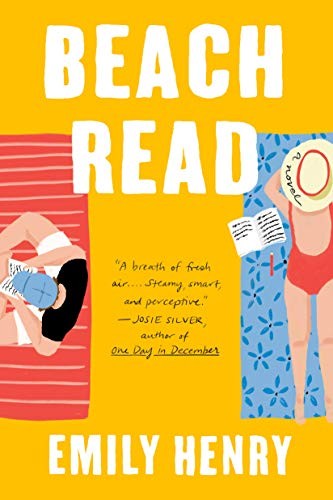
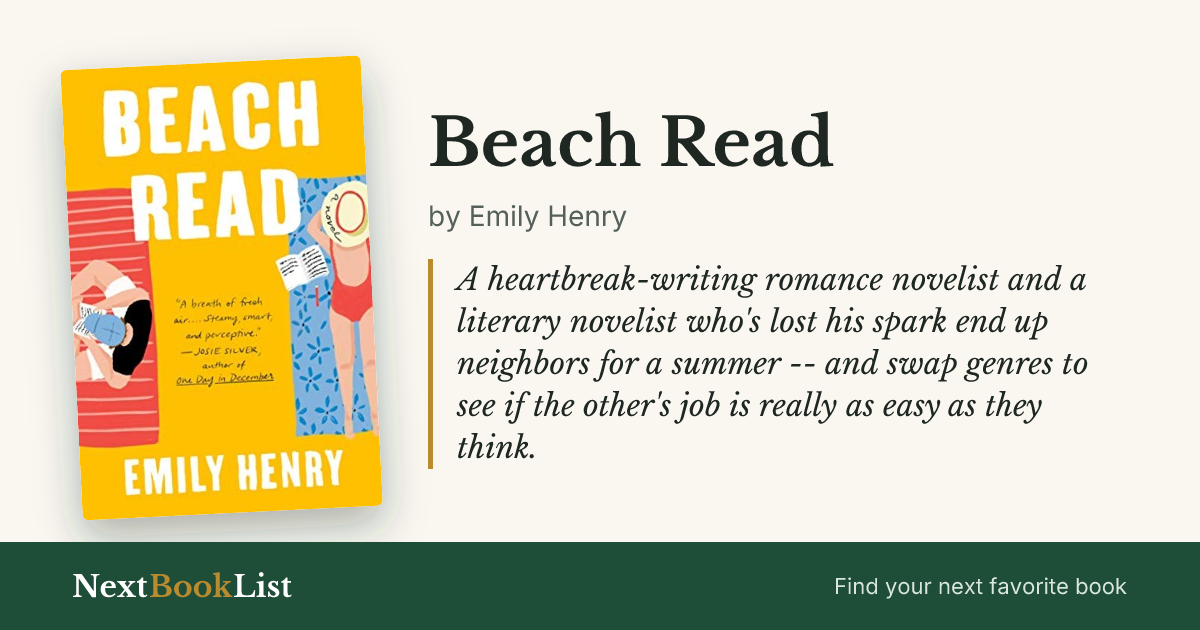
Beach Read
by Emily Henry · 2020
A heartbreak-writing romance novelist and a literary novelist who's lost his spark end up neighbors for a summer -- and swap genres to see if the other's job is really as easy as they think.
Worth reading? The romance novel that made Emily Henry's career, and the genre-swap premise is smarter than it needed to be.
| Author | Emily Henry |
|---|---|
| Published | 2020 |
| Publisher | Berkley |
| Category | Fiction |
| Favorite quote | “If you think the story has a sad ending, it's because it's not over yet.” |
The Verdict
The genre-swap bet is what elevates this past a standard summer romance. Henry uses it to make a real argument that writing romance and writing literary fiction take the same underlying skill, and the back-and-forth between January and Gus’s research trips into each other’s territory gives the banter actual stakes instead of just cute friction.
Both leads carry real grief, and Henry doesn’t let the romance plot paper over it. January’s father’s secret family and Gus’s dead wife are treated as genuine wounds, not backstory color, which is why the book’s earned optimism lands instead of feeling forced.
Skip it if you want a purely frothy beach read with zero grief – the title is a bit of an irony here. Read it if you want banter-forward romance that respects writing as a craft and earns its happy ending through real emotional work, not just chemistry.
you want a smart, banter-driven romance that takes writing seriously as a craft, with two leads whose emotional damage is specific rather than generic
you want a light, frothy beach romance with no grief in it -- both leads are working through real loss (a father's affair, a wife's death), and the book earns its title ironically
Book Summary
January Andrews writes bestselling romance novels but can't make herself believe in happy endings anymore after discovering her recently deceased father had a secret second family. Broke and blocked, she retreats to her father's beach house for the summer, only to find her neighbor is Gus Everett, a literary novelist and former college rival dealing with his own creative dead end after his wife's death.
To break their respective blocks, they make a bet: January will write something literary and dark, Gus will write something hopeful and romantic, each spending time researching the other's usual territory. That premise lets Henry do something more interesting than a standard romance -- it treats genre fiction and literary fiction as equally serious crafts, and uses the swap to force both characters to confront what they've actually been avoiding in their own lives, not just their writing.
Underneath the romance is a real grief narrative for both leads, and the book's central argument is that believing in a happy ending isn't naivety, it's a discipline you have to choose to practice, especially after life gives you reasons not to.
Top 8 Lessons from Beach Read
- January's crisis of faith in love isn't really about romance novels -- it's displaced grief over her father's double life, and the writing block is a symptom, not the root problem.
- Gus's cynicism about happy endings comes from real, specific loss (his wife's death), not a generic broody-love-interest trait, which is what keeps him from feeling like a stock character.
- The book treats genre fiction and literary fiction as equally demanding crafts, refusing the easy joke that romance writing is the 'lesser' skill Gus is slumming through.
- Believing in happy endings is framed as a discipline you practice on purpose, not a fact about the world you either have or don't -- January has to choose it back, not rediscover it.
- Research trips into each other's genre (true-crime tours for January, romance-novel tropes for Gus) force both characters to engage honestly with what they'd previously dismissed.
- Grief that goes unprocessed doesn't disappear, it just relocates -- into writer's block, into cynicism, into an inability to trust anyone's motives, for both leads.
- The book's swap-genres bet only works dramatically because both January and Gus are already secretly good at what they're pretending to learn -- the exercise reveals, rather than teaches, who they are.
- Found stability in a single, difficult summer is treated as plausible without erasing how much real work (financial, emotional, creative) both characters still have left after the book ends.
Top 4 Quotes from Beach Read
"If you think the story has a sad ending, it's because it's not over yet."
Emily Henry, Beach Read
"Life is pretty much a series of good and bad moments right up until the moment you die. Which is arguably a bad one. Love doesn't change that."
Emily Henry, Beach Read
"Not believing in something doesn't stop you from wanting it."
Emily Henry, Beach Read
"Bad things don't dig down through your life until the pit's so deep that nothing good will ever be big enough to make you happy again. No matter how much shit, there will always be wildflowers."
Emily Henry, Beach Read
Frequently Asked Questions
Is Beach Read worth reading?
Yes -- it's the book that established Emily Henry as a top-tier romance writer, and the genre-swap premise gives it more substance than a typical summer romance.
Is Beach Read a light, happy book?
Not entirely -- both leads are processing real grief (a father's secret family, a wife's death), so the tone is warmer than heavy but not weightless.
Is Beach Read part of a series?
No, it's a standalone novel, though it shares Emily Henry's general house style with her other contemporary romances.
Does Beach Read have spice or is it clean romance?
It has some intimate content but isn't as explicit as many contemporary romances -- moderate heat level, character-driven more than scene-driven.
Ready to read it?
Get Beach Read on Amazon