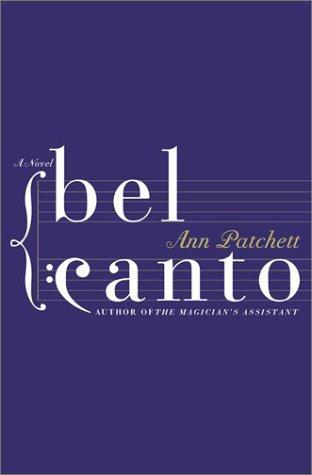
Bel Canto
by Ann Patchett · 2001
Terrorists storm a birthday party at a South American vice-presidential mansion to kidnap a president who isn't even there, and the resulting months-long hostage standoff turns captors and captives into something closer to an improvised, doomed household.
Worth reading? Bel Canto takes a premise built for a thriller -- an armed hostage crisis -- and refuses to write one, using the standoff's suspended time instead to build genuine, often beautiful relationships between captors and captives that the ending won't let you forget were always doomed.
| Author | Ann Patchett |
|---|---|
| Published | 2001 |
| Publisher | HarperCollins |
| Category | Fiction |
The Verdict
Patchett’s boldest choice is refusing to write the thriller this premise sets up. The siege stretches on for months, and instead of escalating tension scene by scene, she lets relationships form slowly across language barriers, class lines, and the supposed line between captor and captive.
The opera device could have felt like a gimmick, but it earns its place as the one language every character in the house can actually understand together, which makes the soprano’s daily singing function as something closer to the book’s emotional center than a stylistic flourish.
Read it if you want patient literary fiction that builds real connection out of an impossible situation. Skip it if you need your hostage story to move like an actual thriller – this one is after something slower and, ultimately, sadder.
you want literary fiction that uses a tense premise to explore connection across language and class barriers, built around real operatic and musical detail
you want a thriller with the pacing of an actual hostage crisis -- this deliberately slows down and lingers, and the tension is emotional rather than kinetic for most of the book
Book Summary
A birthday party for a Japanese businessman at an unnamed South American vice president's mansion, featuring a famous opera soprano hired to perform, is stormed by a guerrilla group intending to kidnap the country's president, who skipped the party to watch his favorite soap opera. With their primary target absent, the terrorists take the entire party hostage instead, and a standoff that everyone expects to last days stretches into months.
Patchett uses the suspended time of the siege to dissolve the usual boundaries between hostages and captors: friendships form, a translator becomes essential to nearly every relationship in the house, a romance develops across a language barrier, and several of the young guerrillas turn out to be barely more than children themselves, drawn into the movement with little real choice.
Opera, and the soprano's daily singing, becomes the novel's organizing language -- something everyone in the house, regardless of nationality or role, can understand and be moved by without translation, standing in for the connection Patchett builds across every other barrier in the book, right up until the ending refuses to let that connection protect anyone from the situation's real violence.
Top 10 Lessons from Bel Canto
- The hostage crisis premise is used to dissolve ordinary social boundaries -- class, nationality, language, captor and captive -- rather than to generate thriller-style tension.
- Several of the young terrorists are portrayed with real sympathy, shown as barely more than children pulled into the guerrilla movement with limited agency of their own.
- Opera functions as a unifying language in the novel, something every character can respond to emotionally regardless of what language they speak, standing in for connection that translation alone can't provide.
- The translator, Gen, becomes structurally essential to nearly every relationship in the house, highlighting how much of human connection depends on someone willing to do the difficult work of understanding between people.
- Patchett deliberately slows the pacing of what could be a thriller premise, using the suspended time of the siege to develop relationships rather than escalate plot tension.
- The novel's ending is a deliberate gut-punch specifically because it withholds the reader's hope that the relationships built during the siege could somehow protect anyone from the real danger of the situation.
- The other hostages -- an international mix of executives and diplomats who only happened to attend Hosokawa's birthday -- shows how arbitrary the line was between who got taken captive and who simply wasn't invited.
- Domestic routines -- cooking, gardening, chess games, impromptu language lessons -- take over the mansion as the siege stretches on, turning captivity into something closer to an improvised communal household than an ongoing crisis.
- Mr. Hosokawa's decades-long devotion to opera, and to Roxane Coss's voice specifically, is the entire reason he agreed to attend a party in a country he had no real business interest in, making him the least political person the terrorists end up holding.
- The young generals leading the operation are shown as constrained by a cause and a chain of command they can't fully control, which complicates any easy villain framing without excusing the violence they're still capable of.
Frequently Asked Questions
Is Bel Canto worth reading?
Yes, if you want literary fiction that uses a tense premise for emotional depth rather than thriller pacing -- it's patient, moving, and doesn't shy away from a hard ending.
Is Bel Canto based on a true story?
Loosely inspired by the 1996-1997 Japanese embassy hostage crisis in Lima, Peru, though Patchett fictionalizes the setting, characters, and outcome.
Did Bel Canto win any awards?
Yes -- it won the PEN/Faulkner Award and the Orange Prize for Fiction in 2002.
Is Bel Canto a thriller?
No -- despite the hostage-crisis premise, it's paced and structured as literary fiction focused on relationships, not suspense.
Do you need to know opera to enjoy the book?
No -- Patchett explains enough about the soprano's repertoire and the emotional effect of the music that no prior opera knowledge is required.
Ready to read it?
Get Bel Canto on Amazon