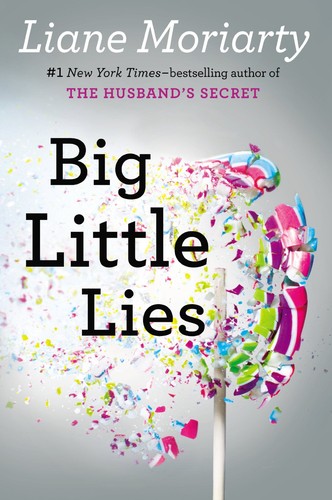
Big Little Lies
by Liane Moriarty · 2014
Three mothers at an idyllic Australian beach town's elementary school hide increasingly serious secrets from each other and their partners -- and the book announces on page one that one of them ends up dead at a school fundraiser, then spends the rest of the novel making you guess who and why.
Worth reading? Big Little Lies is smarter than its beach-read packaging suggests. Moriarty uses the murder-mystery frame (someone dies at the school trivia night, we just don't know who or why until the end) as a hook to hold your attention while the real story, a closely observed look at domestic abuse hiding in plain sight behind a wealthy, seemingly perfect marriage, does the heavier lifting. It's genuinely funny about school-gate social politics and genuinely serious about what it's actually about underneath.
| Author | Liane Moriarty |
|---|---|
| Published | 2014 |
| Publisher | G.P. Putnam's Sons |
| Category | Fiction |
The Verdict
The mystery framing is a smart trick more than the point of the book. Moriarty knows the “who died?” hook will keep pages turning, but what she’s actually building is a patient, detailed portrait of how a controlling, abusive marriage hides behind money and charm, and how easily outside observers get it wrong.
Celeste’s storyline is where the book earns its more serious reputation. The device of cutting to other parents’ after-the-fact testimony, all of them misreading what they saw, is a sharp way to show exactly how invisible this kind of abuse can be even to people paying attention.
Read it if you want domestic suspense with real substance underneath its comic school-gate surface. Skip it if you need the mystery itself to be the main draw – here it’s mostly a delivery mechanism for the character work.
you want domestic suspense with genuine comic timing, and you don't mind the murder-mystery framing being secondary to a slow-building look at friendship, domestic abuse, and school-gate politics
you want the mystery to be the main event -- the who-dies reveal is deliberately backgrounded for most of the book in favor of character work, so impatient thriller readers may find the pacing frustrating
Book Summary
Three mothers, Madeline, Celeste, and Jane, become entangled after their children start kindergarten at the same elementary school in a wealthy Australian coastal town, and the novel opens by revealing that someone will die at the school's trivia night fundraiser, without saying who.
Celeste's storyline, a seemingly perfect marriage to a wealthy, charming husband, gradually reveals itself as a portrait of domestic abuse hidden behind money and social status, and Moriarty uses interview-style testimony from other parents throughout the book (all of whom misread the situation) to show how easily abuse stays invisible to outsiders.
Jane's storyline involves her young son Ziggy being accused of bullying, which turns out to connect to a dark secret from Jane's own past involving the identity of Ziggy's father, tying the school playground conflict directly to a much more serious underlying trauma.
The trivia-night death, when finally revealed, resolves not as a traditional murder but as a moment where the women's collective, protective solidarity finally erupts against ongoing abuse, reframing the entire mystery structure around female alliance rather than individual guilt.
Top 10 Lessons from Big Little Lies
- The novel uses interspersed 'witness' testimony from other parents throughout the book to show how easily outside observers misread a controlling, abusive marriage as simply an intense or 'passionate' one.
- Celeste's arc is used to dismantle the assumption that domestic abuse only happens in poor or visibly troubled households, wealth and social polish are shown actively concealing it, not preventing it.
- Jane's storyline connects a specific act of childhood bullying to a much larger unresolved trauma in her own past, arguing that kids' conflicts often carry weight adults don't immediately see.
- School-gate social hierarchies (which mothers matter, who gets invited where) are drawn with real comic precision, and the novel uses that social comedy as camouflage for the more serious material underneath.
- The novel's structural choice to reveal the death without the identity keeps readers focused on character motive and relationship dynamics rather than plot mechanics, which is a deliberate inversion of typical mystery pacing.
- The climax reframes what looks like an individual crime as an act of collective protection among the women, arguing that solidarity, once formed, can interrupt abuse that isolated individuals couldn't stop alone.
- Madeline's storyline, built around ordinary domestic friction like a co-parenting ex-husband and a teenage daughter drifting toward her stepmother, works as comic relief but also broadens the book's argument that every family, even a stable one, is quietly negotiating its own private tensions.
- Celeste's eventual decision to leave is shown as a process rather than a single moment of clarity, undercutting the common assumption that a victim who hasn't already left simply doesn't see what's happening to her.
- The trivia-night setting itself, a costume party built around 1980s nostalgia, is used to underline how much performance and social theater is baked into this community's version of normal, right up until it violently breaks down.
- Ziggy's bullying accusation is deliberately left ambiguous for most of the book, forcing both the other parents and the reader to sit with uncertainty about a child's guilt in the same way the town sits with uncertainty about Celeste's marriage.
Frequently Asked Questions
Is Big Little Lies worth reading?
Yes -- it's sharper and more serious underneath its comic, beach-read surface than its marketing suggests, especially in how it handles domestic abuse.
What is Big Little Lies about?
Three mothers at an Australian elementary school become entangled in a case of hidden domestic abuse, building toward a death at a school fundraiser revealed only at the end.
Who dies in Big Little Lies?
The novel deliberately withholds this until near the end -- it's central to the book's structure, so it's best discovered by reading rather than being told in advance.
Is Big Little Lies more comedy or drama?
Both -- it's genuinely funny about school-gate social politics while handling domestic abuse and trauma with real seriousness underneath.
Is there a TV adaptation of Big Little Lies?
Yes, an HBO limited series starring Reese Witherspoon and Nicole Kidman, widely praised and closely following the novel's plot.
Ready to read it?
Get Big Little Lies on Amazon