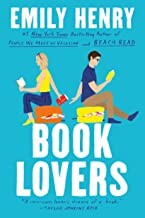
Book Lovers
by Emily Henry · 2022
A cutthroat literary agent who always plays the other woman in her own life gets stuck in a small town with the one editor who's rejected her the most -- and starts to wonder if she's been reading her own life wrong.
Worth reading? Emily Henry's sharpest romance premise -- it subverts its own genre's favorite trope instead of playing it straight.
| Author | Emily Henry |
|---|---|
| Published | 2022 |
| Publisher | Berkley |
| Category | Fiction |
| Favorite quote | “You're in books. Of course you don't have a life. None of us do.” |
The Verdict
The smartest thing about this book is that Nora knows exactly what genre she’s in. Henry lets her heroine be aware of the small-town-romance formula – ambitious woman gets fixed by quaint charm and a local love interest – and then writes a book that pointedly refuses to make her change to earn her happy ending.
That refusal is what separates this from Henry’s other romances. Nora doesn’t get softened into wanting a simpler life; Charlie gets written as someone who actually understands and matches her ambition instead of wanting to rescue her from it, which is a more interesting resolution than the genre usually offers.
Skip it if you specifically want the classic small-town-transformation romance – this book is arguing against that trope on purpose. Read it if you want a romance smart enough to notice its own genre’s clichés and build a better ending around refusing them.
you want a romance that deliberately subverts the small-town-makeover trope by keeping its ambitious, city-loving heroine exactly as ambitious and city-loving as she started
you want the classic small-town-transformation arc where the driven career woman learns to slow down and change who she is -- this book is explicitly arguing against that trope
Book Summary
Nora Stephens is a literary agent who's spent her career noticing she always seems to play a stock role in other people's stories -- specifically, the tightly wound career woman who gets left behind when the hero realizes he wants something simpler. When her sister drags her on a small-town book-research trip, Nora keeps running into Charlie, a brooding editor from New York who's also unexpectedly stuck in town, and the two of them start noticing how thoroughly they don't fit the small-town romance formula everyone around them expects.
Henry's real move here is metafictional -- Nora is explicitly aware of the small-town-romance genre convention (ambitious woman moves to quaint town, falls for a local, learns to want a simpler life) and refuses to let the book force her into that arc. Book Lovers argues that a woman who genuinely loves her ambitious, book-obsessed, New York life doesn't need to be fixed or softened to deserve a happy ending; she just needs someone who actually gets that life instead of wanting to rescue her from it.
Underneath the genre commentary is a real family story -- Nora's relationship with her sister, and the responsibility she took on for her family after their mother's death, is treated with as much weight as the romance plot.
Top 8 Lessons from Book Lovers
- Nora's arc explicitly refuses the small-town-romance convention that ambitious women need softening or rescuing to deserve love -- the book argues her ambition was never the problem to begin with.
- Charlie is written as someone who understands and matches Nora's drive rather than someone meant to slow her down, which reframes what a 'right' romantic partner looks like for a career-focused woman.
- Nora's habit of noticing she plays the same stock role in other people's love stories is used as a genuinely clever way to make the book self-aware about its own genre's clichés.
- The responsibility Nora took on for her family after their mother's death is treated as formative to her whole personality, not just background color explaining why she's 'closed off.'
- Sisterhood, specifically Nora's relationship with Libby, carries as much emotional weight in the book as the romance, and their dynamic shifts meaningfully across the story.
- Being good at your job and genuinely loving your ambitious life isn't framed as a flaw to fix by the book's end -- Nora's happy ending doesn't require her to want a different, quieter life.
- The book uses its awareness of rom-com formula (the makeover, the small-town charm offensive, the 'other woman' role) as running commentary rather than as unexamined tropes it repeats sincerely.
- Grief over a parent's death is shown reshaping how someone loves and cares for others long after the initial loss, still visibly present in how Nora manages her sister and her own life.
Top 2 Quotes from Book Lovers
"You're in books. Of course you don't have a life. None of us do."
Emily Henry, Book Lovers
"It will never be perfect, but parts of it can be beautiful."
Emily Henry, Book Lovers
Frequently Asked Questions
Is Book Lovers worth reading?
Yes -- it's Emily Henry's most self-aware romance, deliberately subverting the small-town-makeover trope rather than playing it straight.
Is Book Lovers a small-town romance?
It's set partly in a small town, but the book's whole point is refusing the genre convention that its ambitious, city-loving heroine needs to change to fit in there.
Is Book Lovers a standalone novel?
Yes, it's a standalone story with no direct connection to Emily Henry's other romances beyond her general house style.
Does Book Lovers deal with grief?
Yes -- Nora's relationship with her sister and her sense of responsibility both trace back to their mother's death, which the book treats with real weight.
Ready to read it?
Get Book Lovers on Amazon