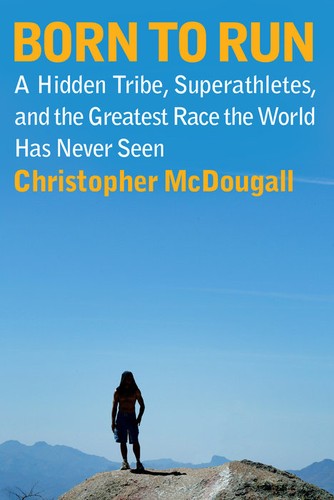
Born to Run
by Christopher McDougall · 2009
Christopher McDougall goes looking for why his foot hurts and ends up with Mexico's reclusive Tarahumara people, who run ultramarathons in sandals without the injuries that plague modern runners.
Worth reading? Born to Run works as a book because McDougall never lets the running theory slow down the story -- the buildup to the climactic ultramarathon between the Tarahumara and a group of American ultrarunners reads like a thriller. The 'humans evolved to run long distances' argument and the case against cushioned running shoes are compelling as written, but they're narrative-driven, not clinical, and the barefoot-running trend the book helped launch has a mixed injury record in the years since.
| Full Title | Born to Run: A Hidden Tribe, Superathletes, and the Greatest Race the World Has Never Seen |
|---|---|
| Author | Christopher McDougall |
| Published | 2009 |
| Publisher | Knopf |
| Category | Health & Fitness |
The Verdict
McDougall built a genuine thriller out of a running injury and a reclusive Mexican tribe, and the pacing toward the climactic race is the reason this book became a bestseller instead of a niche sports-science title.
The barefoot-running argument is worth reading with some distance from the hype it created. It’s a compelling case as written, but “compelling narrative” and “settled science” aren’t the same thing, and the injury data on minimalist running since publication has been mixed.
Read it if you want an actual adventure story about endurance running and the Tarahumara, told with real narrative craft. Skip it if you’re looking for a clinically grounded running-injury guide – this is journalism and story, not a training manual.
you want a genuinely thrilling narrative about endurance running, barefoot/minimalist running theory, and the Tarahumara's running culture, told as an adventure story rather than a training manual
you want peer-reviewed running-injury science -- the book's barefoot-running claims sparked real debate among sports scientists, and McDougall's case is more anecdotal and narrative than clinical
Book Summary
McDougall frames the book around a personal mystery -- chronic running injuries doctors couldn't fix -- that leads him to the Tarahumara, an indigenous Mexican people known for running ultra-long distances in thin sandals with strikingly low injury rates compared to modern shod runners.
The book argues, drawing on evolutionary biology researchers like Dennis Bramble and Daniel Lieberman, that humans evolved as endurance runners -- capable of outlasting faster prey animals over long distances through persistence hunting -- and that this evolutionary history is relevant to how modern humans should run.
McDougall makes a provocative case that modern, heavily cushioned running shoes may encourage a heel-strike running form that increases injury risk, compared to the more forefoot-oriented form associated with barefoot or minimalist running, a claim that became one of the book's most debated legacies.
The narrative builds to a real ultramarathon race organized in Tarahumara territory, pitting the Tarahumara against a small group of elite American ultrarunners, structured with the pacing of an adventure story rather than a reported feature.
Top 10 Lessons from Born to Run
- Humans may have evolved specifically for endurance running -- outlasting faster animals over long distances through persistence hunting -- which is part of the book's case for why running itself isn't inherently bad for the human body.
- The Tarahumara run extremely long distances in thin sandals with comparatively low rates of the chronic injuries common among modern runners in cushioned shoes, which the book treats as evidence worth investigating rather than proof of a single cause.
- Heavily cushioned modern running shoes may encourage a heel-strike running form, which some research (contested, and debated since the book's publication) associates with higher impact forces and injury risk compared to a forefoot strike.
- Running form and technique may matter as much as or more than footwear technology in preventing injury, a claim central to the barefoot/minimalist running movement the book helped popularize.
- Community and culture around running -- the Tarahumara's communal, non-competitive relationship to long-distance running -- shape both performance and sustainability of the sport in ways training plans alone don't capture.
- The book's central claims sparked real scientific debate, and the barefoot-running trend it helped launch has a mixed injury record in the years since, which is worth knowing before adopting its running-form advice uncritically.
- McDougall argues the modern running-shoe industry has an incentive problem -- more cushioning and support sells more shoes, even if the resulting injury rates suggest the underlying technology isn't actually solving the problem it claims to.
- The book leans on colorful real-life characters, especially the reclusive American expat Caballo Blanco and elite ultrarunners like Scott Jurek, to make the case that world-class endurance performance is compatible with running for joy rather than pure competition.
- McDougall's own recovery, going from a doctor-diagnosed 'bad runner' to completing an ultramarathon by changing his form rather than his gear, is used as the book's personal proof-of-concept for its broader argument.
- The Tarahumara's diet and lifestyle, heavy on corn, beans, and chia, plus a culture where running is communal and largely non-competitive, is presented as inseparable from their running longevity, not just their footwear or form.
Frequently Asked Questions
Is Born to Run worth reading?
Yes, as a narrative -- it's a genuinely thrilling adventure story about the Tarahumara and endurance running, even if you treat its barefoot-running science claims with some skepticism.
What is Born to Run about?
Christopher McDougall's investigation into why he keeps getting injured running, which leads him to Mexico's Tarahumara people and a climactic ultramarathon race.
Does Born to Run prove barefoot running is better?
It makes a compelling narrative case, but the claim is contested among sports scientists, and the barefoot-running trend it inspired has a mixed injury record since publication.
Is Born to Run a training manual?
No -- it's a narrative adventure book, not a structured running or training program.
Ready to read it?
Get Born to Run on Amazon