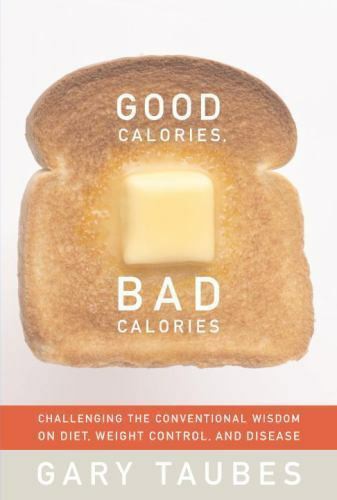
Good Calories, Bad Calories
by Gary Taubes · 2007
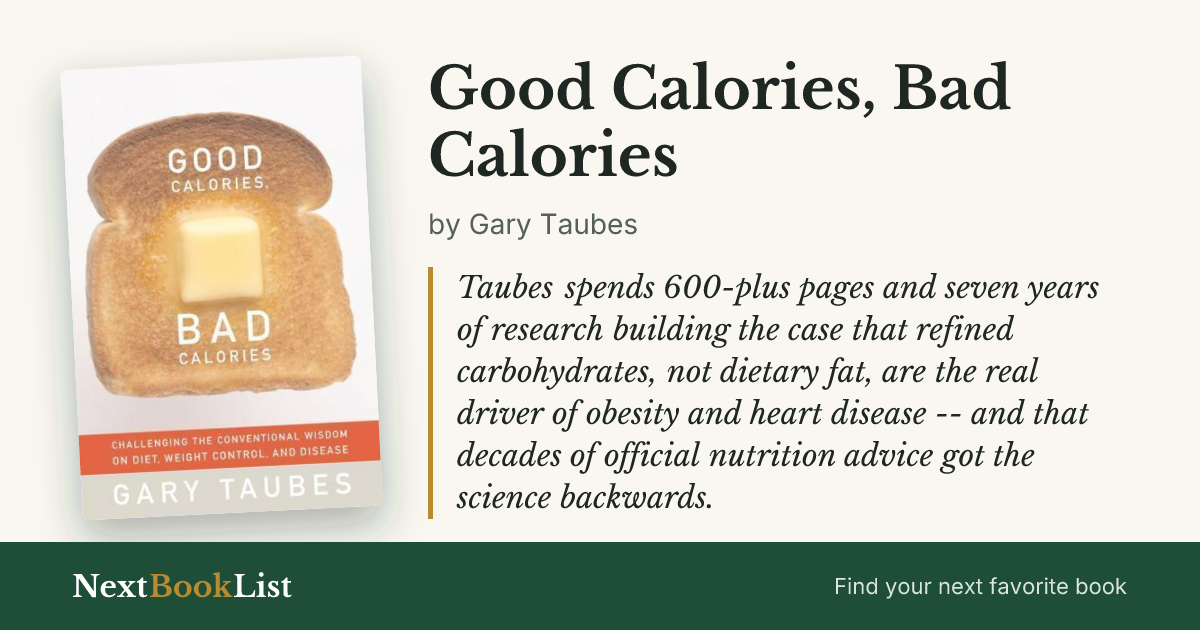
Taubes spends 600-plus pages and seven years of research building the case that refined carbohydrates, not dietary fat, are the real driver of obesity and heart disease -- and that decades of official nutrition advice got the science backwards.
Worth reading? Taubes is doing science journalism at its most ambitious: reconstructing decades of nutrition research, showing where the low-fat consensus came from, and arguing it rested on thinner evidence than its confidence implied. It's dense and long, more history-of-science than diet book, and demands patience most readers won't bring to a health book. But it's the intellectual root of the carbohydrate-insulin hypothesis that later authors like Jason Fung built entire careers on, and reading it is the difference between citing the theory and understanding where it actually came from.
| Full Title | Good Calories, Bad Calories: Challenging the Conventional Wisdom on Diet, Weight Control, and Disease |
|---|---|
| Author | Gary Taubes |
| Published | 2007 |
| Publisher | Alfred A. Knopf |
| Category | Health & Fitness |
| Favorite quote | “"Carbohydrate is driving insulin is driving fat," as the Harvard endocrinologist George Cahill recently summed it up.” |
The Verdict
Taubes isn’t writing a diet book, he’s writing science history, and treating it as anything shorter changes how you should read it. The patience required (600-plus pages, heavy citation, genuine detours into how 20th-century nutrition research got funded and asked its questions) is the price of getting the argument at its original depth, rather than the compressed, more confident version later authors sell.
That depth is also the book’s limit for casual readers. If you want a practical eating plan, this won’t give you one – it argues for a theory, it doesn’t hand you a protocol. Pair it with a more applied book if execution is what you’re after.
Read it if you want to understand where the modern carbohydrate-insulin argument actually came from, footnotes and all. Skip it if you want a fast, practical diet book – this is a science-history argument first, and a long one.
you want the dense, heavily-footnoted origin document behind the modern low-carb and insulin-focused diet movement, and you're willing to read it like a science history rather than a quick diet book
you want a practical eating plan -- this is a science-history argument for why carbohydrate-insulin matters, not a how-to book; pair it with something like The Obesity Code if you want the practical application
Book Summary
Taubes's central argument is that the mid-20th-century shift toward "dietary fat causes heart disease" rested on weaker evidence (most famously Ancel Keys's Seven Countries Study) than the resulting decades of official low-fat guidance implied, and that this consensus hardened into policy faster than the science actually justified.
The alternative case built across the book is that refined carbohydrates and sugar, not dietary fat, are the primary driver of obesity, insulin resistance, and much of the resulting chronic disease -- carbohydrate intake drives insulin, insulin drives fat storage, and a diet built around minimizing refined carbohydrates should, by this logic, be more effective for weight control than one built around minimizing fat.
The book is structured as science history as much as nutrition argument: Taubes traces how research questions got asked (and not asked), how careers and funding shaped which hypotheses got tested, and argues that scientific consensus can ossify around an answer for institutional and career reasons that have little to do with which hypothesis the evidence actually favors best.
Top 8 Lessons from Good Calories, Bad Calories
- The low-fat dietary consensus that dominated official guidance for decades rested on weaker underlying evidence (particularly early observational studies) than its eventual authority suggested.
- Removing carbohydrates from a diet is compared to how diuretic drugs work on blood pressure -- both cause the body to excrete water and sodium, meaning some early low-carb weight loss is water, not fat, and needs to be understood separately from longer-term fat loss.
- The perceived sweetness of a food, not just its actual sugar content, can be enough to trigger insulin secretion, complicating simple 'just count grams of sugar' thinking.
- How much fat a fat cell can store depends heavily on how much glycerol phosphate is available, which is produced primarily from carbohydrate metabolism -- linking carbohydrate intake directly to the body's capacity to store fat.
- Scientific consensus can calcify for institutional and career reasons (funding, prior public commitments, path dependency) rather than because a hypothesis has been most rigorously tested against alternatives.
- The book treats 'carbohydrate drives insulin drives fat storage' as a tighter causal chain than the traditional 'calories in, calories out' model, which it argues treats all calories as biologically interchangeable when they aren't.
- Early 20th-century nutrition science asked different research questions than modern nutrition science does, and some older, later-dismissed hypotheses about carbohydrates and disease are treated as having been abandoned prematurely rather than disproven.
- The book was influential enough to help seed the modern low-carb and ketogenic diet movements, including directly shaping later authors like Jason Fung who built more clinically-focused, practical books on top of Taubes's underlying argument.
Top 4 Quotes from Good Calories, Bad Calories
"Removing carbohydrates from the diet works, in effect, just like the antihypertensive drugs known as diuretics, which cause the kidneys to excrete sodium, and water along with it."
Gary Taubes, Good Calories, Bad Calories
""Carbohydrate is driving insulin is driving fat," as the Harvard endocrinologist George Cahill recently summed it up."
Gary Taubes, Good Calories, Bad Calories
"The perceived taste of sweetness is sufficient to stimulate insulin secretion."
Gary Taubes, Good Calories, Bad Calories
""There is always an easy solution to every human problem," H. L. Mencken once said -- "neat, plausible, and wrong.""
Gary Taubes, Good Calories, Bad Calories
Frequently Asked Questions
Is Good Calories, Bad Calories worth reading?
Yes, if you want the dense, original science-history case behind the carbohydrate-insulin hypothesis -- it's demanding and long, but it's the intellectual root of much of the modern low-carb movement.
What is Good Calories, Bad Calories about?
Gary Taubes's history of nutrition science, arguing the low-fat consensus rested on weaker evidence than its influence implied, and building the case that refined carbohydrates, via insulin, are the primary driver of obesity and chronic disease.
Is Good Calories, Bad Calories a diet book?
Not really -- it's science journalism and history more than a practical eating plan. Readers wanting an actionable protocol usually pair it with a more prescriptive book like The Obesity Code.
Is the carbohydrate-insulin hypothesis in Good Calories, Bad Calories accepted science?
It's a genuinely debated hypothesis in nutrition research, not settled consensus -- Taubes argues for it forcefully, and it remains an active area of scientific disagreement rather than a resolved question.
How does Good Calories, Bad Calories compare to The Obesity Code?
Good Calories, Bad Calories is the denser, earlier, more academic origin document for the carbohydrate-insulin theory; The Obesity Code is a shorter, more accessible, clinically-focused book built on the same underlying idea.
Ready to read it?
Get Good Calories, Bad Calories on Amazon