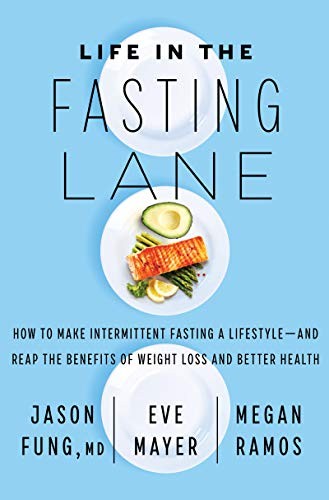
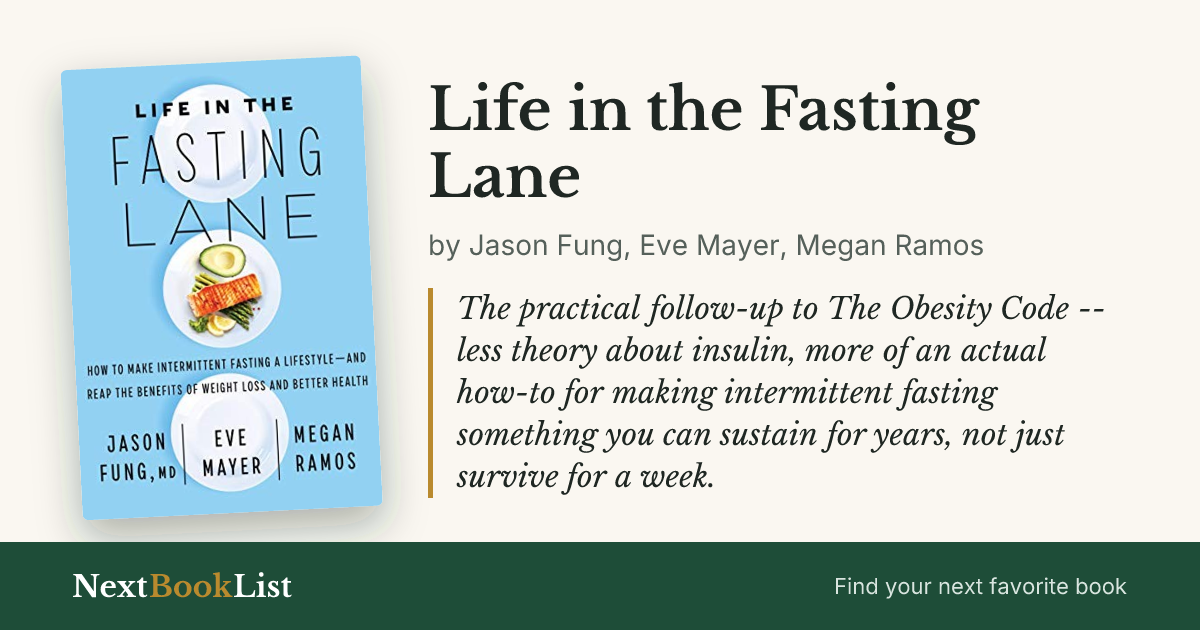
Life in the Fasting Lane
by Jason Fung, Eve Mayer, Megan Ramos · 2020
The practical follow-up to The Obesity Code -- less theory about insulin, more of an actual how-to for making intermittent fasting something you can sustain for years, not just survive for a week.
Worth reading? This is the book The Obesity Code's readers actually needed next. Fung supplies the science recap, but Mayer and Ramos (who coach real fasting patients and have done it themselves) supply the part most fasting content skips: what week three actually feels like, how to handle a dinner party, how to tell normal hunger from a real problem. It's less rigorous and citation-heavy than The Obesity Code by design -- this is a coaching book, not an argument -- so read it for the practical playbook, not for new evidence.
| Full Title | Life in the Fasting Lane: How to Make Intermittent Fasting a Lifestyle -- and Reap the Benefits of Weight Loss and Better Health |
|---|---|
| Author | Jason Fung, Eve Mayer, Megan Ramos |
| Published | 2020 |
| Publisher | Harper Wave |
| Category | Health & Fitness |
| Favorite quote | “Type 2 diabetes is essentially a disease of too much sugar and too much insulin. What decreases sugar and insulin? Fasting.” |
The Verdict
The gap this book fills is real: plenty of people read The Obesity Code, agreed with the insulin argument, tried fasting, and quit in week two because nobody told them what week two actually feels like. Megan Ramos, who ran the clinical fasting program behind Fung’s patient results, is the reason this book earns its keep – her coaching notes on hunger, hydration, and social situations are more useful day to day than another round of insulin theory would have been.
It trades rigor for usefulness on purpose. If you want more evidence for why fasting works, go back to The Obesity Code. This one assumes you’re already convinced and just need help actually doing it for longer than a month.
Read it if you’ve already decided to try intermittent fasting and want a coach’s playbook for making it stick. Skip it if you haven’t read The Obesity Code or aren’t sold on the underlying theory yet – this book won’t make that case for you.
you already buy the insulin/fasting argument from The Obesity Code and want the logistics: what to expect, how to handle hunger and social situations, how to make fasting a routine instead of a one-off experiment
you haven't read The Obesity Code or aren't convinced by its insulin argument -- this book assumes you already agree with the theory and jumps straight to execution
Book Summary
The book's premise is that intermittent fasting fails for most people not because the underlying insulin theory is wrong, but because nobody prepares them for what sustained fasting actually feels like day to day -- the early hunger waves, the social friction, the mental scripts that make quitting easy in week two.
Co-author Megan Ramos ran the clinical fasting program behind The Obesity Code's patient results, and her case histories and coaching notes are used to walk through common failure points (breaking a fast the wrong way, under-hydrating, treating fasting as punishment rather than a tool) with fixes for each.
The throughline is sustainability over intensity: the book steers readers away from extreme, unsustainable fasting protocols and toward finding a fasting rhythm (16:8, alternate-day, one longer fast per week) that a person can actually keep doing for years, on the logic that a moderate protocol followed for a decade beats an extreme one abandoned after a month.
Top 8 Lessons from Life in the Fasting Lane
- Fasting programs fail less because the science is wrong and more because people aren't prepared for the practical, day-to-day experience of sustained hunger and social friction.
- There's an important difference between the physical discomfort of early fasting (which typically passes) and warning signs that mean a person should stop -- the book tries to help readers tell these apart.
- How you break a fast matters almost as much as the fast itself -- breaking one with a large refined-carbohydrate meal blunts much of the intended benefit.
- Hydration and electrolytes are treated as a frequently overlooked practical detail that determines whether a fast feels manageable or miserable.
- A moderate, sustainable fasting protocol followed consistently for years is presented as more valuable than an extreme protocol that gets abandoned after a few weeks.
- Social situations (dinners, holidays, family meals) are one of the most common places fasting routines break down, and the book treats planning around them as a real skill, not an afterthought.
- Different fasting schedules (16:8 time-restricted eating, alternate-day fasting, one extended weekly fast) suit different lifestyles, and the book pushes readers to pick one that fits their life rather than copying someone else's protocol.
- Mental framing matters: treating fasting as deprivation makes it harder to sustain than treating it as a scheduled tool the body already knows how to use.
Top 1 Quotes from Life in the Fasting Lane
"Type 2 diabetes is essentially a disease of too much sugar and too much insulin. What decreases sugar and insulin? Fasting."
Jason Fung, Eve Mayer, Megan Ramos, Life in the Fasting Lane
Frequently Asked Questions
Is Life in the Fasting Lane worth reading?
Yes, if you've already bought the insulin/fasting theory from The Obesity Code and need the practical playbook -- it's the how-to-actually-do-it book that title was missing, though it's lighter on scientific citation by design.
What is Life in the Fasting Lane about?
A practical guide to making intermittent fasting a sustainable long-term habit, covering hunger management, social situations, how to break a fast properly, and how to pick a fasting schedule that fits your life.
Do I need to read The Obesity Code first?
It helps -- this book assumes you already accept the insulin-driven theory of weight gain and moves straight into execution rather than re-arguing the case.
What fasting schedule does Life in the Fasting Lane recommend?
No single fixed schedule -- it presents options (16:8 time-restricted eating, alternate-day fasting, one longer weekly fast) and encourages readers to choose based on what they can sustain long-term.
Is Life in the Fasting Lane just a repeat of The Obesity Code?
No -- The Obesity Code makes the theoretical case for insulin and fasting; this book is the practical coaching manual for actually living with a fasting routine day to day.
Ready to read it?
Get Life in the Fasting Lane on Amazon